Summer holidays do not have to mean taking a break from your favourite sport. At the same time, travelling with a racket does not necessarily mean organising an entire week around intensive training.
For some players, the ideal tennis or padel holiday involves spending every morning on court at a professional academy. For others, it might simply mean playing a match with local people, booking a lesson overlooking the sea or watching a professional tournament during a city break.
Tennis and padel can be the main purpose of a trip, but they can also become a natural part of a more traditional holiday. You can stay at a specialised resort, join an adult training camp, book a court near your hotel or use an app to meet players once you arrive.
Whether you want to play casually, train intensively or explore the culture surrounding racket sports, this guide will help you combine tennis and padel with your summer travels—without having to plan the entire holiday around them.
1. How much tennis or padel do you want in your holiday?
Before choosing a destination, hotel or training programme, decide how much space tennis or padel should occupy during your trip.
Some travellers simply want the opportunity to play once or twice. In this case, convenience matters more than a complete sports programme: look for courts close to your accommodation, simple booking systems, equipment rental and clubs offering individual lessons or social matches.
Other players want to spend time on court almost every day while still leaving room for the beach, sightseeing or activities with family and friends. A resort offering both tennis and padel, or a hotel located near a well-equipped local club, can provide the right balance between sport and relaxation.
For more ambitious players, a holiday can also become an opportunity to improve. Adult tennis camps, padel camps, academies, clinics and intensive training programmes offer a more structured experience, often combining technical sessions, tactical work, physical preparation and match play.
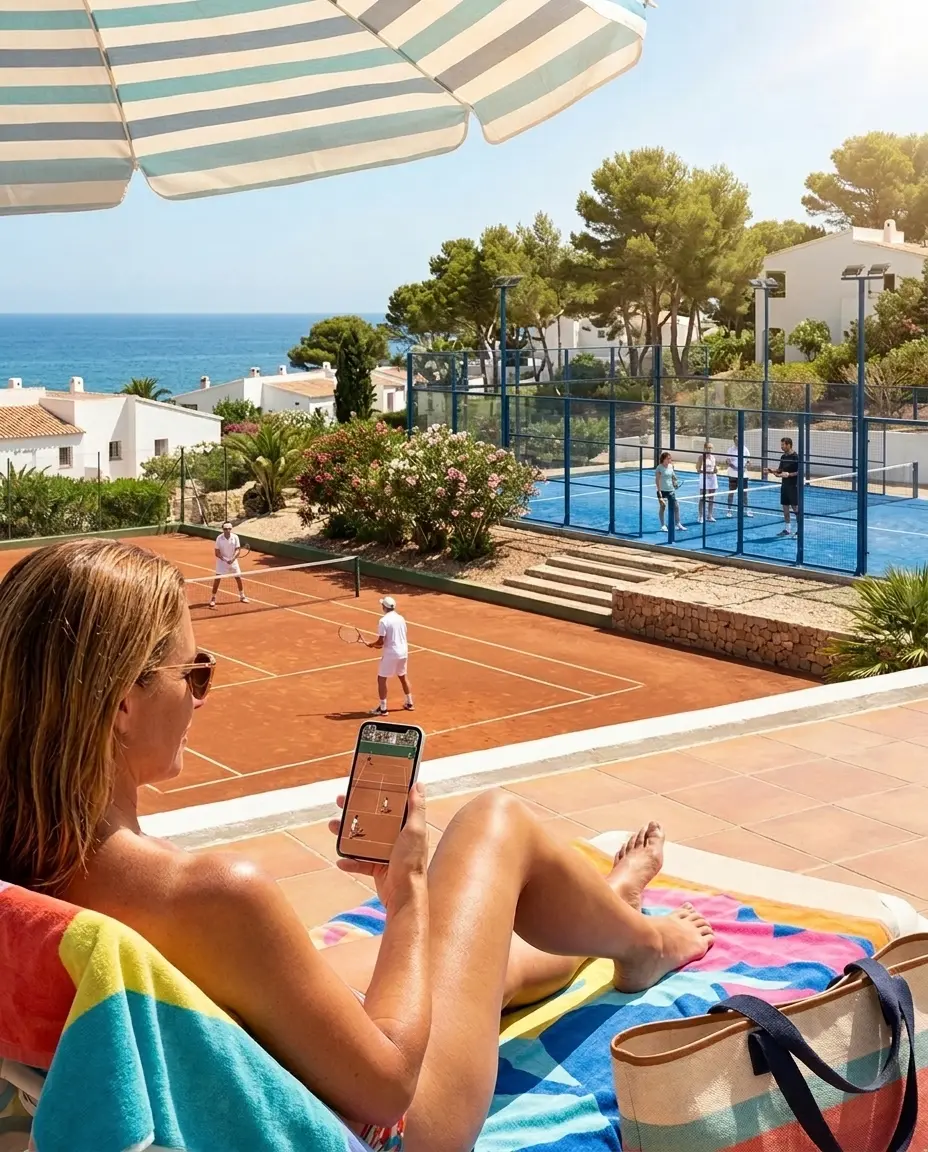
The sport you choose will also influence the planning. Tennis usually requires finding one compatible opponent or booking a coach. Padel requires four players, but many clubs make it easier to join public matches, level-based games and local communities.
What type of tennis or padel holiday is best for you?
Casual players should prioritise accessible courts, flexible booking and equipment rental. Regular players may prefer a resort or local club offering daily sessions. Those looking for measurable improvement should consider an adult camp, intensive clinic or academy programme designed for their level.
2. Hotels, resorts and local clubs: play without planning your entire trip around it
You do not need to book a specialist tennis holiday to spend time on court. In many destinations, the simplest solution is to choose accommodation close to a good local club and organise your sessions separately.
A resort with tennis and padel courts is the most convenient option. Courts are usually within walking distance, booking is handled through the hotel and lessons or rental equipment may already be available on site. This works particularly well for families or groups in which not everyone wants to play.
However, staying near an independent club can offer more flexibility and a more authentic local experience. You can choose your hotel based on location, price or access to the beach, then book courts, coaching sessions or social games nearby. Local clubs may also provide more playing partners and a wider range of activities than a hotel facility.
Before booking, check more than the number of courts. Look at the playing surface, lighting, opening hours and whether the courts are indoor, covered or exposed to the sun. In very warm destinations, early-morning and evening availability can make a major difference.
It is also worth confirming whether the club rents rackets, provides balls and accepts bookings from non-members. Some venues advertise courts online but reserve most time slots for members, lessons or tournaments.
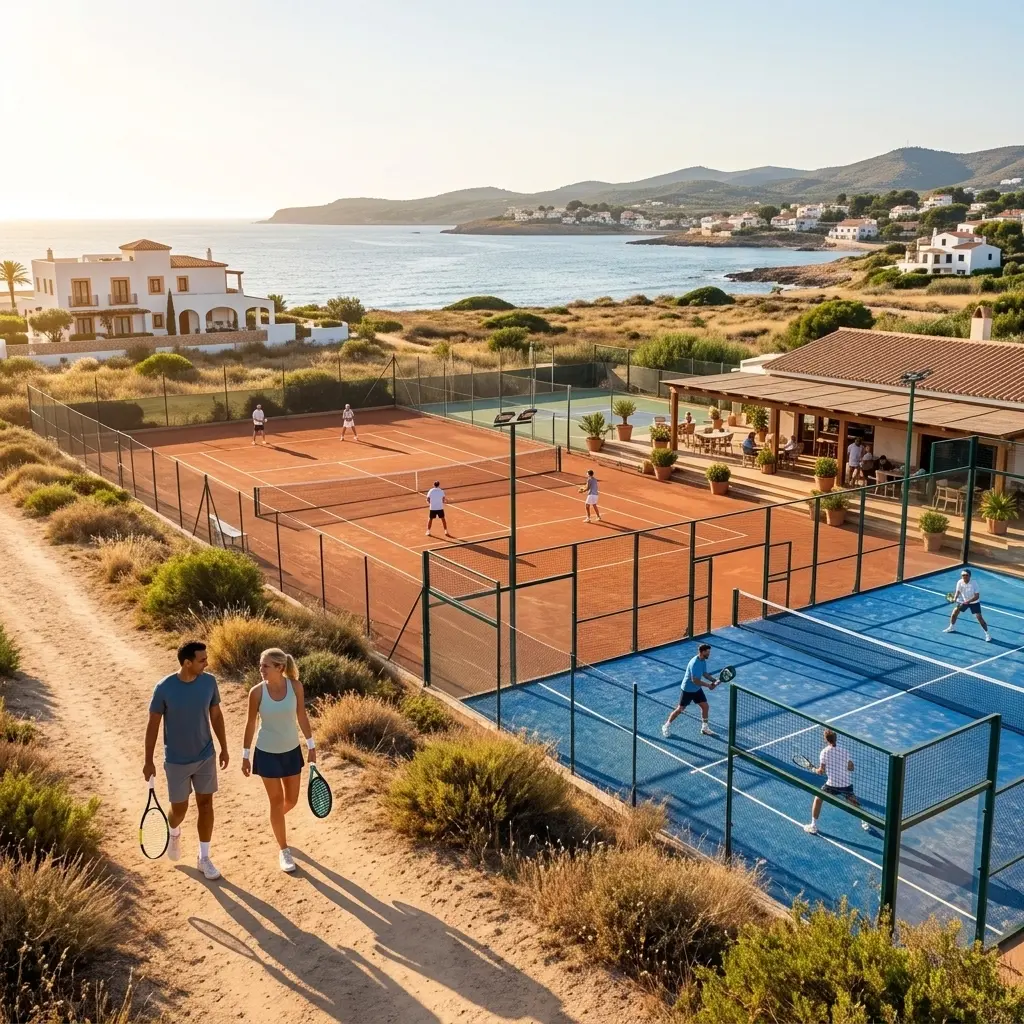
Is it better to stay at a tennis resort or near a local club?
A resort is usually better for convenience, families and short stays. A nearby local club offers greater flexibility, more opportunities to meet players and often a wider choice of coaching, competitions and social matches.
3. Tennis camps, padel camps and academies: turn your holiday into intensive training
For players who want more than a few casual matches, a holiday can become an opportunity to work seriously on their game. Adult tennis camps, padel camps and academy programmes combine travel with structured training, without necessarily requiring a professional playing level.
The names are often used interchangeably, but the formats can be different. An academy is generally a permanent training centre with its own coaches, facilities and methodology. It may offer programmes lasting from a few days to several weeks throughout the year.
A training camp is usually a concentrated experience organised over a weekend or a full week. Daily schedules may include technical drills, tactical sessions, supervised match play and physical preparation. Players are normally divided into groups according to level.
A clinic tends to be shorter and more specific. It may focus on the serve, return, doubles positioning, movement or a particular tactical pattern. A performance camp is usually more demanding and may include video analysis, fitness testing and individual feedback.
These options are not limited to competitive players. Many academies offer programmes for adult beginners, intermediate club players and advanced amateurs. The key is to check the coach-to-player ratio, the number of hours spent on court and whether “training time” includes warm-ups, fitness sessions or match play.
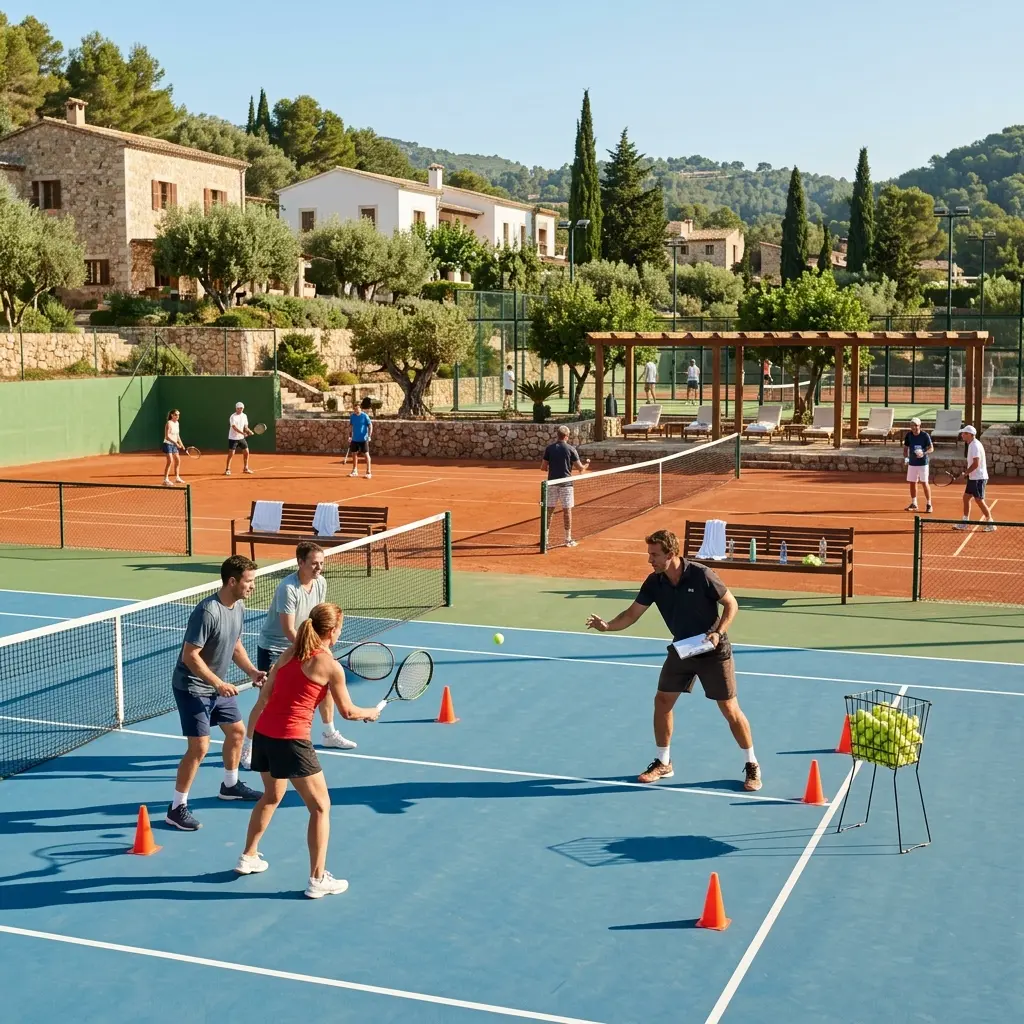
Climate also matters. Four hours of training may feel manageable in spring but exhausting in peak summer heat. When possible, choose a programme with early sessions, shaded recovery areas and enough time between training blocks.
What should you look for in an adult tennis or padel camp?
Choose a programme designed for your level, with clear daily schedules, small training groups and enough match play. Also check the court surface, language of instruction, fitness requirements, accommodation options and how much recovery time is included.
4. No playing partner? Find a match wherever you travel
You have packed your racket, found a court and checked the weather. There is only one problem: you do not know anyone at your destination.
Fortunately, travelling alone no longer means training alone. Apps and online communities can help you find local players, join open matches or book a court with people of a similar level.
Platforms such as Playtomic allow players to search for nearby clubs, join public matches and use level-based profiles to find suitable opponents. RacketPal focuses on connecting racket-sport players and organising singles, doubles or social matches, while services such as GotCourts combine court booking with player searches and local activities. Availability varies by country, so check which platform is most widely used at your destination before travelling.

Club communities can be just as useful. Many tennis and padel centres manage WhatsApp groups, social sessions, ladders or weekly open matches. Contact the club in advance, explain your approximate level and ask whether visitors can join.
Be honest about your experience: rating systems are not identical across countries, and an inaccurate level can make the match frustrating for everyone. Confirm the surface, scoring format, court fee and whether balls are included.
How can you find someone to play tennis or padel with on holiday?
Search local clubs and matchmaking apps before travelling, then contact the venue directly. Public matches, social sessions and club groups are usually the easiest ways to meet players without already knowing someone locally.
5. Build your trip around tournaments, iconic venues and racket culture
Playing is only one way to include tennis or padel in a holiday. A professional tournament, historic venue or famous academy can turn an ordinary city break into a racket-sport experience.
Summer offers several possibilities. You could plan a trip around a major tournament, add one day of live tennis to a longer holiday or choose a destination where you can play in the morning and watch professionals later in the day. Smaller events can be especially appealing: they often provide closer views of the courts and are hosted in attractive coastal, mountain or historic cities.
Some destinations are worth visiting even when no tournament is taking place. London offers the Wimbledon Lawn Tennis Museum and guided tours behind the scenes of the grounds, allowing visitors to explore the history and traditions of the Championships throughout much of the year. Paris, Rome and Mallorca also allow tennis fans to connect a holiday with iconic venues, major events or places associated with the sport’s history.
Padel culture is newer and less centred on traditional museums, but cities such as Madrid, Barcelona and Málaga offer a different kind of experience: large clubs, academies, professional events and a strong social scene surrounding the courts.

The experience does not need to end with the final point. Tournament fan areas, academy restaurants, historic clubhouses and modern padel centres often make eating and socialising part of the visit.
A useful way to plan each destination is through four simple actions: watch, visit, play and eat. Watch a professional match, visit a meaningful venue, book a court locally and discover how racket-sport culture fits into the city beyond the game itself.
Which cities should tennis and padel fans visit?
London, Paris and Rome combine major tennis history with cultural city breaks. Mallorca is closely connected to academy training, while Madrid, Barcelona and Málaga are strong choices for travellers interested in modern padel culture.
6. Flying with tennis and padel equipment: bring it or rent it?
Travelling with your own racket means playing with a familiar weight, grip and setup. However, airline baggage rules can turn a simple decision into one of the most complicated parts of the trip.
Do not assume that a tennis or padel bag will be accepted as cabin baggage. Policies vary between airlines, routes and ticket types, and a racket bag may exceed the permitted dimensions even when it is relatively light. Check the rules for your specific flight before leaving and, when necessary, register sports equipment in advance.
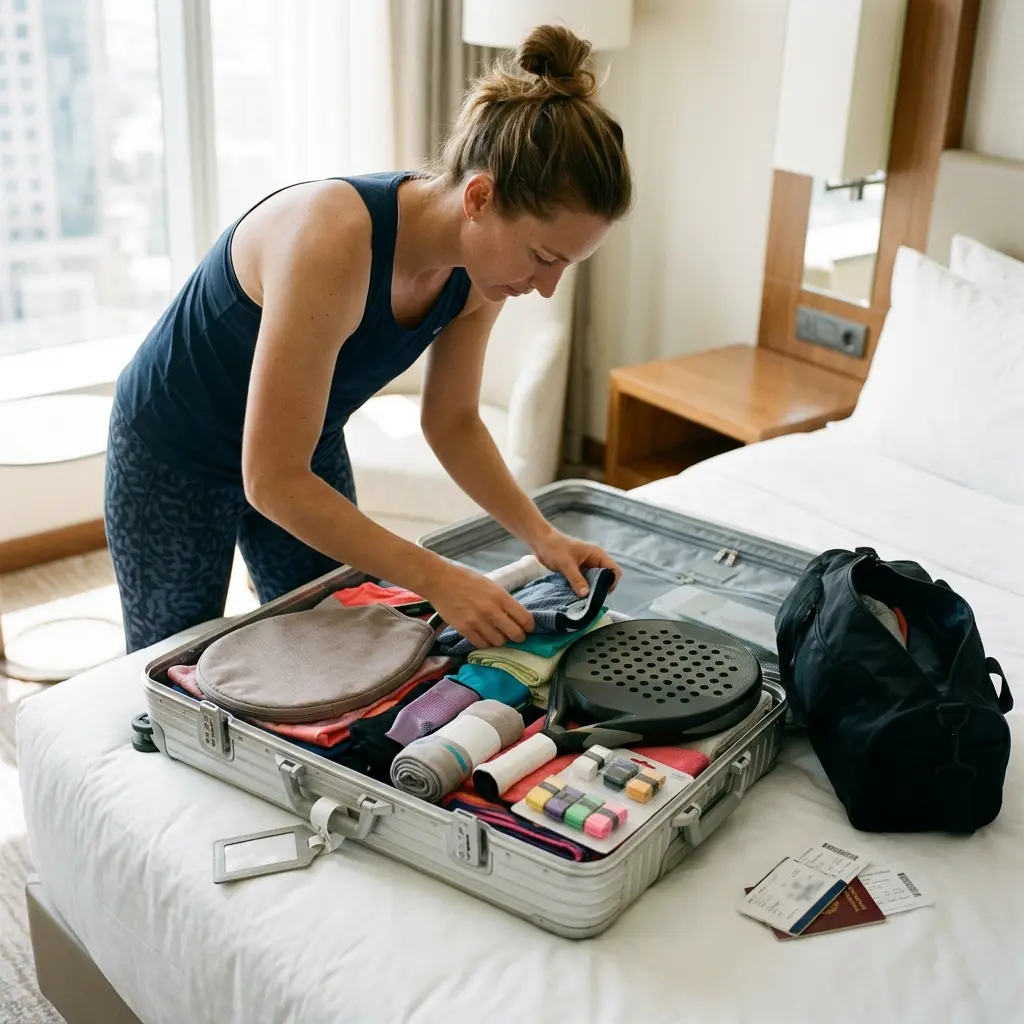
If the racket must travel in the hold, protect the frame with a padded cover and avoid placing heavy objects directly against the head.
Clothes can provide additional cushioning inside a larger suitcase, while grips, accessories and other loose items should be secured so that they cannot move during transport.
Taking photographs of the equipment before check-in may also be useful if the bag is damaged.
Consider what you will actually need on court. Overgrips, wristbands and a spare set of strings require little space, while balls are often easier to buy locally. Players joining a camp should also ask whether the academy provides equipment, restringing and replacement rackets.
Bringing your own racket makes sense when you plan to play regularly, are particularly sensitive to your setup or are attending an intensive programme. Renting locally may be more practical for one casual match, especially when travelling with hand luggage only.
Can you take a tennis or padel racket on a plane?
Sometimes, but there is no universal rule. Acceptance depends on the airline’s cabin-baggage dimensions and sports-equipment policy. Check the conditions of your specific flight rather than relying on general advice.
7. Prepare your body and your racket before departure
A tennis or padel holiday should not begin with the first point. A little preparation before travelling can make the transition to unfamiliar courts, temperatures and training schedules much easier.
If you have not played regularly, gradually increase your activity during the weeks before departure. Even a recreational camp may involve several hours of movement each day, and combining this with heat, travel and reduced recovery can be more demanding than expected.
Short mobility routines for the shoulders, hips and ankles can be continued almost anywhere. Resistance bands take up little space and can be used for activation before a match, while hydration and recovery should be planned as carefully as the court booking. In warm destinations, avoid making the first session the longest or most intense one of the trip.
Your equipment also deserves a pre-holiday check. Inspect the strings, grip, frame and grommets, and pack at least one replacement overgrip. If you intend to restring the racket or modify its setup, do it early enough to test the result before leaving.
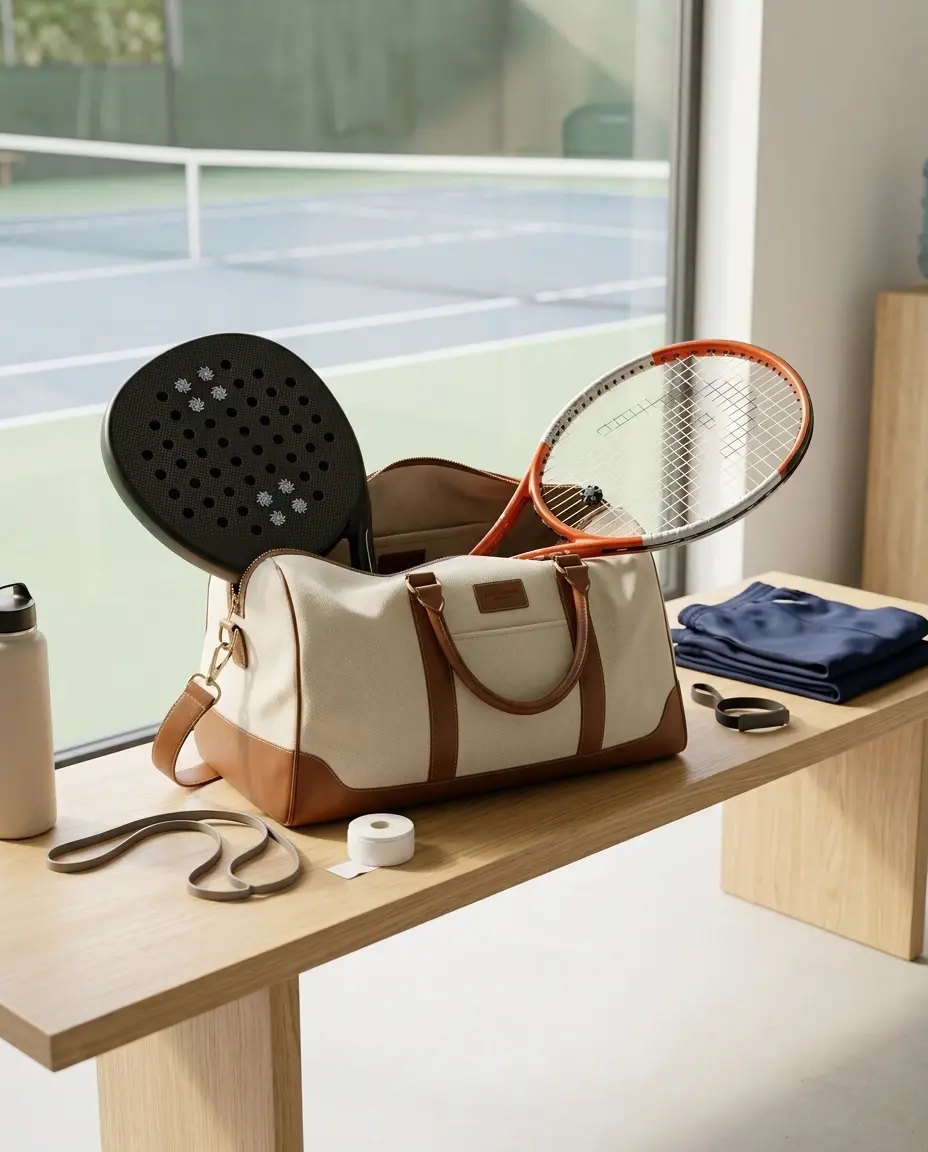
Preparation does not necessarily mean buying a different racket. Lightweight technical add-ons can help players tune the response of equipment they already know. AMbelievable develops 3D-printed technical products in Italy for different areas of tennis and padel equipment.
Universal is designed to tune the vibration response of the tennis string bed, while Torsion Balancer adds weight in selected frame positions to support stability on off-centre impacts. Auxetic Power Pads are installed during stringing and interact with the response of the string bed. For padel players, Padel Buzz Stopper is fitted into the racket holes and is designed to act on frame vibrations.
The most important rule is simple: install any new component before the holiday and test it during normal play. The first morning of an intensive camp is not the ideal moment to discover an unfamiliar setup.
How should you prepare for a tennis or padel holiday?
Return to regular play gradually, prepare for the destination’s climate and check your equipment before travelling. Any new strings, grips or technical add-ons should be installed and tested at home, not introduced for the first time during the trip.
Conclusion. Make space for your racket, not necessarily an entire sports holiday

Combining tennis or padel with a summer holiday does not require planning the entire trip around the court.
You might join a local match through an app, book a lesson near your hotel or spend a few mornings training at an academy. You could also attend an intensive camp, watch a professional tournament or visit one of the places where racket-sport history was made.
The right experience depends on how much space you want the sport to occupy
It can be the main purpose of the journey, a way to stay active or simply an opportunity to meet people and experience a destination from a different perspective.
Plan the sessions that matter, check how you will transport or rent your equipment and prepare your body and racket before leaving. Once those details are covered, the rest can remain flexible.
Sometimes, the best way to discover a new place is not from a tour bus or a crowded viewpoint, but from the other side of a net.