A tennis racket's weight is easy to measure, but the number on the scale tells only part of the story. Two rackets can both weigh 300 grams and still feel remarkably different during a swing or when hitting the ball. The reason is simple: how much a racket weighs matters, but so does where that weight is distributed.
This is why racket customization goes far beyond simply making a frame heavier. Adding mass at 12 o'clock, at 3 and 9, or closer to the handle can produce very different changes in balance, swingweight, twistweight and stability. The same principle explains the difference between head-heavy and head-light rackets and why players and racket technicians carefully consider weight placement when adjusting a setup.
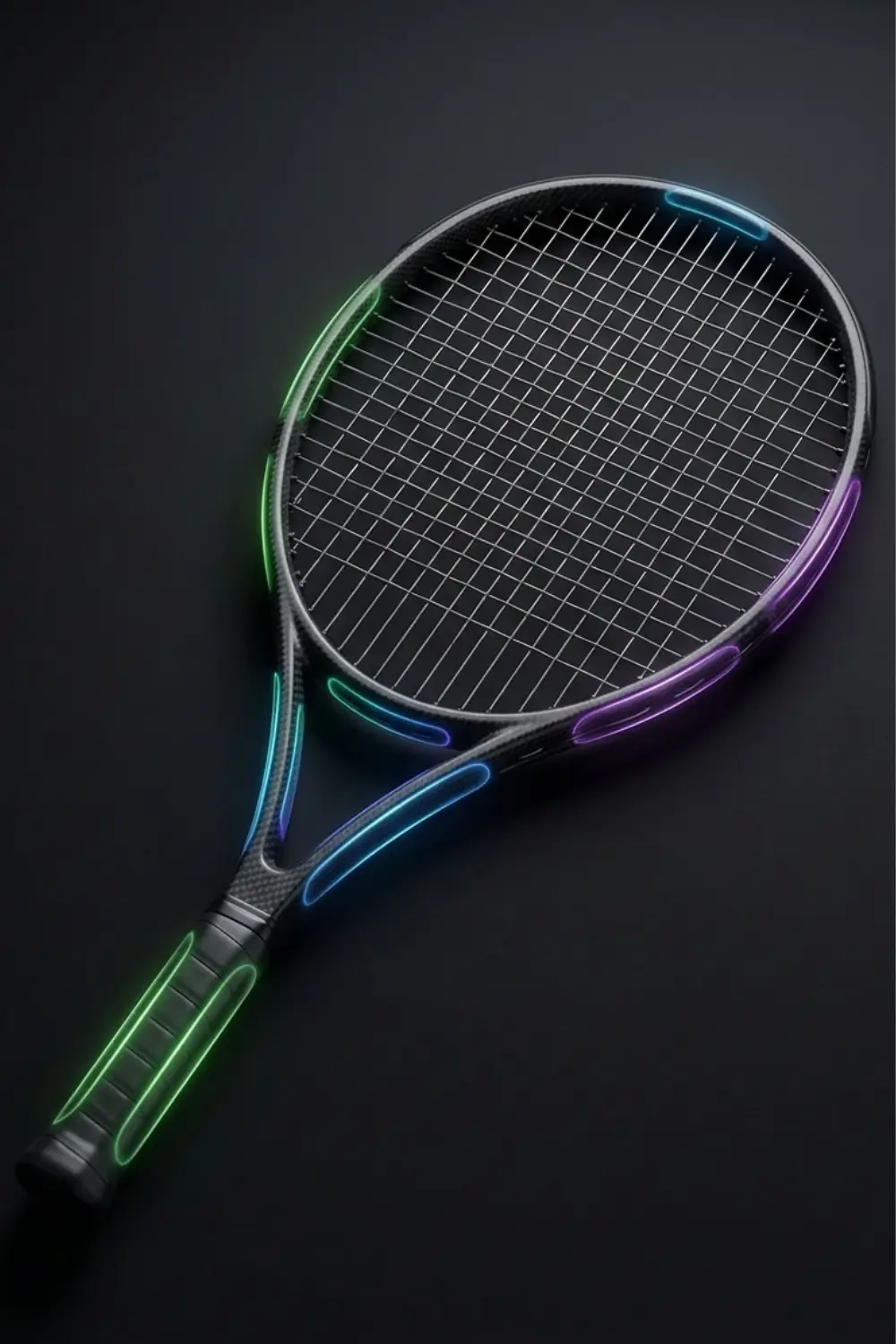
Traditional customization often relies on lead or tungsten tape, but other solutions can combine mass placement with additional functions. AMbelievable™ Torsion Balancers, for example, weigh 1 gram each and can be positioned symmetrically on the frame. Their mass contributes to the racket's weight distribution, while their 3D-printed metamaterial geometry is designed to manage torsional vibrations generated by the frame, particularly following off-center impacts
So, what actually happens when you add weight to a tennis racket? And how can you decide how much weight to add and where to place it? To answer that, we first need to understand why total racket weight is only the starting point.
1. Tennis Racket Weight: Why Grams Don't Tell the Whole Story
Tennis racket weight describes the racket's total mass, but it does not tell you how that mass is distributed or how difficult the racket will be to accelerate and rotate. Balance and swingweight are therefore essential for understanding how a racket behaves in motion.
The first distinction to make is between unstrung weight and strung weight. Manufacturers commonly specify the weight of an unstrung racket, while the racket you actually take onto the court also includes the strings and, depending on your setup, an overgrip, vibration dampener, protective tape or other accessories. All of these components add mass to the finished racket.
In general, additional mass can affect characteristics such as stability, manoeuvrability and the amount of momentum carried into impact. But describing a racket simply as "heavy" or "light" can be misleading. A 300 g racket and a 305 g racket do not necessarily behave according to what those five extra grams might suggest.
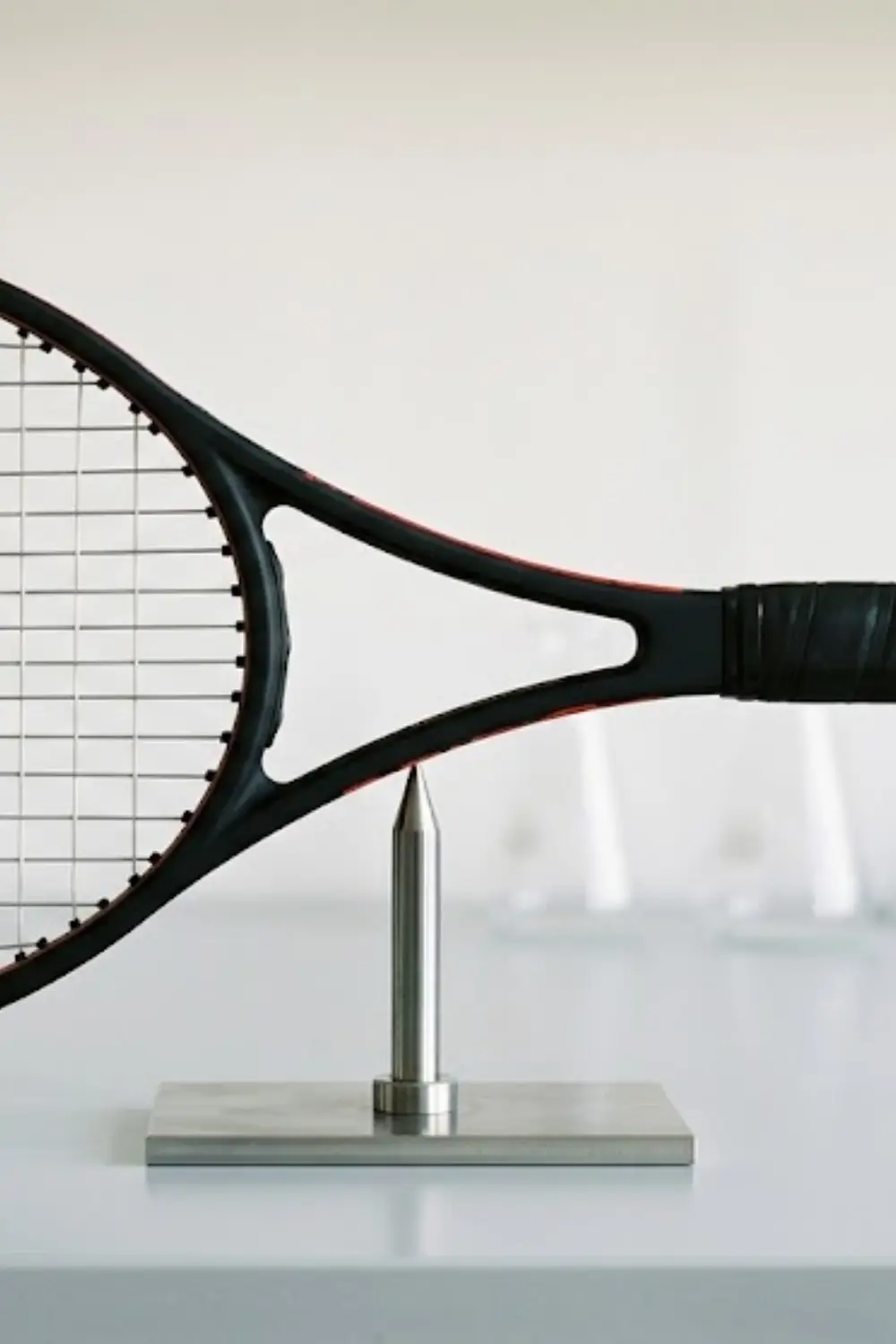
Imagine adding 2 grams to the handle of a racket and then, in a second configuration, adding the same 2 grams near the tip at 12 o'clock. The scale sees exactly the same increase. The player does not.
The reason is rotational inertia. Mass positioned farther from the axis around which the racket is being rotated has a greater influence on its resistance to rotation. As a result, a relatively small amount of weight placed toward the racket head can noticeably change how demanding the racket feels to swing, even though its total weight has increased by only a few grams.
This is also why products such as Torsion Balancer should not be considered only in terms of their 1 g weight. Where that gram is positioned on the frame matters. Two units installed symmetrically at 3 and 9 o'clock interact with the racket's mass distribution differently from two units positioned at 10 and 2.
Before understanding those differences, however, there is another fundamental specification to consider: racket balance, and the difference between a head-heavy and a head-light tennis racket.
2. Head-Heavy vs Head-Light Tennis Rackets: What's the Difference?
The difference between a head-heavy and a head-light tennis racket depends on where its balance point sits. A head-heavy racket has a greater proportion of its mass distributed toward the head, while a head-light racket has more of its mass distributed toward the handle. An even-balanced racket sits between the two.
This distinction is important because racket balance and racket weight are not the same thing. A heavier tennis racket can still be head-light, while a lighter racket can be head-heavy. Looking only at the total number of grams therefore tells you very little about where that mass is concentrated and how the racket may behave during a swing.
The balance point is the position along the racket where its mass is evenly distributed on either side. Moving additional mass toward the head shifts this point forward, making the setup more head-heavy. Adding mass closer to the handle can instead move the balance in the opposite direction, particularly when it is used to counterbalance weight already positioned higher on the frame.
In practical terms, head-light rackets generally feel easier to manoeuvre relative to their total mass, which is one reason many heavier performance rackets use a head-light balance. Head-heavy configurations place a greater proportion of mass toward the hitting end of the racket, but can also make the racket feel more demanding to accelerate and reposition.
This becomes particularly relevant when customizing a tennis racket. Adding several grams at 12 o'clock, for example, does more than increase its total weight: it also moves the balance toward the head. Adding the same mass inside or around the handle produces a very different setup.
Smaller additions around the hoop can also be used without radically transforming the racket's overall balance. Torsion Balancers, for example, are installed as a symmetrical pair of 1 g units, allowing 2 grams of total mass to be positioned at specific points of the frame while also providing their torsional vibration control function.
But balance still does not explain everything. Two rackets can have the same total weight and even the same balance point while behaving differently when swung. To understand why, we need to look at two rotational properties that are particularly important in racket customization: swingweight and twistweight.
3. What Are Swingweight and Twistweight in a Tennis Racket?
Swingweight measures a tennis racket's resistance to being rotated through the swing, while twistweight describes its resistance to twisting around its longitudinal axis. Both depend on how mass is distributed, which is why adding the same amount of weight in different positions can produce different results.
The physics behind this can be understood through moment of inertia. In simplified terms, the contribution of a point mass to rotational inertia can be represented as:
I = mr²
Here, m is mass and r is its distance from the axis of rotation. The squared distance is particularly important. Moving a small amount of mass farther away from the relevant axis can have a much larger effect than placing the same mass close to it.
For swingweight, this helps explain why adding weight toward the tip of the racket has a stronger effect than adding the same number of grams near the handle. A higher swingweight means greater resistance to changing the racket's rotational motion. It can contribute to greater momentum through impact, but it can also make the racket more demanding to accelerate, decelerate and reposition.
Twistweight describes a different rotation. When the ball hits away from the racket's longitudinal centre line, the impact generates torque that tends to rotate the racket around that axis. A racket with greater twistweight offers more inertial resistance to this rotation, which is one of the mechanical factors associated with stability on off-center hits.
This distinction is particularly relevant when deciding where to add weight to a tennis racket. Mass at 12 o'clock is far from the hand and therefore has a strong influence on swingweight. Mass positioned laterally at 3 and 9 o'clock sits farther from the racket's longitudinal axis, making that placement particularly relevant to twistweight. Positions such as 10 and 2 o'clock affect both parameters in different proportions.
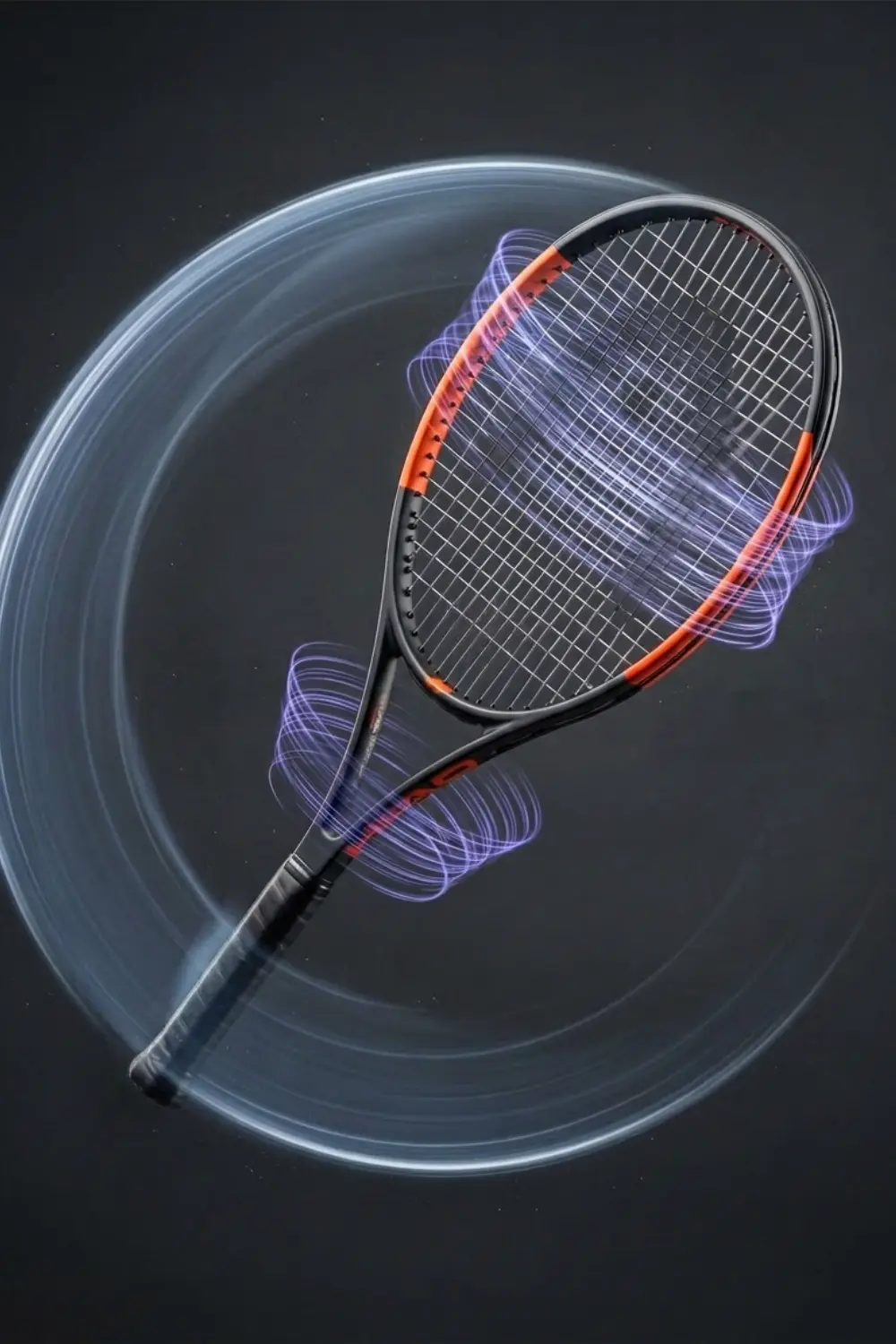
This is also why the placement of AMbelievable™ Torsion Balancers matters. Two 1 g units always add the same 2 grams of static mass, but changing their position changes how that mass contributes to the racket's rotational properties. At the same time, their function goes beyond mass distribution: their metamaterial geometry is designed to contrast torsional vibrations of the frame and provide a more stable response following off-center impacts.
Rather than considering those effects in isolation, you can use the Torsion Balancer Simulator to select a specific tennis racket and compare how different configurations affect parameters such as swingweight and twistweight.
Understanding these concepts gives us the physics. The next question is the practical one: where should you actually add weight to a tennis racket, and what changes at 12, 10 and 2, 3 and 9, or closer to the handle.
4. Where Should You Add Weight to a Tennis Racket?
Where you add weight to a tennis racket determines much of what that extra mass will change. Weight at 12 o'clock has a strong effect on swingweight, weight at 3 and 9 o'clock has a greater influence on twistweight, while adding mass closer to the handle increases total weight with a smaller effect on swingweight. There is therefore no single best position: the right placement depends on what you want to change in your setup.
Adding Weight at 12 O'Clock
Placing weight at 12 o'clock, at the very top of the racket head, is one of the most effective ways to increase swingweight with a relatively small amount of added mass.
Because this position is far from the hand, even a few grams can noticeably increase the racket's rotational inertia. The balance also moves toward the head, and the additional mass at the tip can increase the momentum carried by the racket into impact. The trade-off is that the racket may become more demanding to accelerate and manoeuvre.
For this reason, simply adding more weight at 12 is not automatically an improvement. The starting swingweight and the player's target setup matter just as much as the number of grams added.
Adding Weight at 3 and 9 O'Clock
Placing weight symmetrically at 3 and 9 o'clock moves mass farther away from the racket's longitudinal axis. This makes it particularly relevant when the goal is to increase twistweight and resistance to rotation on off-center impacts.
Imagine hitting the ball slightly toward one side of the string bed. Because the impact force is not aligned with the racket's central axis, it creates a torque that tends to twist the frame. Increasing the racket's moment of inertia around that axis means greater resistance to this rotation.
This is also one possible configuration for Torsion Balancers. Installing one 1 g unit on each side adds 2 grams symmetrically to the frame, contributing to twistweight while the devices' metamaterial structure is designed to contrast the torsional vibrations generated by the frame after impact.
Adding Weight at 10 and 2 O'Clock
Positions around 10 and 2 o'clock combine characteristics of upper and lateral placement. The added mass sits both relatively high on the racket and away from its longitudinal axis, so it can contribute to both swingweight and twistweight.
This makes 10 and 2 particularly interesting when looking for a different compromise between manoeuvrability, rotational inertia and stability rather than maximizing only one parameter.
It is also the standard placement we recommend for Torsion Balancer. Since changing the position changes the mechanical contribution of the same 2 grams, comparing configurations is more useful than considering product weight alone.
The Torsion Balancer Simulator lets you select your racket and test different placements virtually, showing how the chosen configuration changes parameters such as swingweight and twistweight before modifying your physical setup.
Adding Weight to the Throat or Handle
Moving additional mass closer to the throat or handle produces a very different result. Because the added weight is closer to the axis around which the racket is swung, its effect on swingweight is smaller than the same amount of mass positioned at the top of the hoop.
Weight in or around the handle is often used when a player wants to increase total racket mass or create a more head-light balance without producing the same swingweight increase that would result from adding those grams to the head.
This comparison highlights the central principle of racket customization: the number of grams is only meaningful when you also know where those grams are positioned.
5. How Much Weight Should You Add to a Tennis Racket?
There is no universal amount of weight that should be added to a tennis racket. The appropriate quantity and placement depend on the racket's starting specifications, the characteristic the player wants to modify and the resulting combination of static weight, balance, swingweight and twistweight.
This is why adding 2, 5 or 10 grams without first defining a target can be misleading. Even a relatively small amount of mass placed high on the hoop can produce a meaningful change in swingweight, while considerably more mass can be positioned near the handle with a smaller effect on the same parameter.
A more useful approach starts with a different question: what do you want to change?
A player looking for greater resistance to twisting on off-center impacts may investigate lateral mass placement. Someone looking to increase swingweight may consider positions higher on the hoop. Another player may want additional overall mass while maintaining a head-light balance. Each objective leads to a different configuration.
This is also why racket customization is common in professional tennis. Professional players can use customized specifications rather than relying exclusively on the stock setup of a retail frame.
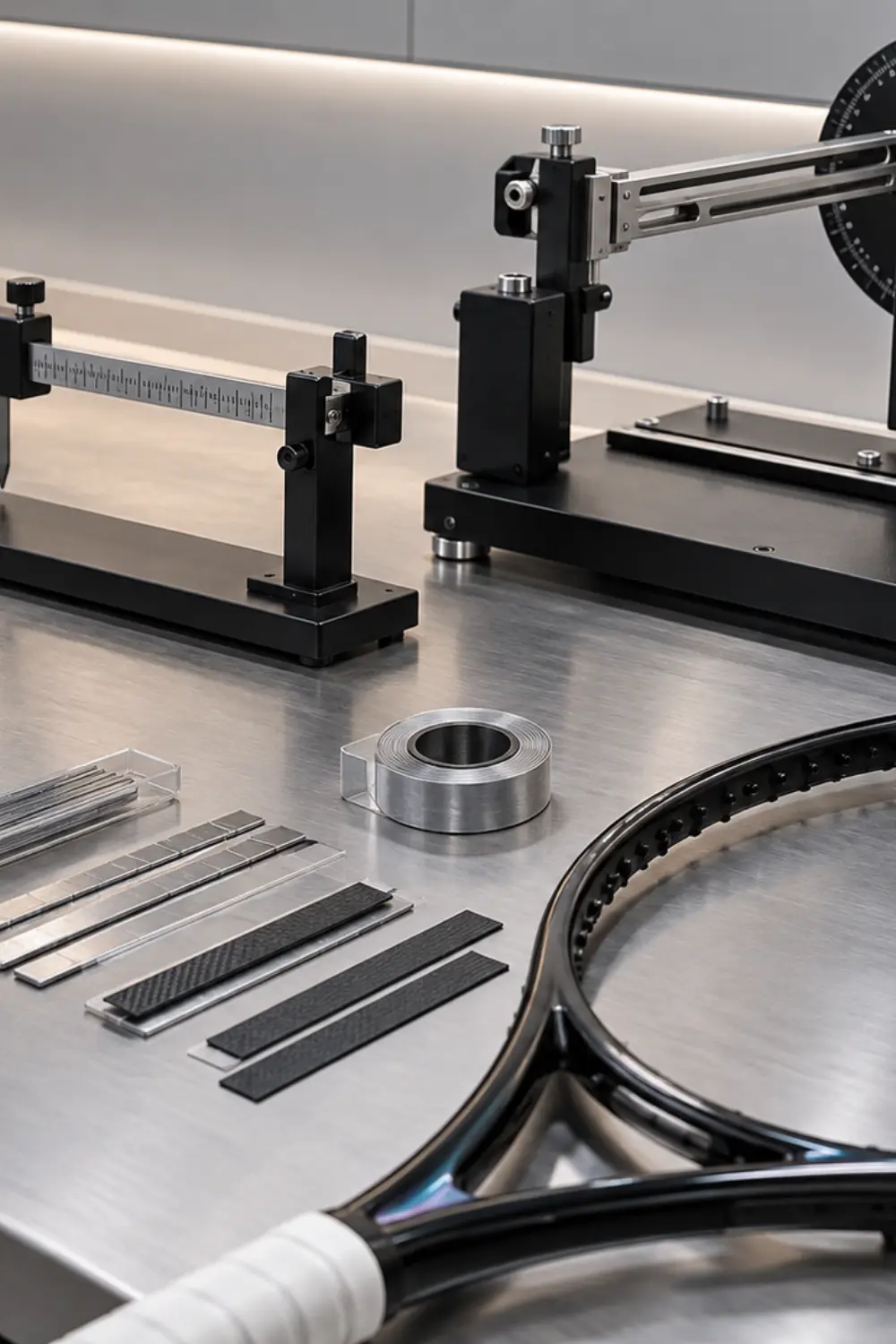
Weight can be added or redistributed to achieve specific targets and, when several rackets are used in competition, technicians can also work to make those frames behave as consistently as possible.
6. How Are Professional Tennis Rackets Customized and Measured?
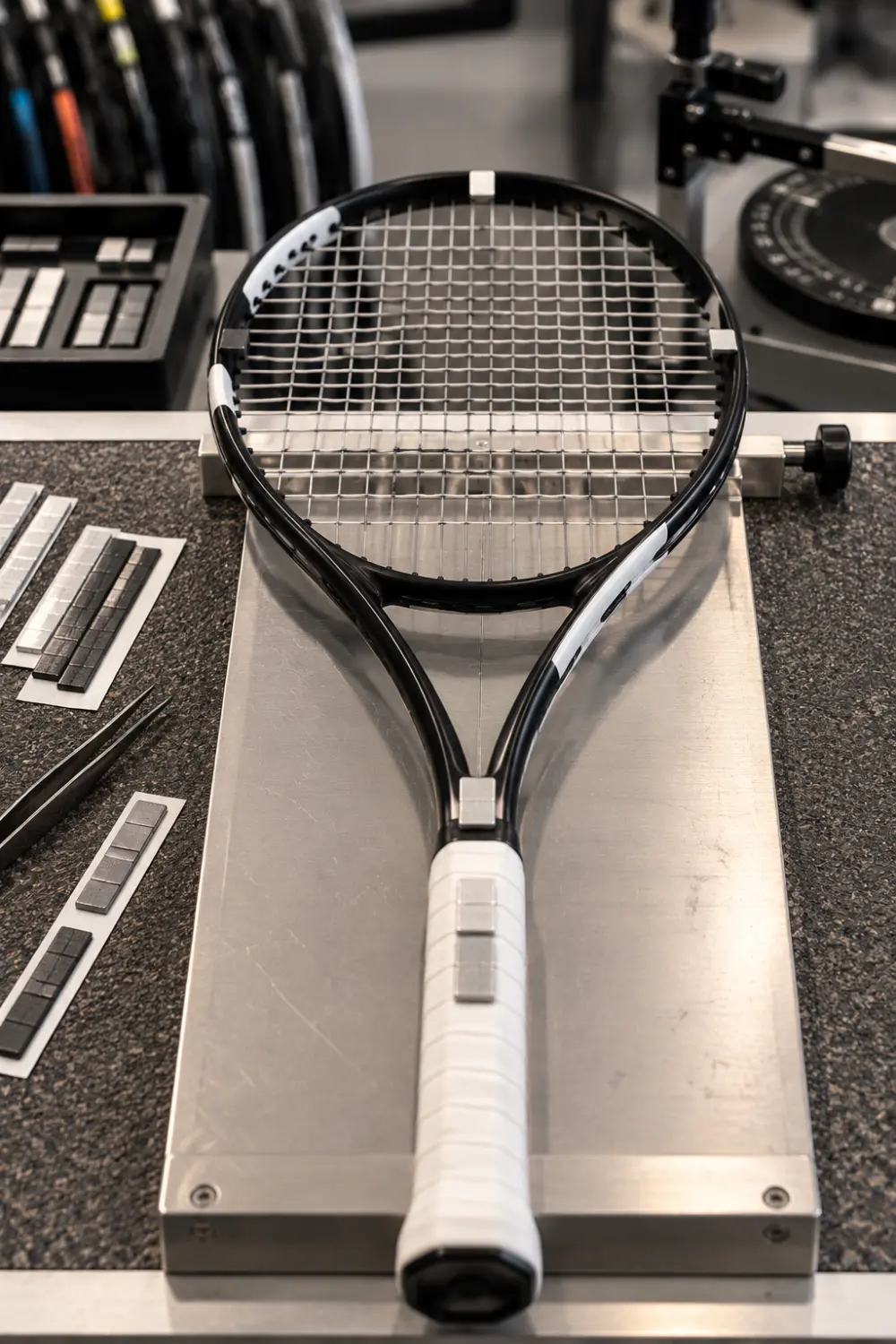
Professional racket customization is not based only on adding tape until the racket feels right. Racket technicians, experienced stringers and dedicated customization specialists can measure the starting specifications and work toward defined target values.
A precision scale measures static weight, while a balance board or dedicated machine can identify the racket's balance point. A swingweight machine measures its rotational inertia around a defined axis, allowing technicians to quantify a property that cannot be determined accurately from static weight alone. More specialized equipment and calculation methods can also be used to assess other parameters and match multiple rackets as closely as possible.
Professional players provide useful examples of why this matters, but copying a professional's number of grams or exact placement is rarely meaningful on its own. Their racket, starting specifications, strings, physical characteristics and intended setup may all be different.
For recreational and competitive players, the same principle can be applied on a smaller scale: measure where possible, understand which parameter you are changing, make controlled adjustments and test the result on court.
And when the modification involves Torsion Balancer, part of this process can happen before installation. The Torsion Balancer Simulator allows you to start from a specific racket model, compare available configurations and see how changing the number and position of the devices affects the simulated setup.
7. Torsion Balancer: Weight Distribution and Torsional Vibration Control
Traditional racket customization usually focuses on where additional mass is placed and how it changes weight, balance, swingweight and twistweight. AMbelievable™ Torsion Balancer adds another element to this equation: each device adds 1 gram to the frame, while its 3D-printed metamaterial geometry is designed to manage torsional vibrations.
These are two different effects and should not be confused.
First, there is the effect of mass placement. Torsion Balancers are installed symmetrically on the racket frame, with two units adding 2 grams in total. As with any additional mass, their position influences the racket's rotational properties.
Moving the same pair between 3 and 9 o'clock and 10 and 2 o'clock does not change their total weight, but it does change how that mass contributes to swingweight and twistweight.
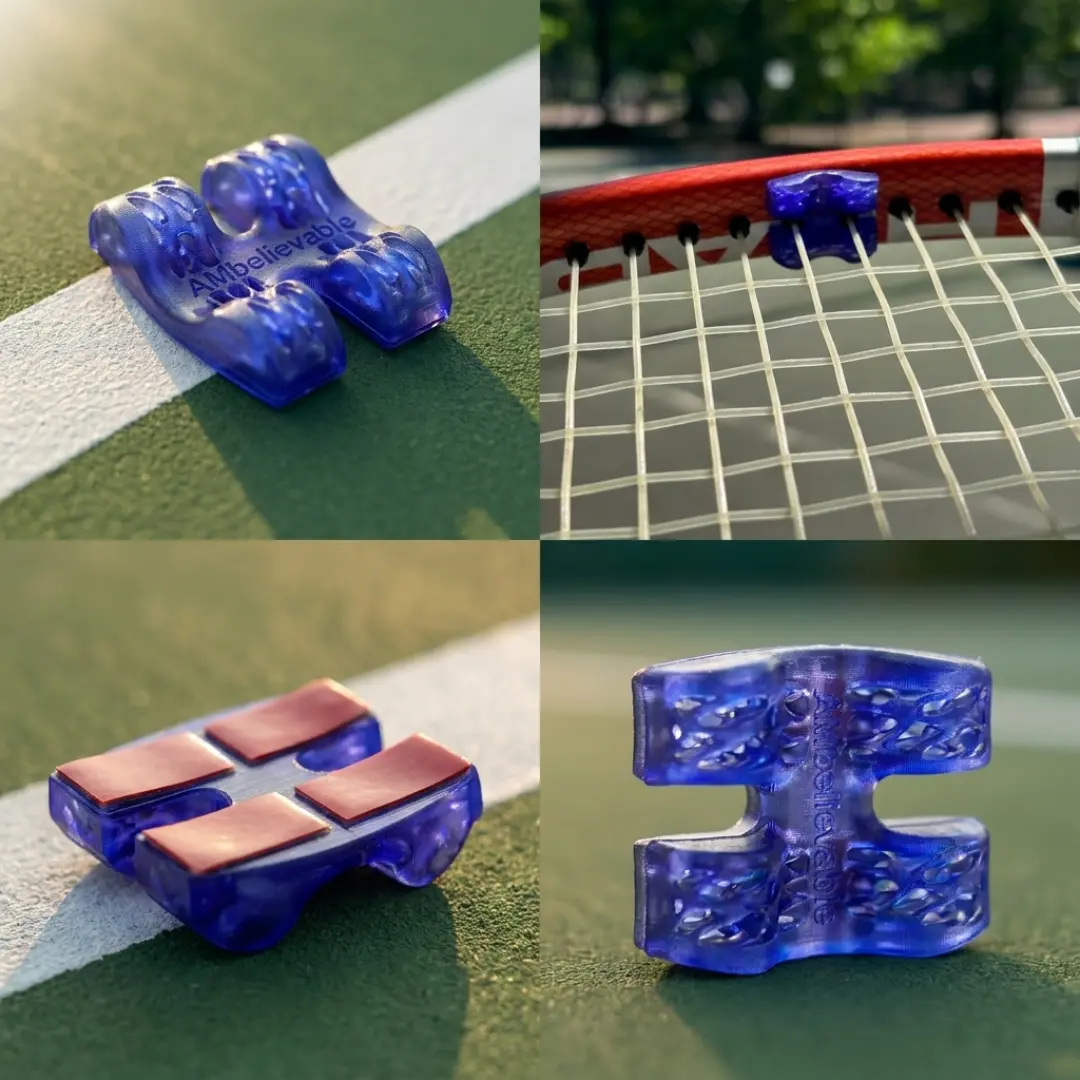
Second, Torsion Balancer is designed specifically to interact with torsional vibrations of the racket frame. During a mis-centered hit, the impact force acts away from the racket's central axis, generating torque and causing the frame to twist. The resulting response is not determined by weight alone: the frame also undergoes torsional oscillations following impact. Torsion Balancer uses its metamaterial geometry to contrast these vibrations, helping provide a more stable response when contact occurs away from the center of the string bed.
This is an important distinction from simply adding conventional weighting material. Adding mass at 3 and 9 o'clock, for example, can increase twistweight because the additional mass increases the racket's resistance to rotation. Torsion Balancer combines this effect of strategically positioned mass with a device specifically designed for torsional vibration management.
Its 4 mm thickness also allows it to act as a bumper, adding a protective layer between the racket frame and accidental contact with the court or surrounding surfaces.
Because placement affects the mechanical contribution of the added mass, there is no need to choose a configuration blindly. With the Torsion Balancer Simulator, you can select your tennis racket, compare different numbers and positions of Torsion Balancers, and see how each configuration changes parameters such as swingweight and twistweight before testing the setup on court.
8. Does Adding Weight Work the Same Way on a Padel Racket?
The same principles of mass and rotational inertia also apply to padel rackets, but their different geometry creates different possibilities for customization. In particular, the perforated hitting surface makes it possible to position small removable accessories directly inside the racket holes, while other devices can be placed around the outer frame.
AMbelievable™ Padel Buzz Stoppers are an example of the first approach. Each insert weighs only 0.4 grams, and the four-piece pack adds 1.6 grams when all four are installed. They fit directly into compatible racket holes and can be removed or repositioned in seconds, making it possible to experiment with different positions without permanently modifying the racket.
Their effect is not limited to the additional static mass. Because Buzz Stoppers occupy part of the open area of the racket holes, their presence also interacts with airflow through the racket during the swing. This aerodynamic effect is different from simply increasing racket weight or swingweight, but it can contribute to a change in how resistance during the swing is perceived. For this reason, mass and aerodynamic drag should be considered as separate phenomena rather than describing the racket as simply becoming "heavier."
Padel rackets can also be customized around the frame. Padel Torsion Balancers weigh 1 gram each and apply the same broader concept of combining strategically positioned mass with torsional vibration management.
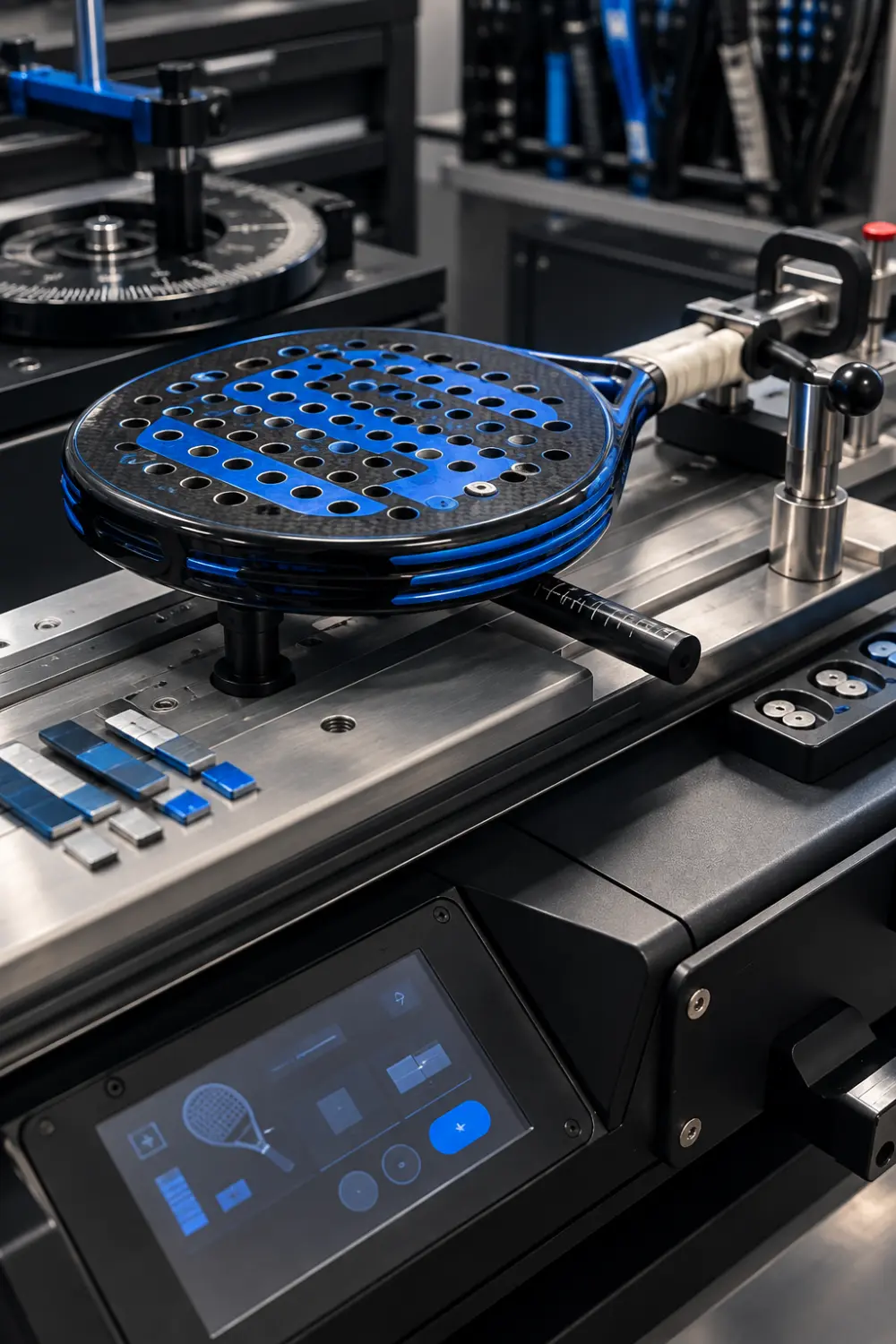
Their metamaterial geometry is designed to contrast torsional vibrations and help stabilize the racket response on mis-centered impacts, while their position on the edge of the racket also changes mass distribution. Their thickness additionally gives them a bumper function around the frame.
The result is a similar principle applied to a different piece of equipment: small changes in mass, position and vibration management can alter racket behaviour without requiring a permanent modification of the original setup.
Conclusion. Tennis Racket Weight Is About More Than Grams
Understanding tennis racket weight means looking beyond the number printed on the frame. Balance tells us where the mass is distributed, swingweight how that distribution affects rotation during the swing, and twistweight how strongly the racket resists twisting around its longitudinal axis.
That is why adding a few grams can produce very different results depending on where they are placed. Weight at 12 o'clock, 3 and 9, 10 and 2 or inside the handle does not simply make the racket heavier: each position changes the setup in a different way.
For the same reason, there is no universally correct amount of weight or ideal placement for every player. Racket customization is ultimately about understanding which characteristic you want to modify and making deliberate changes rather than adding mass for its own sake.
And this is also the principle behind solutions such as Torsion Balancer: using position and mass distribution while addressing another part of racket dynamics, torsional vibration, through its metamaterial geometry.