When the court gets hot, the whole game changes
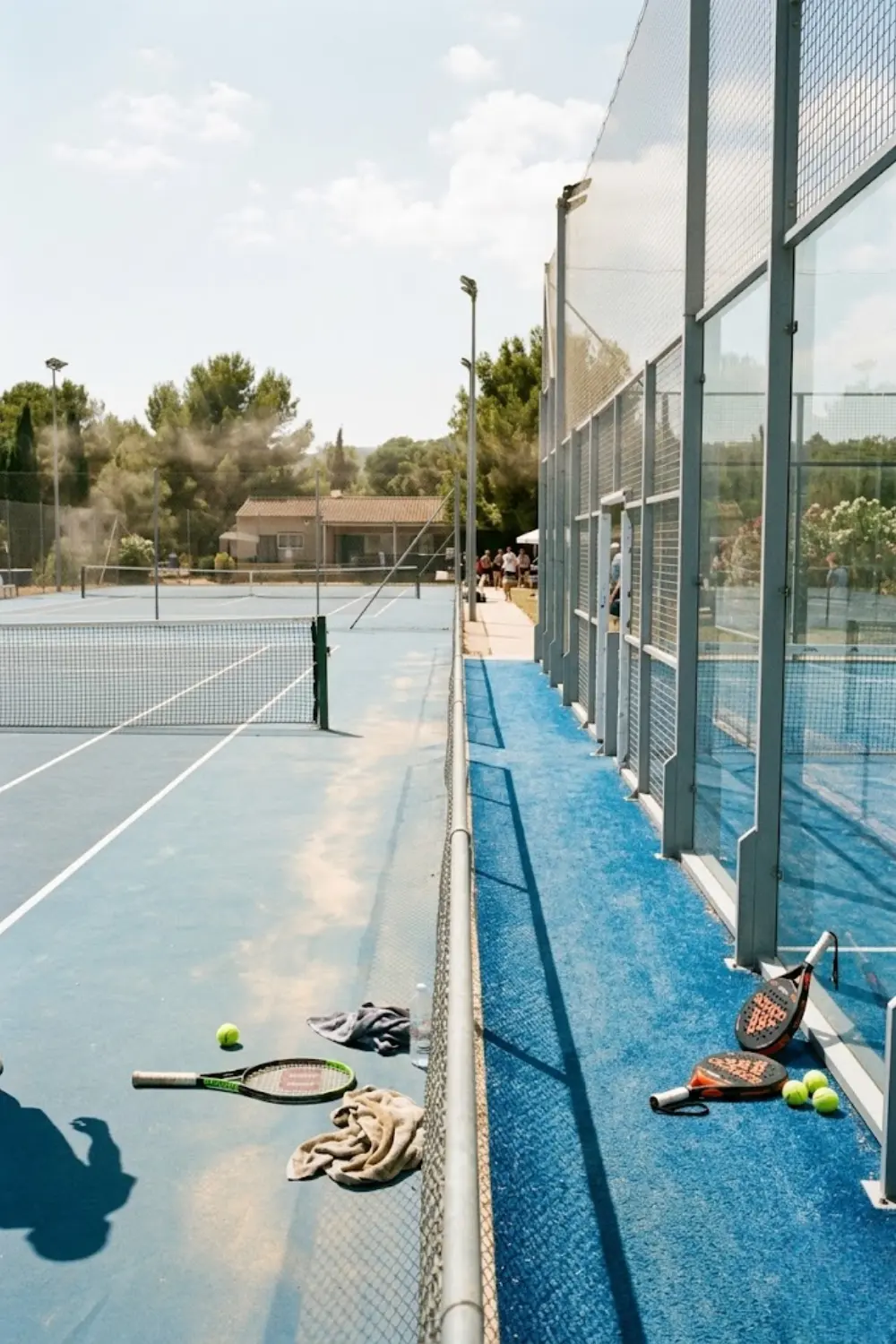
Playing tennis in hot weather is not just the same game with more sweat. The ball jumps differently, the strings react differently, the grip becomes harder to control, and the body has to fight not only the opponent, but also the conditions. Anyone who has played a summer match under a heavy sun knows the feeling: shots that normally land deep suddenly fly long, the racket seems less precise, the hand slips on the handle, and after a few intense rallies even simple decisions start to feel slower.
This is why heat is such an interesting topic for tennis and padel players. It is not only about endurance or hydration, even if those are essential. Heat changes the physics of the game.
It changes how the ball rebounds, how the strings behave, how the racket feels at impact and how the player perceives control.
In padel, where the ball, the glass, the racket holes and fast exchanges all interact, hot conditions can make the game feel even more reactive and harder to manage.
For professional players, extreme heat can become a real performance factor. For amateur and competitive players, it is often the hidden reason why the setup that felt perfect in spring suddenly feels too powerful, unstable or uncomfortable in summer.
The solution is not always to change racket or blame technique. Sometimes, it means understanding what heat is doing to your equipment, your body and your sensation of impact. So, how does heat affect tennis and padel? And what should you change in your strings, grip, dampener, accessories and match routine when the temperature rises?
If you already want to refresh your rackets...
Take a look here!
1. Heat changes the physics of tennis and padel
The first thing heat changes is the way the ball moves through the game. In warm conditions, tennis and padel balls often feel more lively: they bounce higher, come off the court faster and give the player less time to organize the next shot. This is one of the reasons why tennis in hot weather can feel more difficult to control, especially for players who already hit with a lot of power or use a very elastic string setup.
The effect is not only psychological. Temperature affects the pressure and elasticity of the ball, while the court surface can also become faster or more reactive under the sun.
A hard court in the middle of a summer afternoon does not feel like the same court in the morning. The same applies to padel, where the ball can come out of the glass more aggressively and where fast exchanges leave even less time to adjust.
That is why many players experience a strange sensation in the heat: they are not necessarily playing worse, but the environment is changing the response of the entire system. The ball, the court, the racket, the strings and the player’s body are all reacting to temperature.
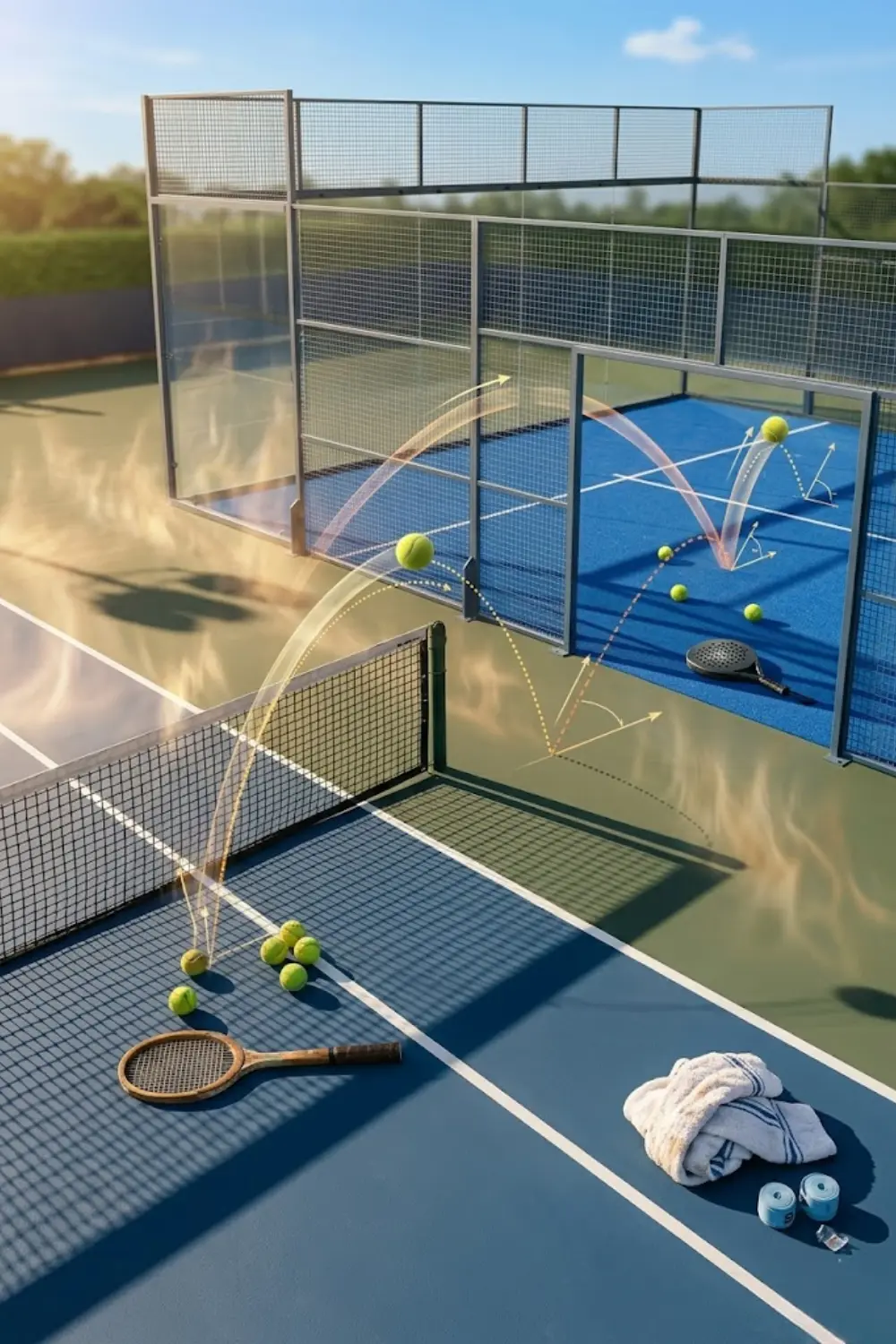
A forehand that usually lands safely inside the baseline may suddenly travel deeper. A defensive lob in padel may become harder to control. A return may feel cleaner one moment and too reactive the next.
Understanding this is important because it changes the way we think about summer performance. Heat is not just something to “resist”. It is something to read. When conditions become hotter, the smartest players adapt their timing, their shot selection and their equipment setup. They accept that the game has become faster and more elastic, then they look for ways to recover control.
2. Strings in summer: why your racket may feel softer, more powerful and less precise
If the ball feels faster in hot weather, the strings are often the second reason your game starts to feel different. Tennis string tension and temperature are closely connected, and many players notice it without knowing exactly why. The racket that felt controlled in spring can suddenly feel more powerful in summer. The ball leaves the stringbed with a higher launch, shots travel deeper, and the same swing may produce a less predictable result.
This happens because the stringbed is not a fixed surface. It is a dynamic system that stretches, snaps back, loses tension and changes its response depending on the conditions.
In hot weather, strings can feel softer and more elastic, especially after the racket has been left in a hot car, inside a closed bag or under direct sun for too long.
For the player, the result is simple: more power, but sometimes less control. This is especially important for players who use polyester strings.
Poly strings are popular because they offer control and spin, but they can lose tension and playing quality over time. Heat can make this sensation more noticeable.
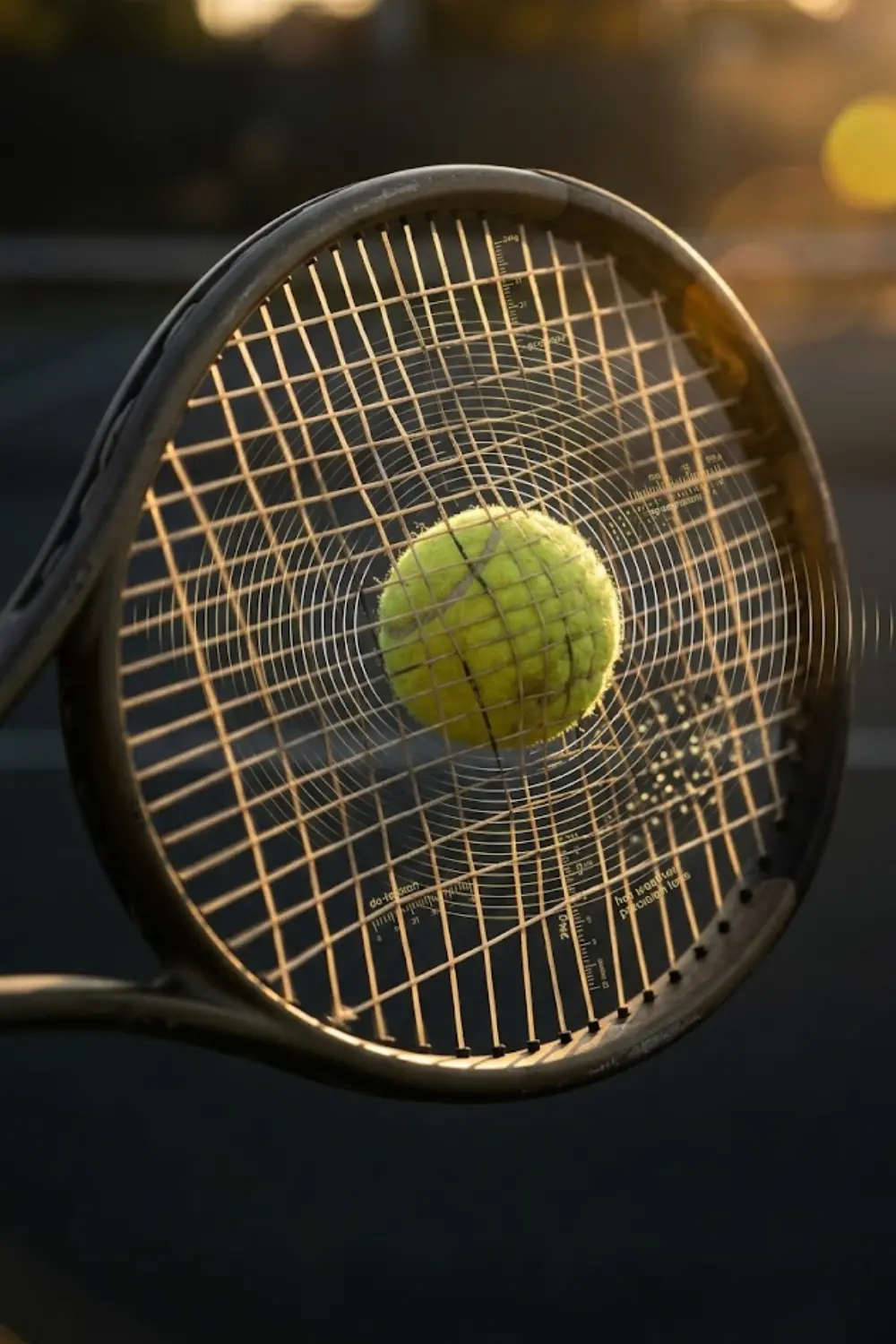
A stringbed that is already old may start to feel “dead” or unstable, while a very soft setup may become too lively when the temperature rises. Multifilament and nylon strings can also feel more powerful in summer, while natural gut is particularly sensitive to environmental conditions such as temperature and humidity.
The solution is not necessarily to increase string tension dramatically. A sudden change can create new problems, especially before a tournament or an important match. A better approach is to track your setup: string type, tension, hours of play, weather conditions and playing sensation. If your shots are consistently flying long in hot weather, a small tension adjustment can help. If your strings feel unpredictable, move too much or no longer give you feedback, it may simply be time to restring.
For tennis players who compete during summer, stringing becomes part of heat management. You are not only preparing your body for the match; you are preparing your equipment for the conditions. In hot weather, control starts inside the stringbed.
3. Grip, sweat and control: the first accessory that fails in the heat
Before the strings, before the dampener and even before the racket itself, there is one contact point that decides everything: your hand on the handle. In summer tennis and padel, the grip is often the first accessory that fails.
When sweat reduces friction, the racket starts to move slightly in the hand. The player may not lose the racket completely, but even a small slip is enough to change the racket face, disturb timing and make the impact feel less secure.
This is why choosing the right tennis grip for sweaty hands is not just a matter of comfort. It is a matter of control. A grip that works perfectly in indoor conditions may become too slippery after twenty minutes under the sun.
A tacky overgrip can feel great at the beginning, but lose performance when it becomes wet. A dry or absorbent overgrip may be better for heavy sweaters, but it must be replaced before it becomes compressed, shiny or saturated.
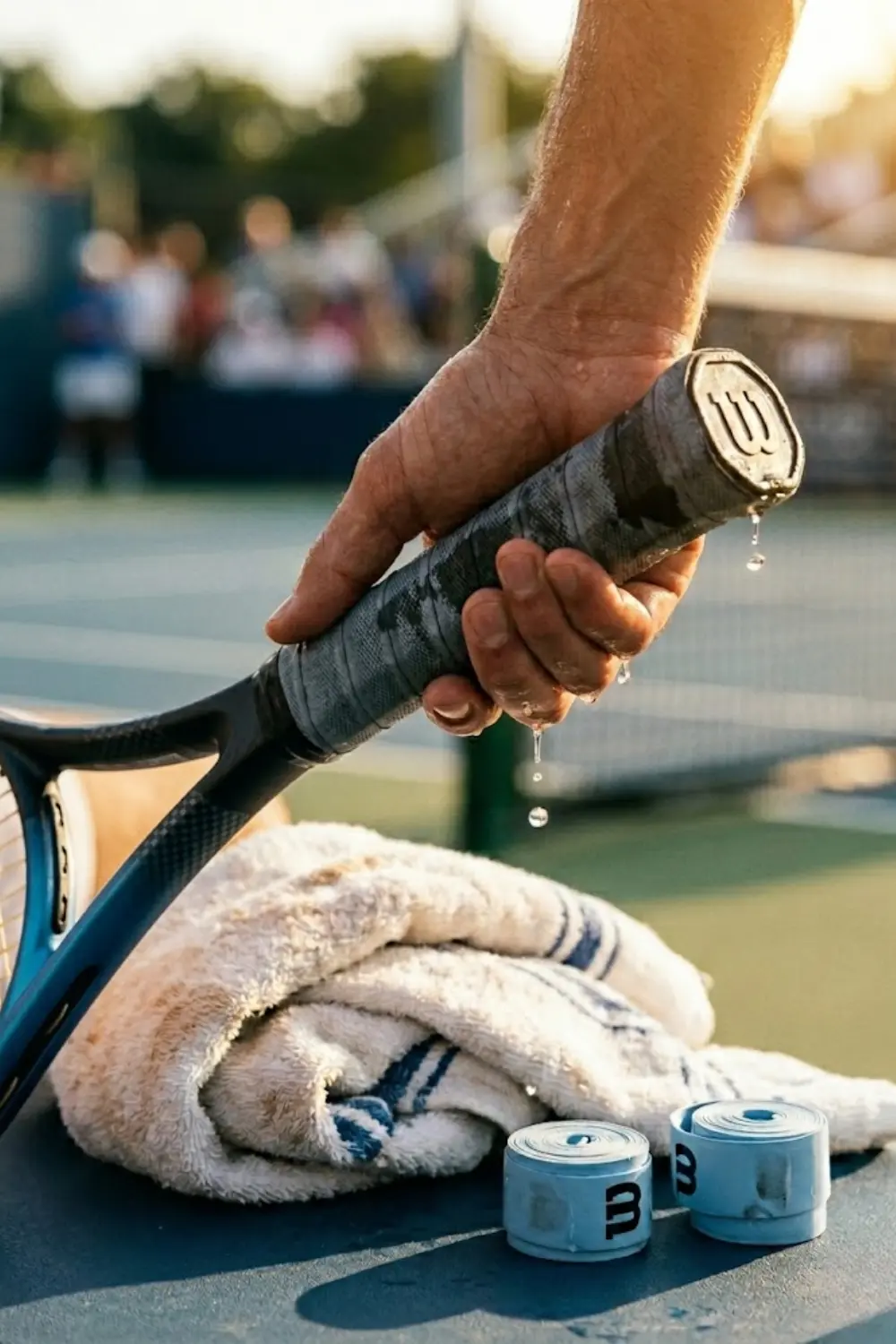
In padel, this becomes even more important. The exchanges are fast, the reaction time is short, and the player often has to adjust the racket face quickly on volleys, bandejas, defensive blocks and shots close to the glass. If the hand does not feel stable, the whole racket feels unstable. The problem is not only that the grip slips; it is that the player loses confidence in the connection with the racket.
A good summer routine should include more than one spare overgrip in the bag, a towel, wristbands and, when needed, a change of grip before the match is over. Many players wait too long. They replace the overgrip only when it is completely destroyed, but in hot weather the performance drop starts earlier. If the surface feels glossy, if the handle rotates slightly during serve, or if you squeeze harder just to keep control, the grip is already affecting your game.
Heat makes every small weakness in the setup more visible. And the grip is the most direct weakness of all, because it is where the player meets the racket. When that connection is clean, the racket feels like an extension of the hand. When it is compromised by sweat, even the best technique becomes harder to trust.
4. Accessories and equipment: why heat is the right moment to check your setup
When temperature rises, your equipment becomes more exposed. Strings feel more reactive, grips lose friction, the hand becomes less stable on the handle, and the sensation at impact can become less clean. This is why summer is one of the best moments to check not only your racket and strings, but also the smaller accessories that shape the way you feel the ball: overgrips, dampeners, frame add-ons, power pads and padel inserts.
This is where AMbelievable naturally enters the conversation. AMbelievable is an Italian brand specialized in 3D-printed tennis and padel accessories designed to manage vibration, refine impact sensation and help players personalize the way their racket feels. Instead of treating accessories as simple decorative add-ons, AMbelievable works on the physical response of the racket, using metamaterial geometries and additive manufacturing to create products that interact mechanically with vibrations.
For tennis players, the AMbelievable range includes vibration control systems such as Universal, Torsion Balancer and Frame Stabilizer, power enhancers like Auxetic Power Pads, and string dampeners as well as VibraLive and Custom Logo dampeners.
Each product works on a different part of the racket experience: stringbed feel, impact response, off-centre stability, frame vibration and personal setup.
For padel players, the Padel Buzz Stopper is designed to fit inside the holes of the racket, helping to reduce unwanted vibrations, add strategic weight and create a steadier sensation on harsh hits and fast exchanges.
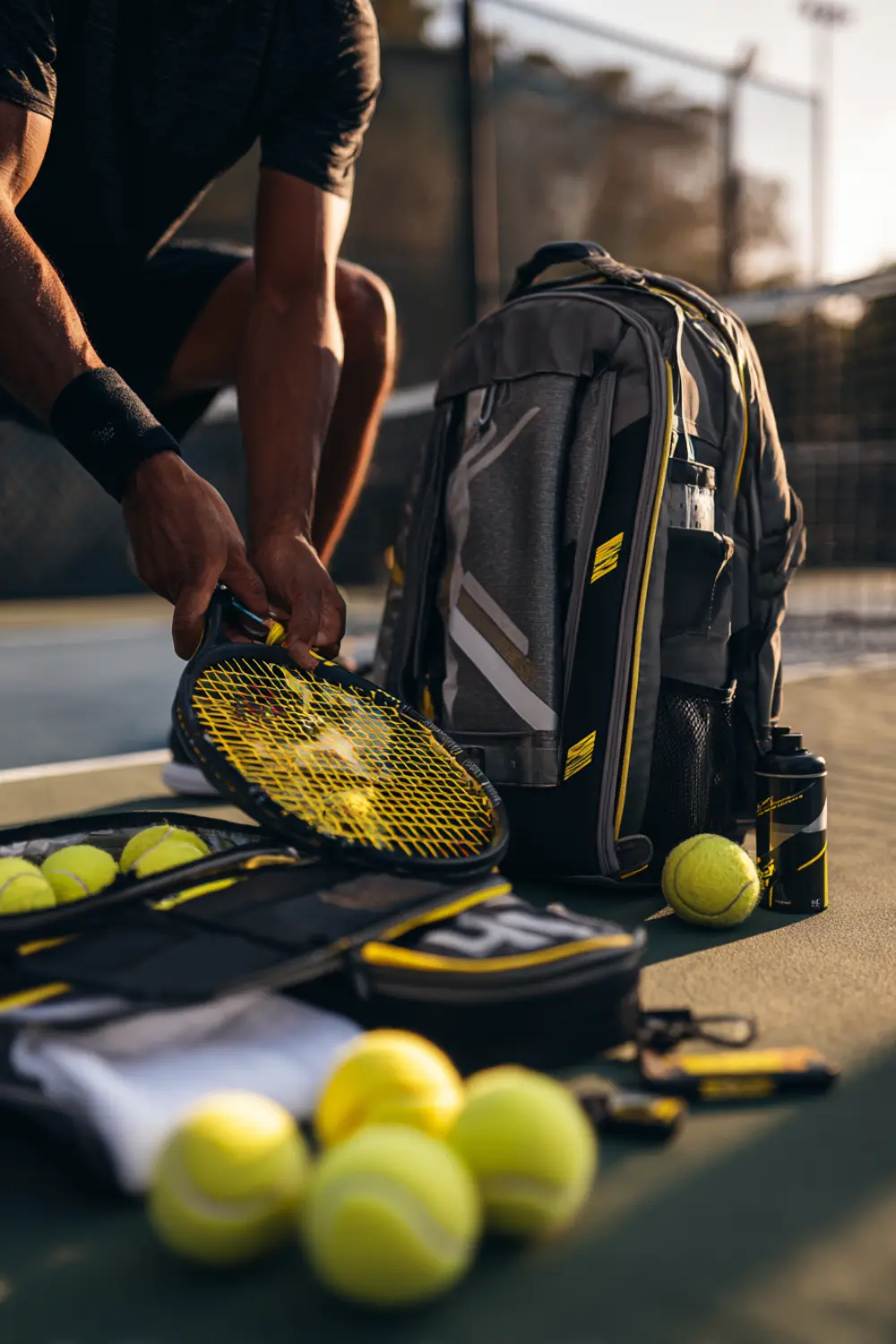
In hot weather, this kind of equipment check becomes even more important. If your strings feel too lively, your grip starts slipping, your dampener moves, or your racket feels unstable on off-centre contact, the problem may not be only your technique. It may be your setup reacting to the conditions. Heat makes small weaknesses more visible. A grip that was already worn becomes slippery. A stringbed that was already old becomes unpredictable. A vibration accessory that no longer fits properly starts to lose its role.
The best approach is simple: before your next summer match, inspect the whole system. Check the strings, replace the overgrip, make sure your dampener or padel inserts are stable, and pay attention to how the racket feels on impact. Control does not start only with the swing. It starts with the equipment you bring onto the court.
5. The player’s body in the heat: hydration, cramps and decision-making
Of course, heat does not only affect the ball, the strings and the racket. It affects the player first. Tennis and padel are stop-and-go sports, but that does not make them easy in hot weather. A player may rest for a few seconds between points, then immediately explode into a sprint, a recovery step, a jump, a serve or a long defensive exchange. Over time, heat accumulates. The body loses fluids, the heart works harder, the legs become heavier and the mind becomes less clear.
This is why professional tennis often gives us extreme examples of something every amateur player can recognize. In very hot conditions, even elite athletes can struggle with cramps, dizziness, nausea, fatigue or sudden drops in performance. When a player collapses after a long match, needs medical treatment or visibly loses physical control, it is a reminder that heat is not just uncomfortable. It can become a real performance factor.
For club players, the signs are usually less dramatic but still important. You may start mistiming the ball. You may choose the wrong shot because your decision-making slows down. You may stop moving your feet before contact. You may feel that your racket is too heavy, your legs are empty or your concentration is suddenly gone. Sometimes the problem is tactical. Sometimes it is technical. But in summer, it may simply be heat stress.
Hydration is the first layer of protection, but it should start before the match, not only when you feel thirsty. Water is essential, but during long sessions or heavy sweating, electrolytes can also help replace what the body is losing. Players should bring enough fluids for the entire session, use breaks to cool down, and avoid treating a summer match like a normal spring practice.
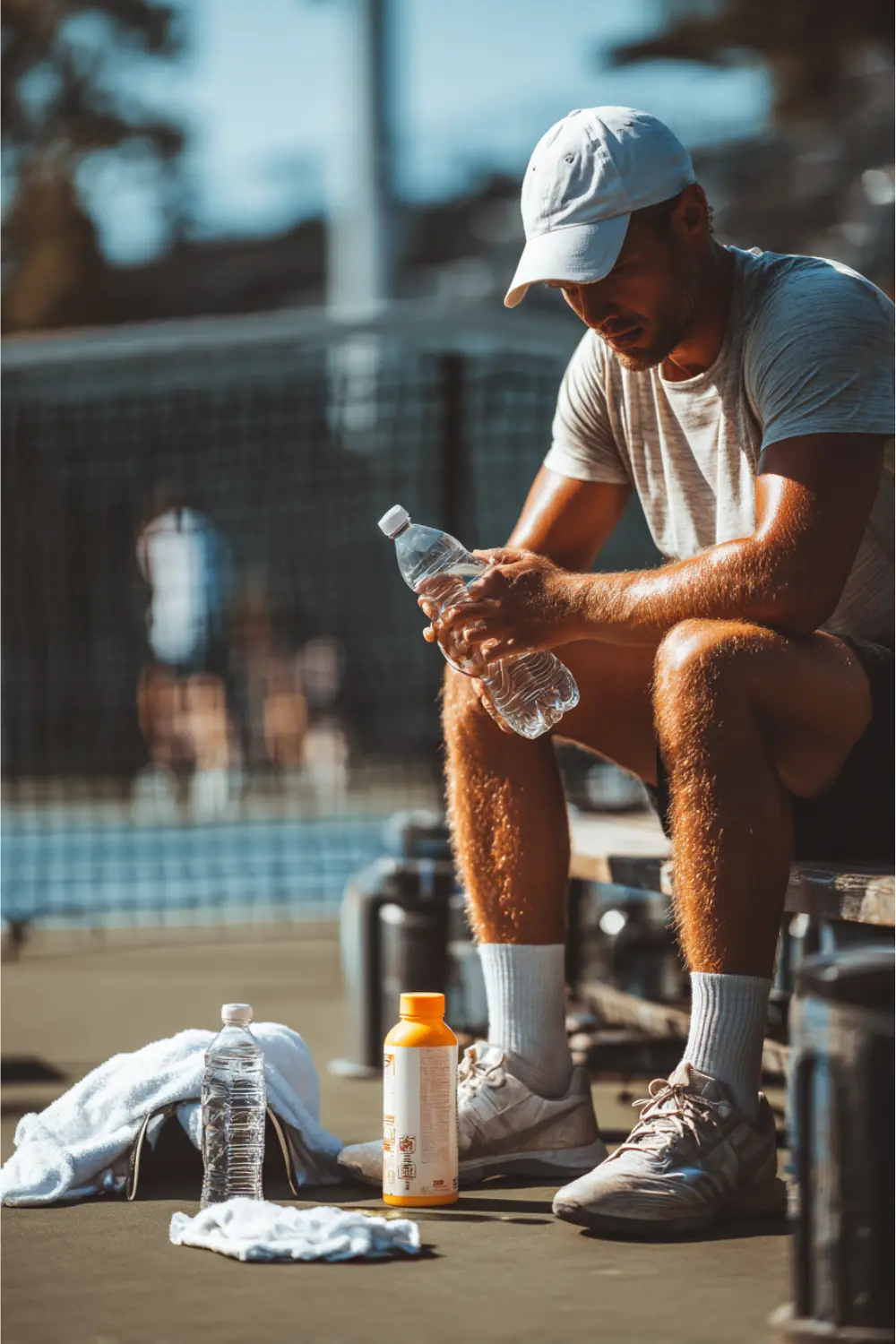
Nutrition also matters. Playing in the heat with low energy levels can make fatigue arrive faster. A light, digestible pre-match meal, enough carbohydrates, and small recovery habits between matches can make a real difference during tournaments or long padel sessions. Sun protection is part of the same routine: sunscreen, a cap, breathable clothing, a towel and a spare shirt are not details. They are performance tools.
The most important rule is to listen to warning signs. Dizziness, chills, confusion, nausea, strong cramps or sudden weakness should never be ignored. In those moments, pushing through is not toughness. It is bad decision-making. The smarter player understands that adapting to heat means protecting both the body and the quality of the game.
6. Smart summer scheduling: when and how to play
One of the easiest ways to play better tennis in hot weather is also the most obvious: choose the right moment of the day. Heat does not affect only your body after one hour of play. It starts influencing the match before the first point, through court temperature, sun exposure, ball response and the amount of energy your body needs just to stay cool.
For this reason, early morning and evening sessions are usually the smartest options during summer. The court is cooler, the sun is less aggressive, the grip stays dry for longer and the body can manage intensity more efficiently. Playing at midday, especially on hard courts or exposed padel courts, creates a completely different challenge. The surface can radiate heat, the ball can feel more reactive and recovery between points becomes harder.
This does not mean that summer tennis or padel should be avoided. It means that the session should be planned differently. A match at 8:00 in the morning and a match at 14:00 under direct sun are not the same sport. The rules are the same, but the physical and mechanical conditions are different. The smarter player respects that difference.
If you cannot avoid playing during the hottest hours, reduce the risk with practical habits. Use high-protection sunscreen, wear breathable clothing, bring a cap or visor, and keep a towel and spare shirt in your bag. Start the warm-up gradually instead of immediately increasing intensity. Take breaks seriously. Use every pause to drink, breathe, cool down and reset your focus.
Padel players should be especially careful because many matches are played in enclosed or semi-enclosed facilities, where heat and humidity can build up even when the court is not fully exposed to the sun. The game may feel less physically demanding than singles tennis at first, but repeated explosive movements, long exchanges and limited airflow can make fatigue arrive suddenly.
The best time to play tennis in summer is not only the time when the sun is lower. It is the time when your body, your equipment and your concentration can work together instead of fighting the conditions.
7. Summer equipment checklist: what to inspect before your next match
Heat makes every weak point in your setup more visible. A stringbed that was already losing tension becomes harder to control. A grip that was already worn becomes slippery. A dampener that was already loose starts moving more. A padel insert that does not fit properly becomes distracting during fast exchanges. In summer, small details become performance details.
Before your next match in hot weather, start with the strings. Ask yourself if the ball is flying longer than usual, if the stringbed feels too soft, if the strings move excessively or if the response has become unpredictable.
If the answer is yes, the problem may not be your swing. Your strings may be old, too lively for the temperature or no longer suited to the conditions.
Then check the grip. This is the simplest and most underestimated summer upgrade. If the overgrip is shiny, compressed, slippery or saturated with sweat, replace it before the match. Do not wait until the racket starts rotating in your hand. A fresh grip gives you a cleaner connection with the handle, especially on serve, volleys, returns and padel shots played under pressure.
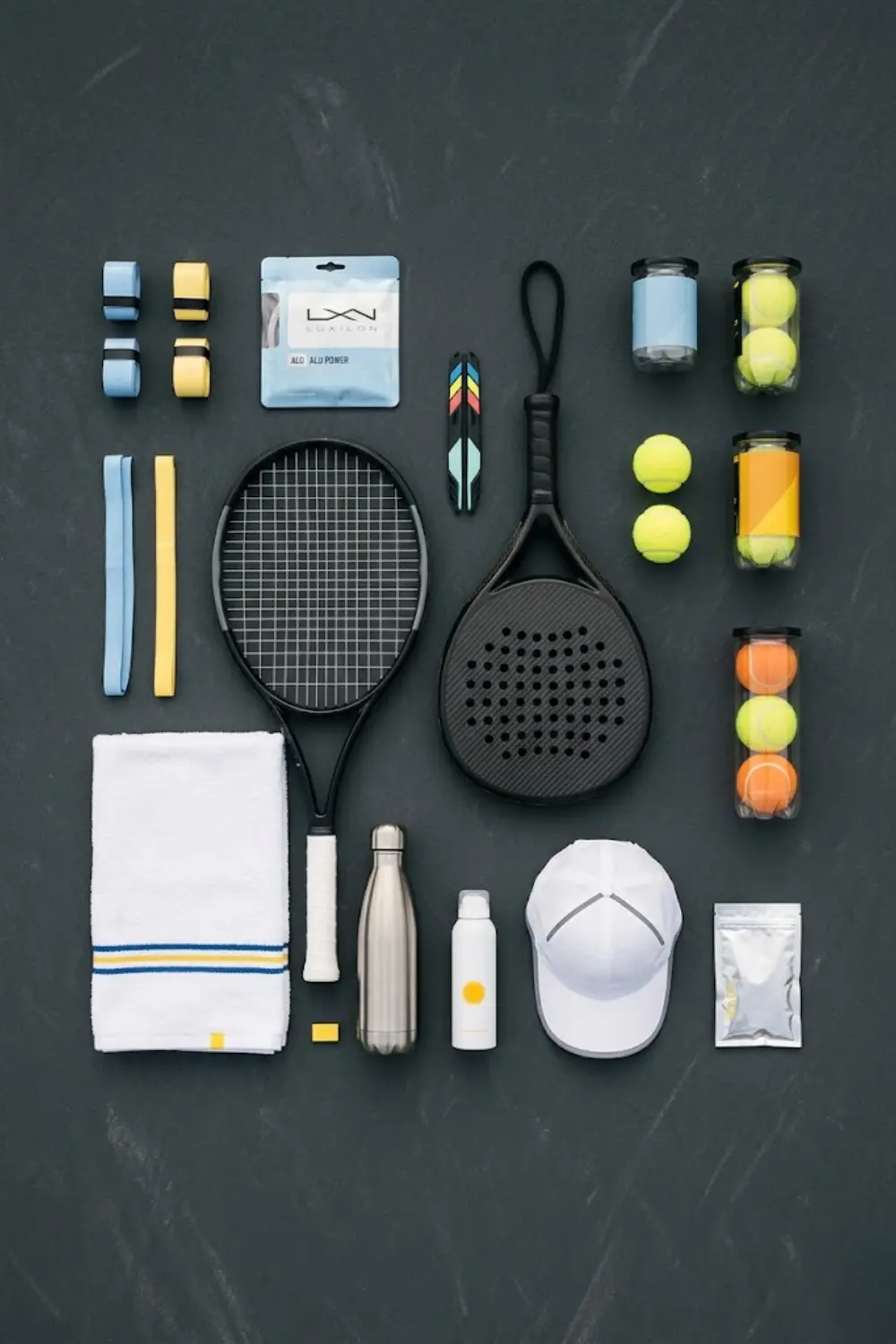
After that, inspect your vibration-control accessories. In tennis, make sure your dampener is stable, correctly positioned and still giving you the sensation you want at impact. If you use technical accessories such as power pads, frame stabilizers or torsion-control add-ons, check that they are properly fitted and not damaged. In padel, make sure the inserts inside the racket holes are secure and do not move during play.
Storage also matters. Leaving your racket in a hot car, in direct sun or inside a closed bag for hours can make your setup feel worse before you even start playing. Strings, grips, balls and accessories all perform better when they are treated as part of a system, not as random objects in the bag.
A simple summer checklist should include strings, grip, dampener or vibration accessory, padel inserts, balls, towel, sunscreen, cap, water and electrolytes. It may sound basic, but this is exactly the point. In hot weather, control is rarely the result of one big solution. It comes from a series of small adjustments that help the player recover a stable, confident and predictable feel.
Conclusion: In the heat, control starts before the first point
Playing tennis or padel in hot weather is not only a question of resisting the temperature. It is a question of understanding how the entire game changes. The ball becomes more reactive, the court feels faster, the strings can lose precision, the grip becomes harder to trust, and the body has to work harder to stay clear, coordinated and focused.
That is why summer performance should never be reduced to one single factor. If your shots fly long, it may be the strings. If the racket feels unstable, it may be the grip, the dampener or the way your accessories are fitted. If your decisions become slower, it may be fatigue, dehydration or heat stress. And if the whole setup feels different, it probably is different, because heat changes the way equipment and body interact.
The smartest players do not simply accept this loss of control. They adapt. They choose better playing times, hydrate before the match, protect themselves from the sun, check their strings, replace worn grips and pay attention to the vibration-control accessories that shape the feel of impact.
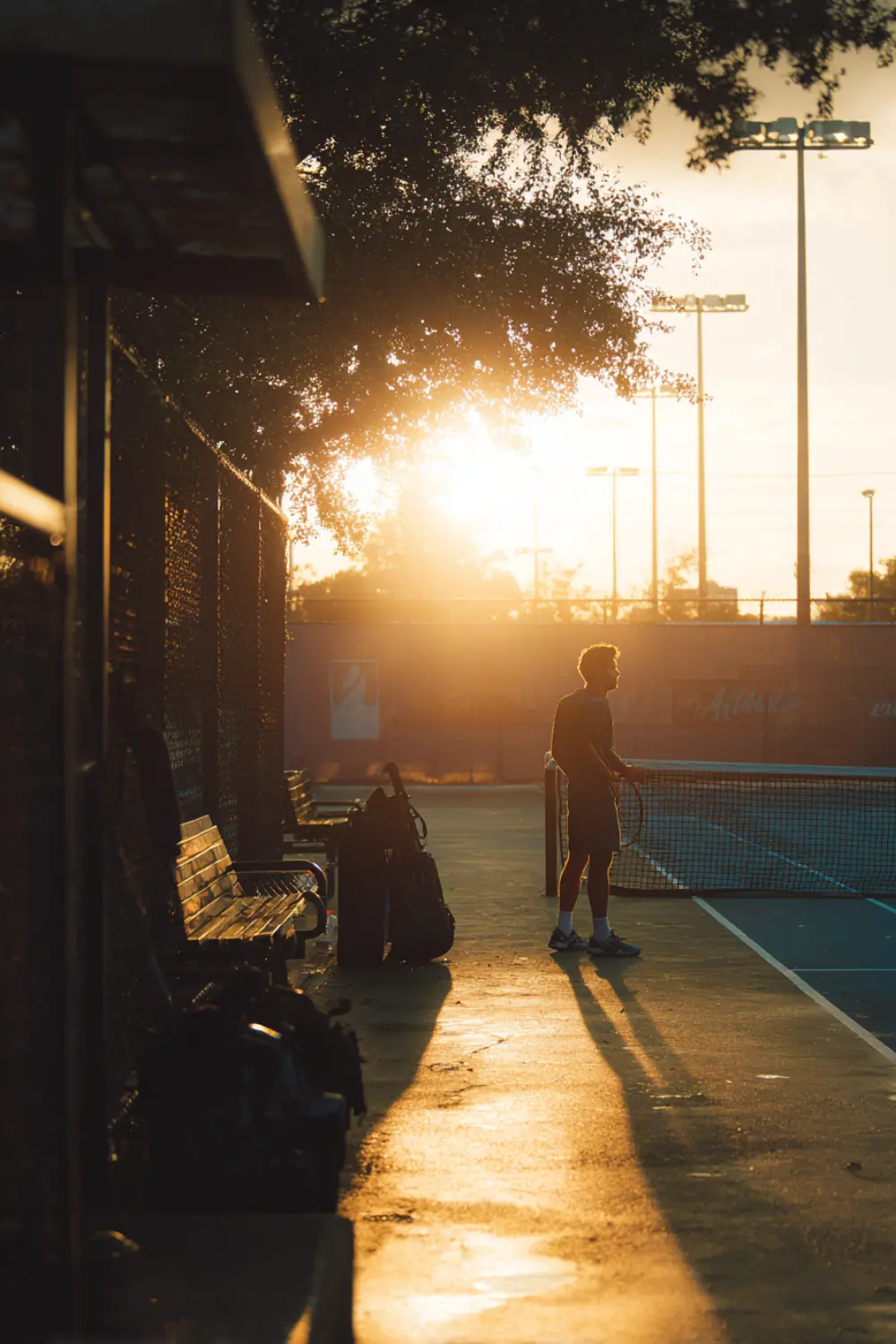
In summer, the details matter more. A fresh overgrip, a stable dampener, a well-maintained stringbed or a properly fitted padel insert can help recover a cleaner and more predictable sensation when conditions become harder. Heat does not only test your endurance. It tests your setup.
So, before your next match in hot weather, do not only ask yourself if you are ready to play. Ask if your racket is ready too. Because in tennis and padel, control starts before the first point.