Every new tennis season starts the same way: fresh motivation, clear intentions, and a long list of things we want to improve. Train more. Be more consistent. Win more matches. Feel better on court.
Yet by mid-season, many of those resolutions quietly disappear — not because they were unrealistic, but because they were never translated into actionable goals.
In tennis, improvement is rarely about making drastic changes. It’s about building systems that work over time. Systems that help you decide what to focus on, how to measure progress, and when to adjust instead of quitting. Without that structure, even the best intentions remain abstract.
This guide is designed to bridge that gap. Rather than prescribing what your tennis goals should be, it focuses on how to define them properly and how to turn them into habits you can actually sustain. From setting measurable objectives using proven frameworks, to managing training volume, refining consistency, protecting your arm, and building accountability through routines and shared goals.
Think of it as a practical roadmap for players who want to approach 2026 with clarity — not just motivation — and give their tennis a realistic chance to improve week after week.
1. Train More (But Increase Volume Gradually)
One of the most common tennis resolutions is also one of the most dangerous: “I’ll train more this year.”
Not because training more is wrong, but because how you increase volume matters more than the final number of sessions.
A sudden jump from two sessions per week to four or five almost always leads to fatigue, frustration, or minor injuries that break consistency. Tennis places repetitive stress on the same joints and muscle chains, and adaptation takes time.
A smarter approach is progressive overload applied to tennis-specific training. Instead of doubling your volume, add one extra session every three to four weeks. That session doesn’t even need to be a full match — it can be technical drilling, light hitting, or tactical patterns. What matters is continuity.
Equally important is planning recovery into the goal itself. Rest days aren’t a failure to train; they’re what allow training to compound.
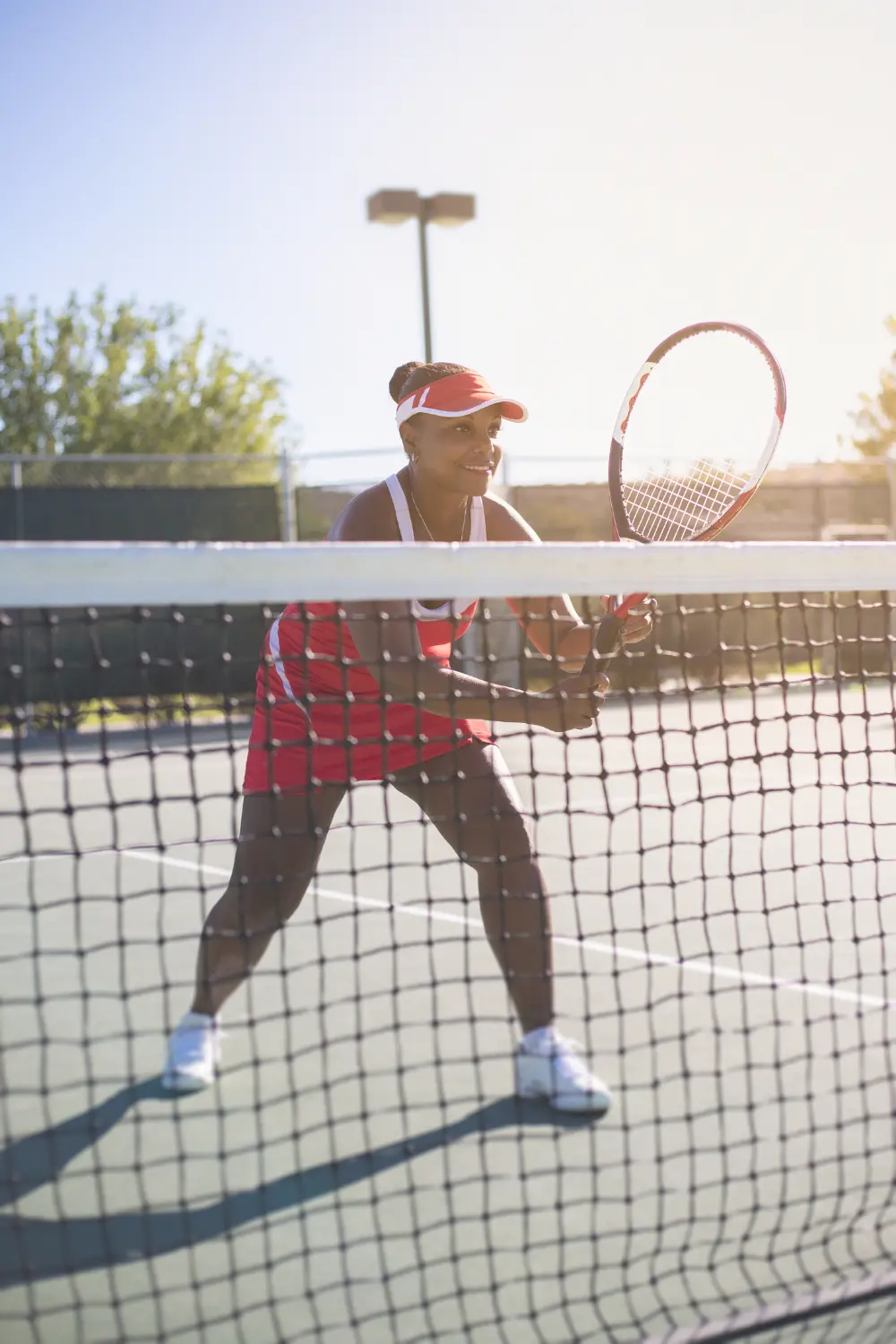
Players who improve sustainably treat tennis like a long-term project, not a January sprint.
A simple way to track this goal is to define it numerically: number of sessions per week, average duration, and type of workload. When volume is visible and planned, consistency becomes easier — and motivation lasts longer than the first few weeks of the season.
2. Quantify the Goal: Turn Tennis Resolutions into SMART Objectives
One of the main reasons tennis resolutions fail is that they remain too abstract. “I want to improve” or “I want to win more” sound motivating, but they don’t give you anything concrete to work with. That’s where goal quantification becomes essential.
A proven framework for setting effective goals is the SMART method: Specific, Measurable, Achievable, Relevant, and Time-bound. Applied to tennis, this means replacing generic intentions with objectives you can actually track.
For example, instead of saying “I want a better ranking”, a competitive player might set a goal like “Reach one category higher by the end of the season”, deliberately choosing a target that feels challenging but realistic.
For non-competitive players, the same logic applies. A SMART tennis goal could be “Play at least three times per week for the next two months” or “Reduce unforced errors on my backhand by tracking consistency during practice sets.”
What matters is that the goal is observable and reviewable, not just aspirational
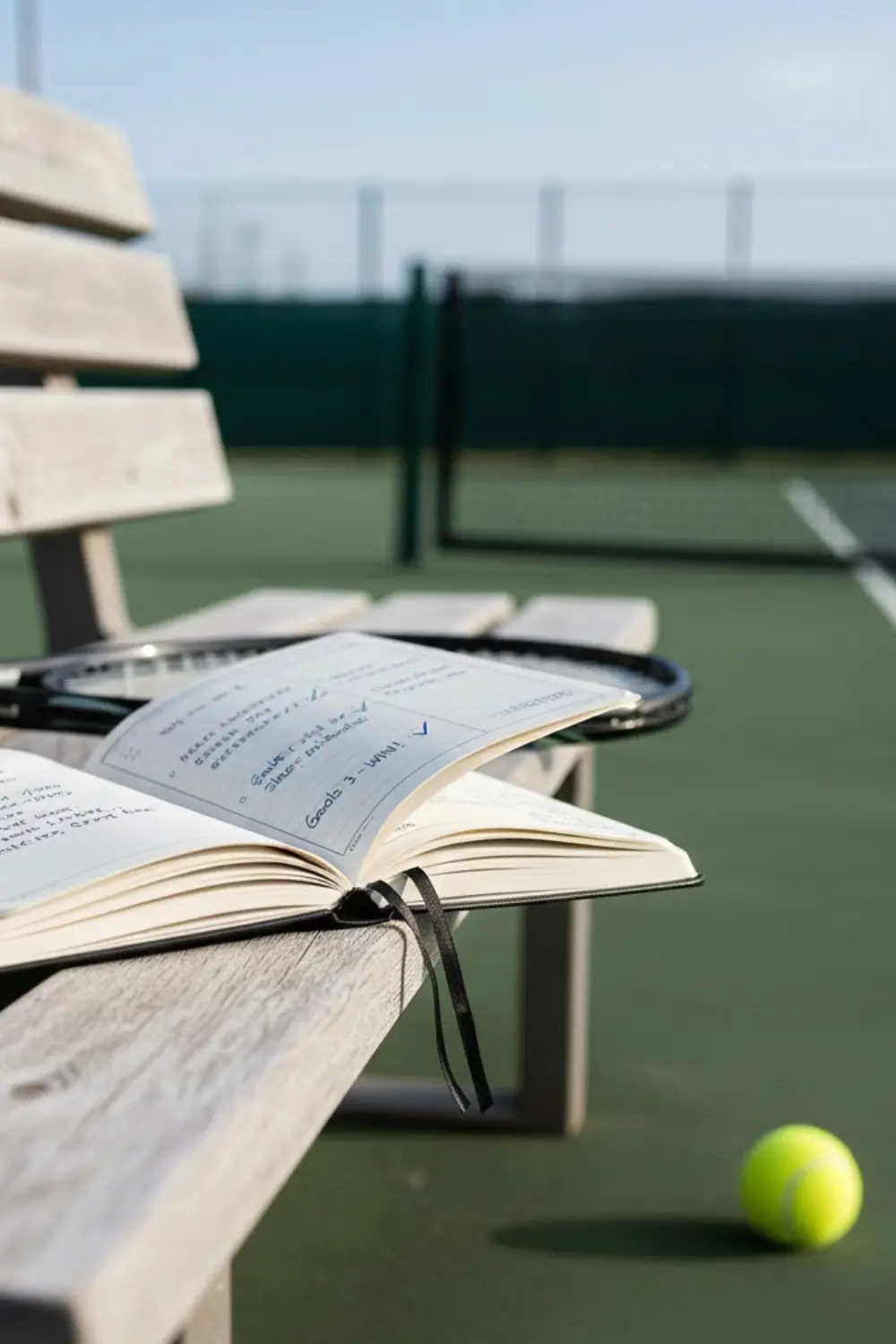
Quantifying your objectives also makes adjustments easier. If progress stalls, you don’t abandon the goal — you refine it. You change the timeline, the workload, or the metric. This turns goal-setting into a feedback loop rather than a pass-or-fail test.
In tennis, clarity creates commitment. When goals are clearly defined, motivation stops being emotional and starts becoming structural — something you can rely on even when enthusiasm dips mid-season.
3. Eat Better for Tennis: Fuel Consistency, Not Just Training
Improving your tennis doesn’t start only on court. One of the most underestimated — and most effective — resolutions is simply eating better with tennis in mind. Not following a strict diet, but understanding how nutrition affects energy levels, focus, and recovery during repeated sessions.
Tennis is a stop-and-go sport that combines endurance, explosiveness, and decision-making under fatigue. Poor fueling often shows up not as lack of strength, but as late footwork, rushed shots, and declining consistency late in matches.
That’s why tennis nutrition should prioritize stable energy availability, hydration, and recovery rather than extreme calorie control.
A practical approach is to link nutrition goals directly to training habits. For example:
- eating a balanced meal 2–3 hours before practice
- bringing a simple carbohydrate source to longer sessions
- focusing on post-training recovery instead of skipping meals
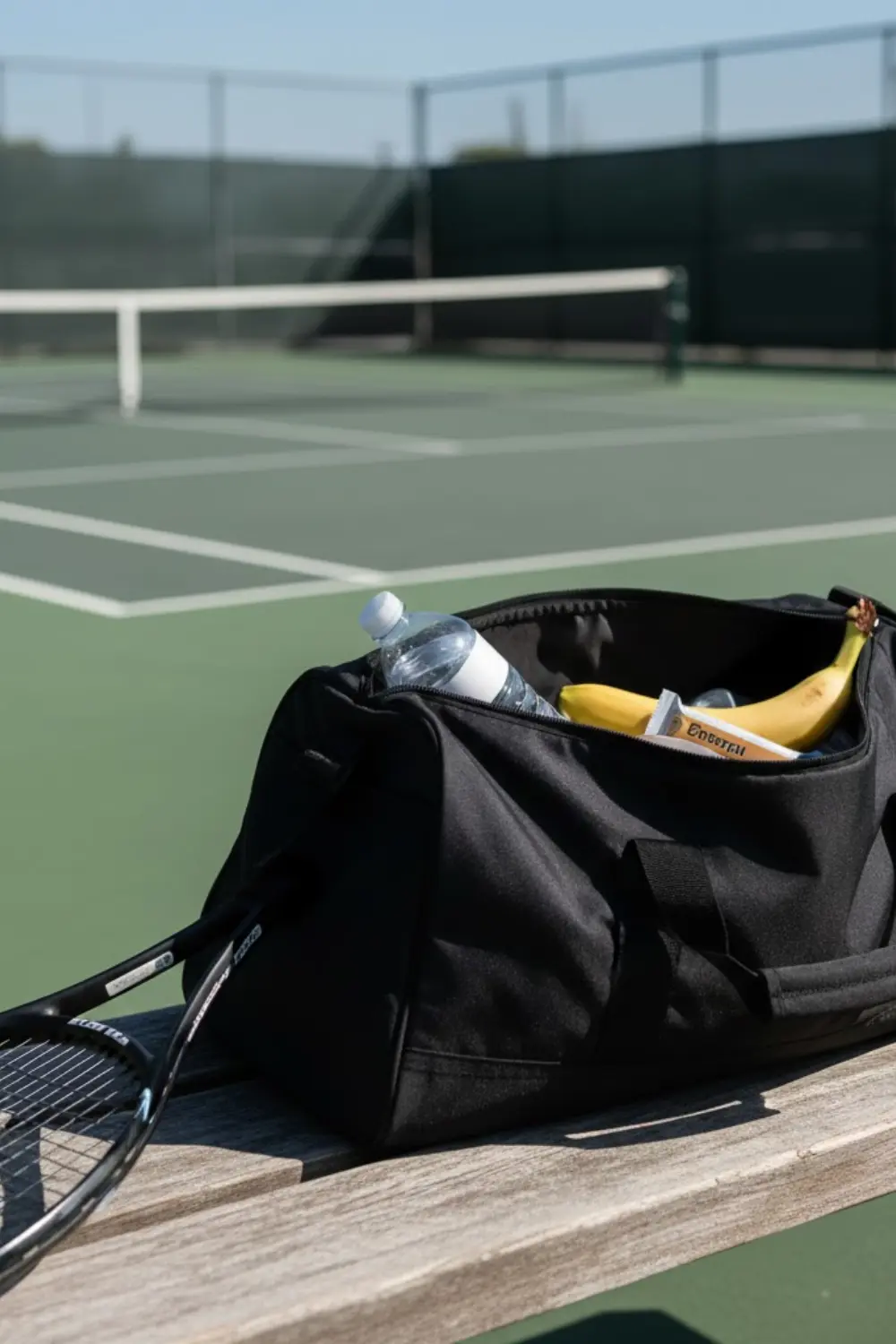
These are small actions, but they compound quickly when training frequency increases. Importantly, nutrition goals should be as trackable as training goals. Even something as simple as noting how you feel during the last 30 minutes of a session can reveal whether fueling is supporting your tennis or holding it back.
When nutrition is aligned with your goals, consistency improves naturally. You don’t just train more — you train better, recover faster, and arrive on court with the mental clarity needed to make good decisions under pressure.
From a long-term perspective, eating better isn’t about restriction. It’s about giving your body the resources it needs to support the volume and quality of tennis you’re aiming for throughout the season.
4. Find Your Setup: Stop Guessing, Start Testing Methodically
Many tennis players set a resolution they rarely articulate clearly: “I want my racquet to feel right". The problem is that this goal often turns into constant experimentation without structure — new strings every week, weight changes after one bad session, or copying setups from players with completely different games.
A more effective approach is to treat your setup as a controlled experiment, not a quick fix. Whether you’re adjusting strings, tension, balance, or vibration-related accessories, the key is consistency over time.
Each configuration needs enough sessions to reveal its real behavior, not just first impressions.
A practical rule is to commit to a setup for six to seven sessions, ideally under slightly different conditions: relaxed practice, higher-intensity drills, and at least one match.
During this period, track a few simple indicators: perceived stability on off-center hits, fatigue in the arm after training, confidence under pressure, and overall comfort. These signals matter more than isolated “good” or “bad” shots.
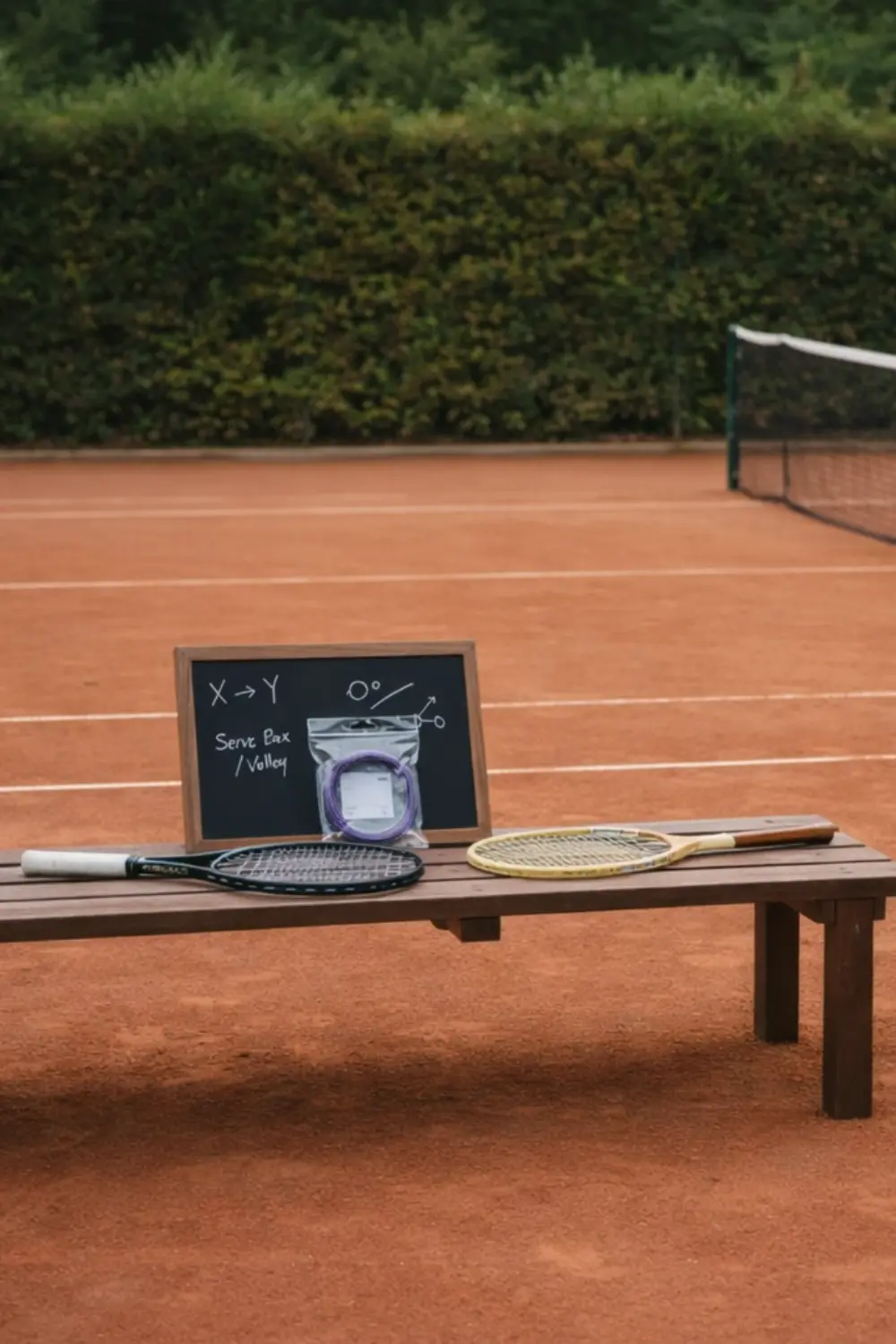
This method turns equipment tuning into a measurable process instead of a source of confusion. It also helps separate real improvements from placebo effects, which are surprisingly common when changes are made too frequently.
In this context, structured solutions can help reduce trial and error. With AMbelievable bundles, players can choose between two accessory setups offered at preferred bundle pricing: one designed to enhance controlled power by improving stability and response under acceleration, and another aimed at maximizing vibration control across the entire racquet — from stringbed vibrations to frame vibrations, including torsional vibrations and the throat area.
Finding your setup isn’t about chasing perfection. It’s about reducing uncertainty. Rather than changing everything at once, these bundles are meant to be tested over multiple sessions, as part of a deliberate and measurable setup process. When your equipment becomes predictable, your attention shifts back to tactics, footwork, and decision-making — where matches are actually won.
5. Reduce Arm Stress Early: Technique First, Then Smart Support
One of the most important — and often delayed — tennis resolutions is protecting your arm. Many players wait until discomfort becomes pain before taking action, but by then the problem is already harder to manage. If your goal for the new season is to train more and play more consistently, arm stress needs to be addressed proactively.
The first and most effective step is always technical. Even a few lessons with a coach can make a significant difference by refining timing, contact point, and arm relaxation through the stroke. Small adjustments in how you arrive to the ball or release the racquet often reduce impact shock more than players expect. Technique doesn’t just improve performance — it directly affects how stress is transmitted to the arm and forearm.
That said, technique alone doesn’t eliminate all sources of fatigue. Tennis impacts generate vibrations across different frequency ranges, and low-frequency vibrations are particularly associated with deep, repetitive micro-shocks that accumulate over long sessions.
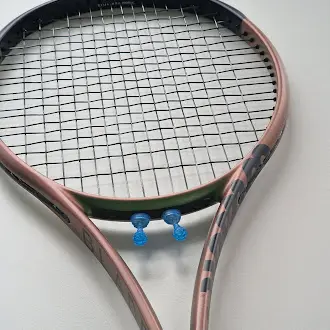
These don’t necessarily hurt during play, but they often show up afterward as a heavy or loaded feeling in the arm.
This is where selective solutions can play a supporting role. Tools like the AMbelievable Frame Stabilizer are designed to act specifically on low frequencies, helping reduce residual stress without muting the racquet’s feedback or changing how the stroke feels on impact. The goal isn’t to “fix” your game, but to support it when training volume increases.
It’s important to approach this as a process, not a quick judgment. Give any change a few sessions. Pay attention to how your arm feels after training, the day after, and across consecutive workouts. When the arm feels lighter over time, consistency becomes easier — and resolutions last longer.
6. Track Feel, Not Just Results: Build Awareness That Drives Improvement
One of the most overlooked yet powerful tennis resolutions is learning to track how the game feels, not just how it ends. Match results matter, but they don’t always reflect real progress — especially in phases where you’re training more, changing habits, or refining your setup.
Focusing only on wins and losses often leads players to abandon good processes too early. A loss can hide improvements in consistency or decision-making, while a win can mask poor execution or rising fatigue.
Tracking feel helps separate short-term outcomes from long-term development.
A practical way to do this is to define a small set of qualitative markers to observe after each session: perceived stability on off-center hits, arm fatigue the day after training, clarity of feedback at impact, or confidence in defensive situations.
These indicators are subjective, but over time they become patterns — and patterns are measurable.

This approach also supports smarter adjustments. When you change something — training volume, nutrition, or equipment — feel-based tracking allows you to understand why performance shifts, not just whether it does. Instead of reacting emotionally to a bad day, you refine your system.
In tennis, awareness accelerates improvement. Players who regularly reflect on how their body and racquet respond develop better decision-making, adapt faster, and stay committed to their goals even when results fluctuate. Tracking feel turns resolution-following into a feedback-driven habit — one that compounds throughout the season.
7. Build Accountability: Improve Faster by Sharing the Goal
One of the simplest ways to make tennis resolutions last is also one of the most effective: don’t pursue them alone. Motivation is unreliable, especially over a long season, but accountability creates structure even when enthusiasm dips.
This doesn’t require a formal team or a strict training plan. It can be as simple as creating a small circle of players you train with regularly — friends, club mates, or practice partners who share similar goals. When training sessions are scheduled with others, skipping becomes harder and consistency improves naturally.
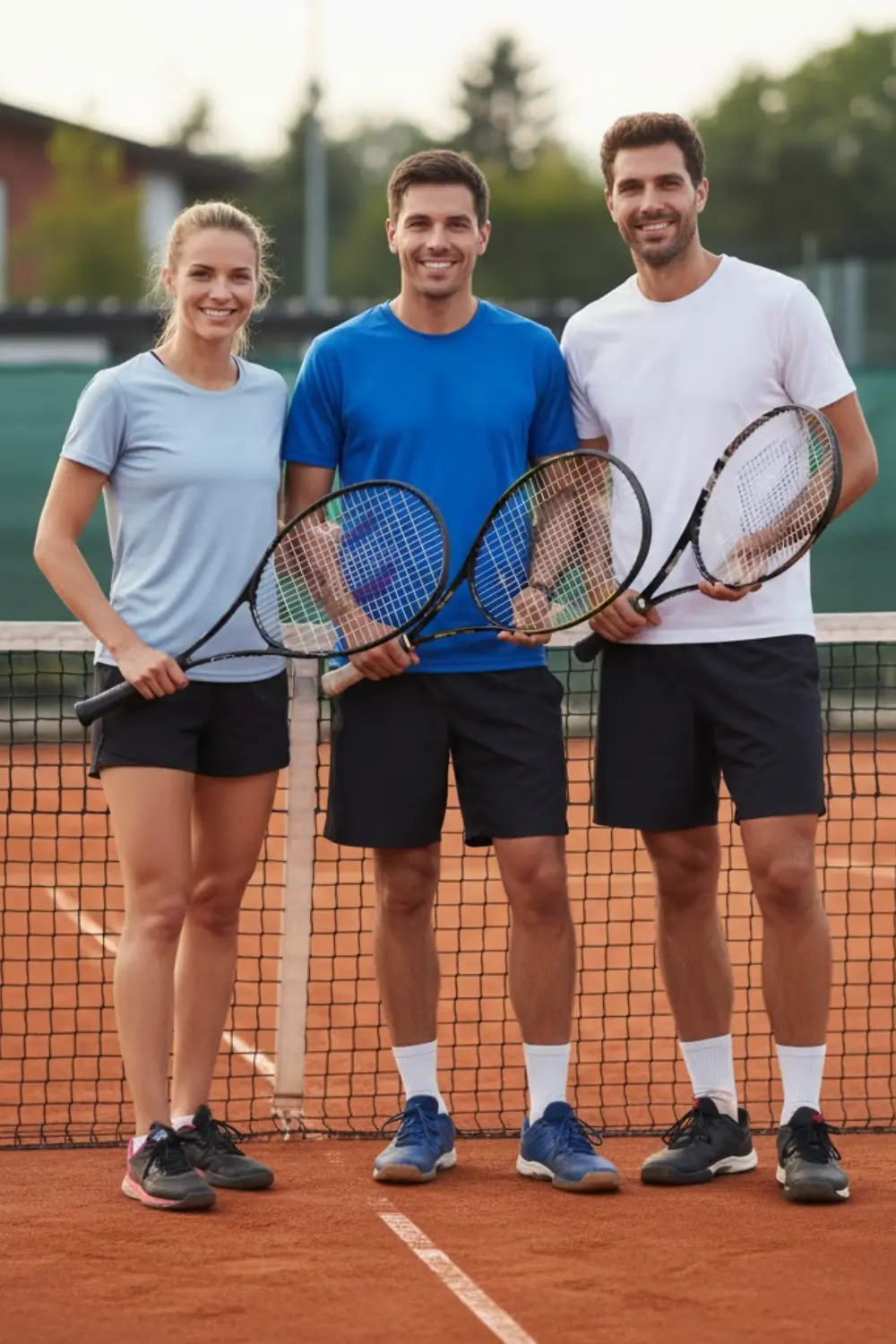
Shared goals also encourage healthier comparison. Seeing others commit to their objectives helps normalize effort and progress, while open conversations about struggles and plateaus reduce frustration.
In many cases, improvement accelerates not because training becomes harder, but because it becomes more regular.
Another powerful form of accountability is inspiration through example. Many players find renewed focus by studying the career of a professional they admire — not to copy their strokes, but to understand how they trained, adapted, and built longevity.
Turning that inspiration into a concrete action, such as a weekly routine or mindset shift, gives it practical value.
In tennis, progress thrives in environments that support it. Whether through shared sessions, friendly challenges, or collective habits, accountability transforms personal resolutions into commitments — and commitments are far more likely to be kept over the course of a full season.
Conclusion: Make 2026 the Year Your Tennis Becomes Intentional
Tennis resolutions rarely fail because they are too ambitious. They fail because they are left unsupported. Motivation fades, schedules change, results fluctuate — and without a system, even good intentions slowly disappear.
The common thread across all these goals is structure. Quantifying objectives, managing training volume, fueling the body properly, refining equipment with method, protecting the arm early, tracking feel, and building accountability all serve the same purpose: turning improvement into a process rather than a hope.
This approach doesn’t promise quick fixes. It encourages patience, observation, and adjustment — the same qualities that define long-term development in tennis. When goals are measurable and habits are repeatable, progress becomes more resilient to bad days and tough matches.
From a technical standpoint, this also applies to equipment choices. Tools designed with intention — especially those focused on preserving feel while reducing unnecessary stress — can support consistency when training frequency increases. Not as shortcuts, but as part of a broader system that respects both performance and longevity.
As the new season begins, the most valuable resolution may simply be this: stop chasing change, and start building it. With clarity, method, and the right support, improvement stops being a seasonal promise and becomes a sustainable reality on court.