Racket sports players spend hours choosing rackets, testing strings, adjusting tension, and refining technique. Yet one of the most influential aspects of performance and feel is often overlooked: vibrations.
In tennis, vibrations have been studied and discussed for decades, especially in relation to racket vibrations, stringbed behavior, and vibration dampeners. In padel, however, vibrations remain less understood, even though they play a central role in how the ball feels at impact and how the racket behaves during play.
Padel is often perceived as a more accessible and “softer” sport compared to tennis. But from a physical and engineering perspective, this assumption is not entirely accurate. The absence of strings, combined with the rigid structure of a padel racket, creates a very different vibration response.
Rather than simply reducing impact forces, padel tends to transmit vibrations more directly through the racket and into the player’s hand. This affects not only comfort, but also control, consistency, and overall shot perception.
Starting from established knowledge of tennis vibrations, this article explores how vibrations are generated in padel, how they differ from tennis, and how they are transmitted through the racket.
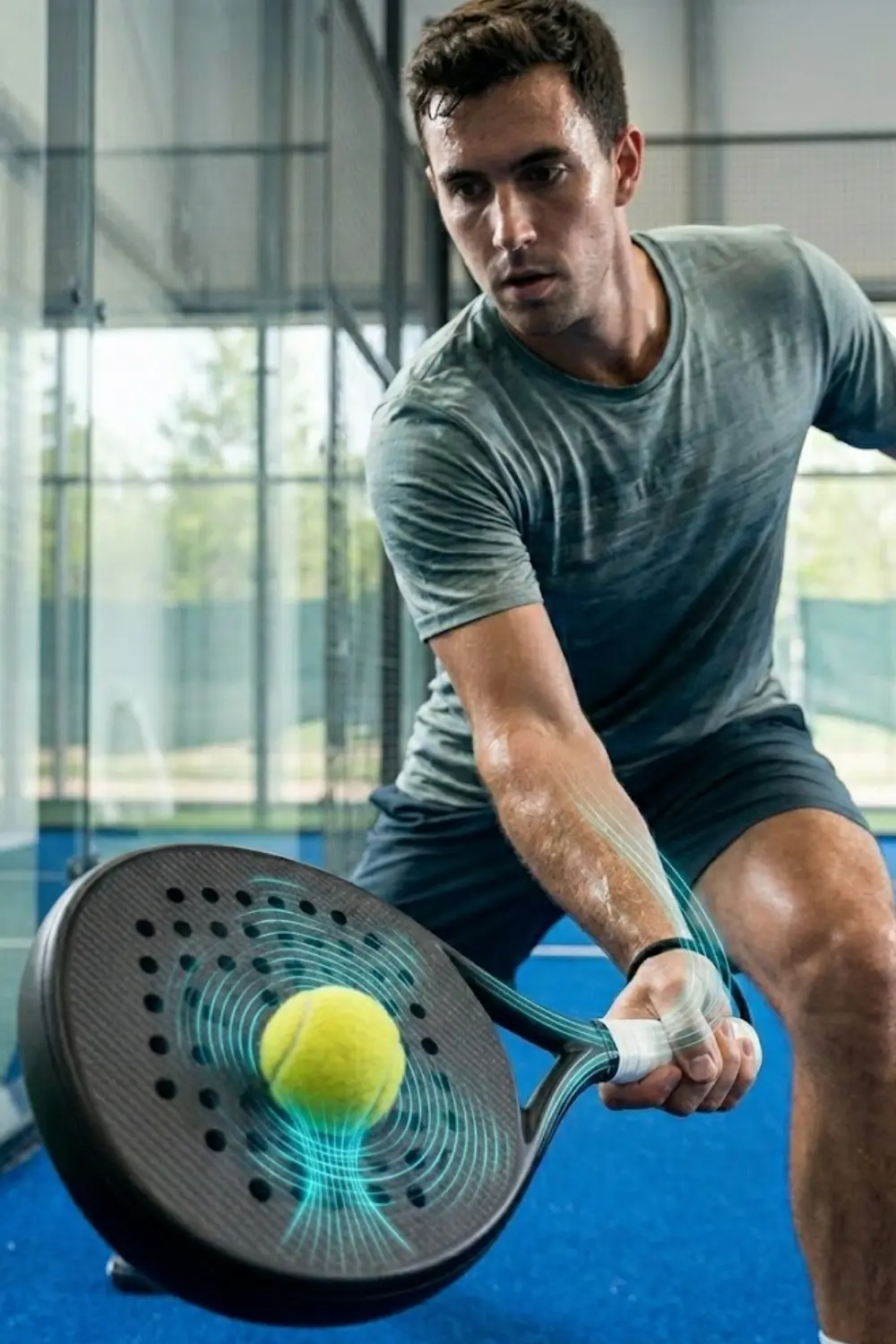
We will break down how materials such as carbon, fiberglass, and core foams influence vibration behavior, how different types of shots amplify or dampen specific vibration modes, and why off-center impacts and defensive situations often produce the most critical vibration patterns.
From structural design to real-game scenarios, the goal is to understand not just where vibrations come from, but when they matter the most. Because understanding vibrations is not just about comfort. It is about understanding what you really feel at impact.
1. Impact Physics: The Origin of Vibrations in Racket Sports
Every shot in racket sports begins with a collision between the ball and the racket. During this extremely short interaction, energy is transferred, partially returned to the ball, and partially absorbed by the racket structure. What is not returned does not simply disappear. It propagates as vibrations.
These vibrations travel through the racket, starting from the impact point and spreading across the frame, the handle, and eventually into the player’s hand. This process is fundamental in both tennis and padel, although the way vibrations are generated and transmitted differs significantly between the two.
Racket vibrations are not uniform. They exist across a wide range of frequencies, each corresponding to different physical behaviors of the system.
High-frequency vibrations are typically associated with the local response of the impact surface. In tennis, this is mainly the stringbed.
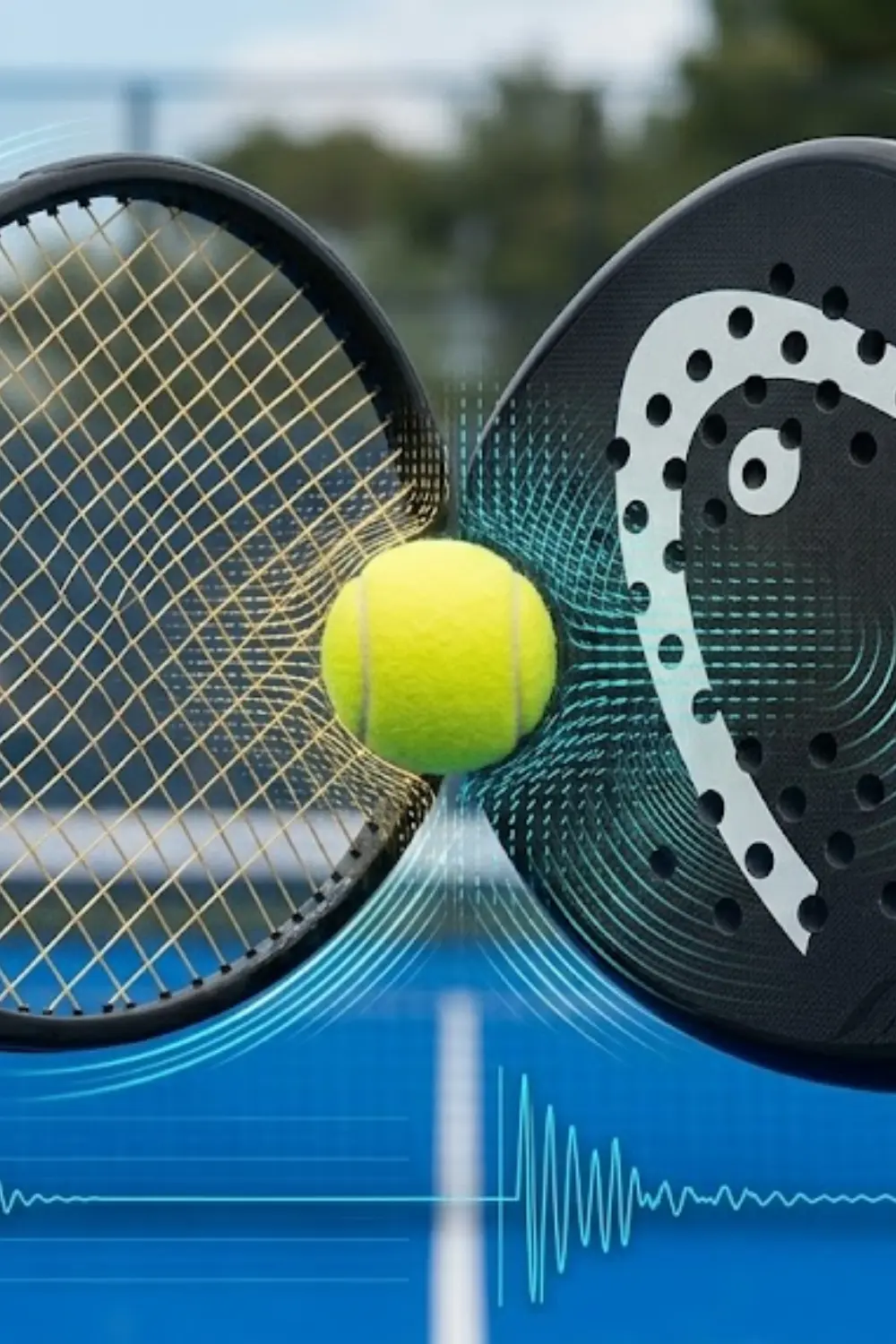
In padel, it is the outer composite layers of the racket. These vibrations influence what players perceive as sound, sharpness, or crispness at impact.
Low-frequency vibrations, on the other hand, are linked to the deformation of the entire racket structure. They are strongly connected to stability, control, and the overall sensation of the shot. These are the vibrations that travel more deeply through the racket and are more directly perceived by the player.
In practice, this means that factors such as racket materials, impact location, and shot type can significantly alter how vibrations are perceived by the player. A clean volley, an off-center smash, or a defensive shot played under pressure can all produce very different vibration patterns.
In padel, scenarios such as rebounds off the glass or late defensive contacts tend to amplify torsional and asymmetric vibrations, as the absence of a stringbed changes how energy is distributed through the racket.
From a performance standpoint, vibrations are not just a byproduct of impact. They are a source of information. They provide feedback about where the ball was hit, how clean the contact was, and how efficiently energy was transferred.
For this reason, the goal of vibration control is not to eliminate vibrations entirely, but to understand which vibration modes are useful and which ones negatively affect performance. This distinction becomes even more important when comparing tennis and padel, where the structure of the racket fundamentally changes how vibrations are generated and transmitted.
2. Tennis as a Reference System: Elasticity and Controlled Response
To understand padel vibrations, it is useful to start from tennis, where the interaction between ball and racket has been extensively studied and partially optimized over time.
In tennis, the presence of a stringbed introduces an elastic interface between the ball and the frame. This layer plays a fundamental role in how energy is absorbed, stored, and released during impact. Instead of a direct collision with a rigid surface, the ball interacts with a system that deforms, increasing dwell time and redistributing forces more gradually.
This has two important consequences. First, the stringbed acts as a natural filter for vibrations, reducing part of the high-frequency content generated at impact.
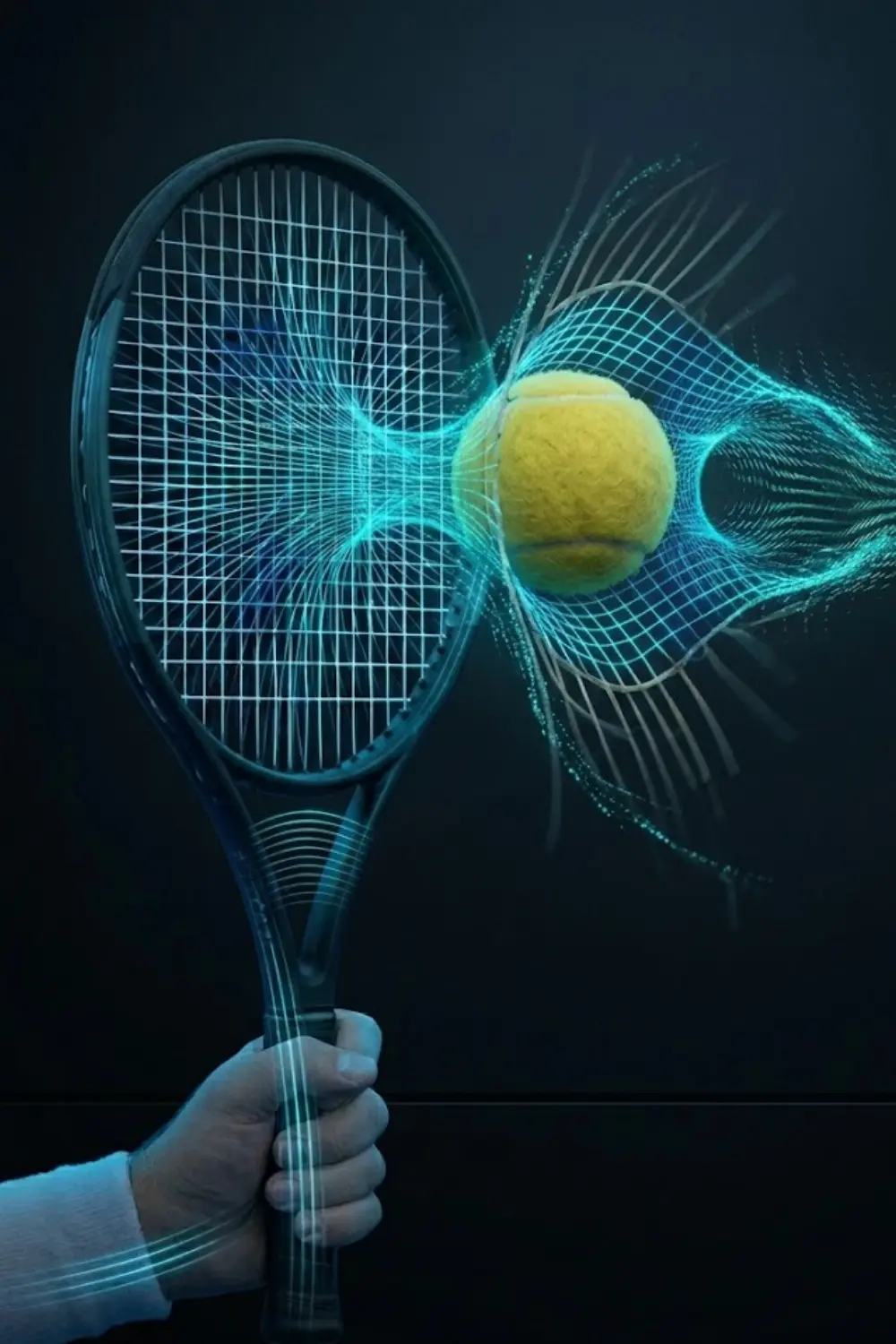
Second, it allows players to tune the response of the racket by adjusting parameters such as string type and tension. A tighter stringbed will typically produce a sharper, more direct response, while a looser one increases dwell time and alters the vibration spectrum.
However, this does not mean that vibrations are fully controlled in tennis. Most traditional solutions, such as rubber dampeners, primarily affect audible and high-frequency vibrations, with limited influence on the lower-frequency structural modes that are more closely related to stability and feel.
As a result, even in a relatively optimized system like tennis, a significant portion of vibrations remains unmanaged. What changes is not the presence of vibrations, but how they are filtered, distributed, and perceived through the racket.
Even in a system as refined as tennis, vibration control remains a partially solved problem. Most existing solutions still focus on reducing perceived vibrations, without addressing how different vibration modes actually behave within the racket structure.
AMbelievable is the first brand to approach vibrations differently, treating them not as something to dampen, but as something to engineer. Instead of acting only on the surface, this approach focuses on how vibrations propagate across the structure, targeting specific frequency ranges that directly influence stability, control, and feel.
And this same approach is now ready to be applied to padel, extending the proven advantages of AMbelievable’s patented vibration control technology into a sport with different impact dynamics and structural behavior.
3. Padel Racket Engineering: A More Direct Impact System
In padel, the absence of strings fundamentally changes the way impact occurs. The ball no longer interacts with an elastic membrane, but with a rigid composite surface, typically made of carbon or fiberglass layers combined with an internal foam core.
This structural difference leads to a more direct transmission of energy at impact. Instead of being partially absorbed and redistributed by the stringbed, energy is transferred more immediately into the racket structure. The result is not necessarily a stronger impact, but a different vibration profile.
Padel rackets behave less like tensioned systems and more like composite plates.
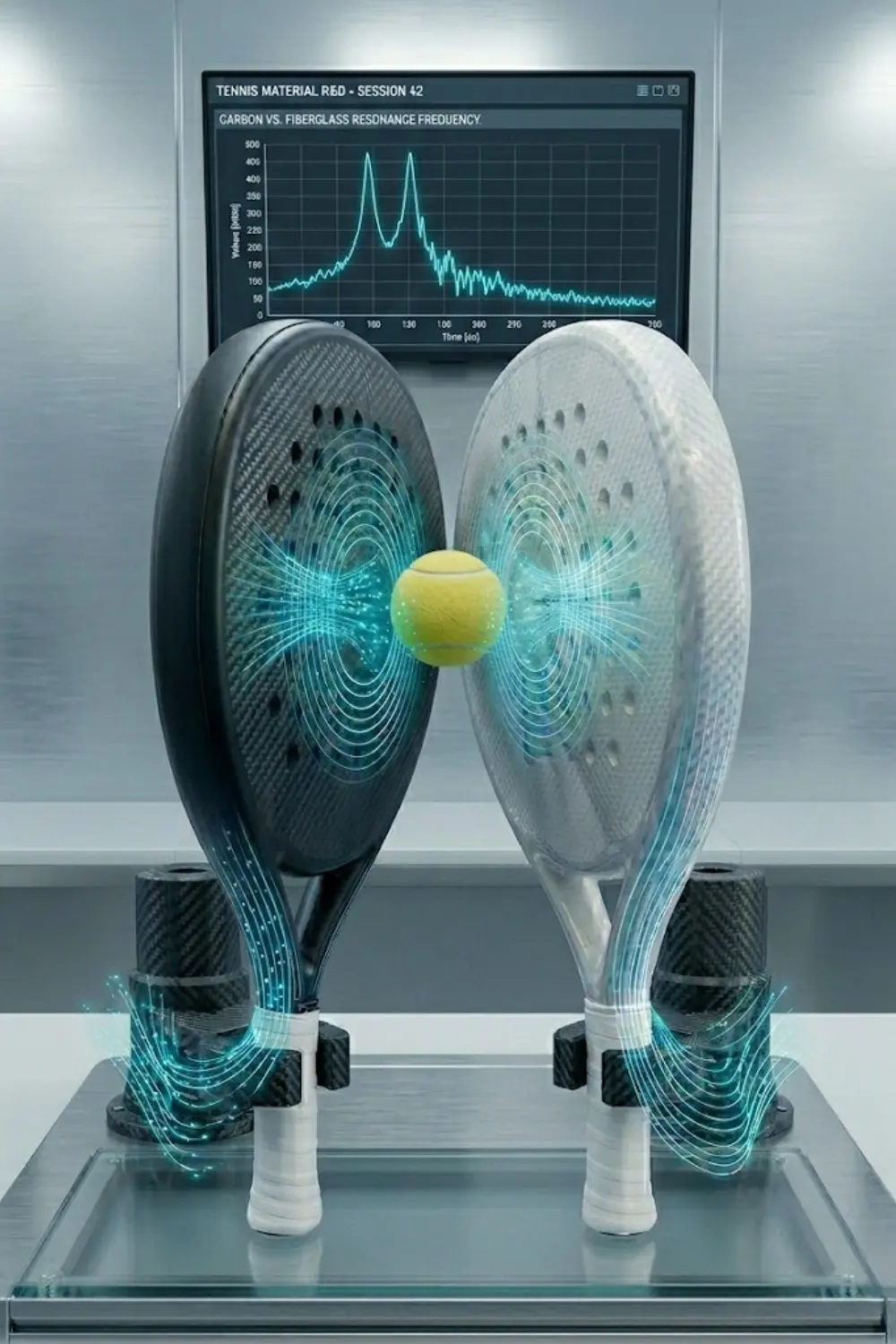
Their response is governed by material stiffness, core composition, and geometric features such as drilled holes, which introduce local discontinuities in the structure. These elements influence how vibrations propagate, reflect, and dissipate within the racket.
Materials play a central role. Carbon fiber faces tend to produce a stiffer and more reactive response, transmitting vibrations more efficiently, especially in the higher frequency range. Fiberglass, on the other hand, introduces more damping and a softer feel, at the cost of reduced precision. Similarly, the choice between EVA and FOAM cores affects how energy is absorbed and how vibrations are distributed throughout the structure.
What is missing in padel is not damping itself, but selective control. Current rackets rely on material properties to influence vibrations, but they do not differentiate between useful feedback and unwanted vibration modes.
This is why padel often feels “soft” at first contact, yet can still produce complex and sometimes unstable vibration patterns. Without an intermediate elastic layer, vibrations are less filtered and more directly transmitted, making their behavior more dependent on impact conditions and racket design.
4. Where Padel Vibrations Become Critical: Shots and Game Situations
If vibration behavior depends on structure and materials, it becomes even more complex when we look at real game situations. In padel, the way the ball is hit, the timing of the shot, and the position on the racket face all play a decisive role in how vibrations are generated and perceived.
Unlike tennis, padel is characterized by shorter swings, frequent defensive play, and constant interaction with the environment, especially the glass. This leads to a higher number of non-ideal impacts, where the ball is not struck cleanly in the center of the racket.
Off-center hits are particularly relevant. When impact occurs away from the optimal point, the racket does not only vibrate linearly, but also rotates slightly around its axis. This generates torsional vibrations, which are more irregular and harder to control. These vibrations tend to travel more directly through the structure and are often perceived as instability or lack of precision.
Certain shots amplify this effect. Defensive lobs played late, volleys under pressure, or balls rebounding off the glass often force the player into compromised contact conditions, where timing and positioning are not optimal. In these situations, the racket is less able to manage energy efficiently, and vibrations become more pronounced and less predictable.
Another key factor is repetition. Padel rallies often involve a high number of consecutive shots, many of which are played in constrained or reactive conditions. Over time, even moderate vibration levels can accumulate, making their consistency and distribution more relevant than their peak intensity.
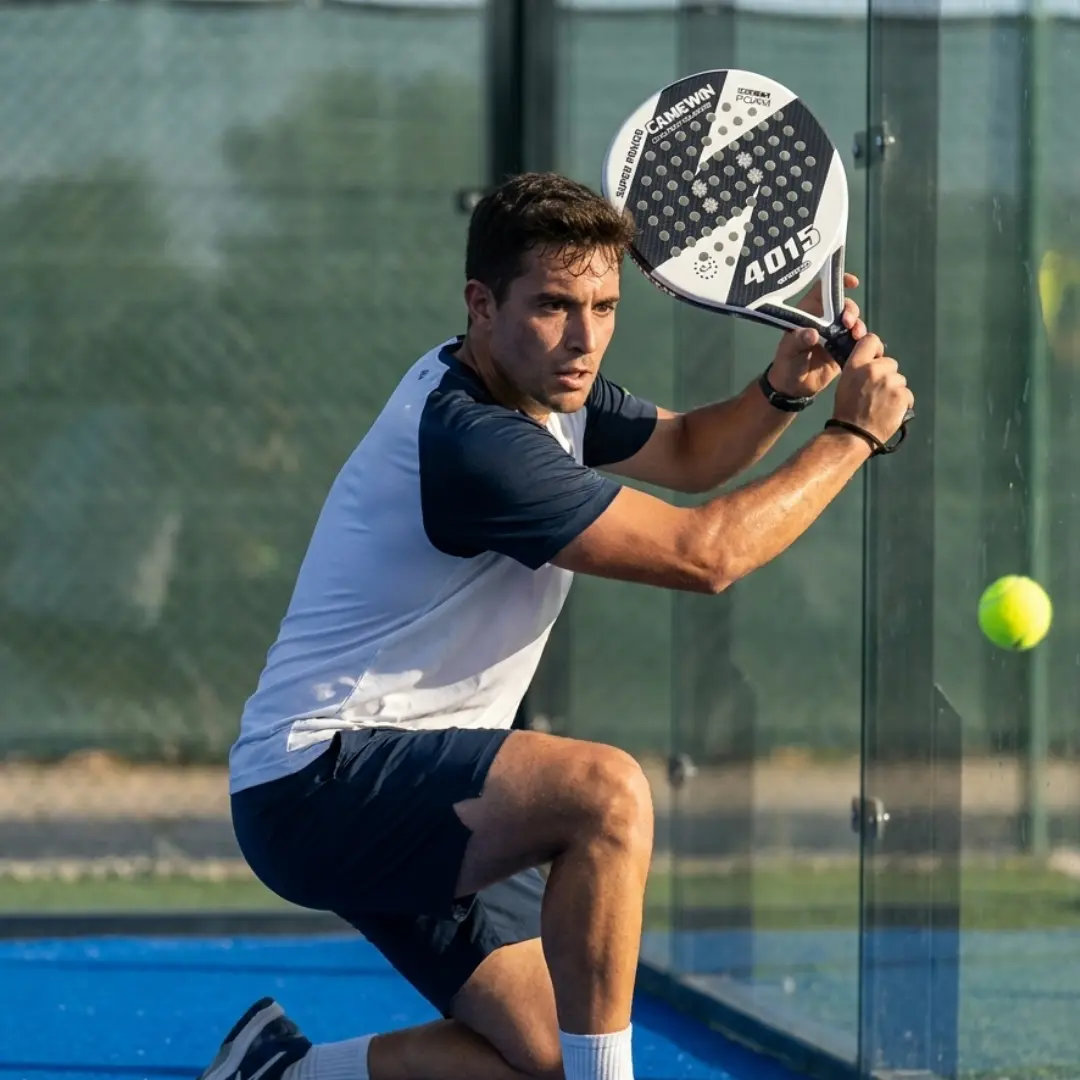
This is where the difference with tennis becomes more evident. In tennis, a well-executed stroke with proper timing and technique can minimize unwanted vibrations. In padel, the structure of the game itself increases the likelihood of impacts where vibration control becomes critical rather than optional.
5. Materials and Construction: The Hidden Trade-offs
While game situations determine when vibrations become critical, materials and construction define how the racket responds to those conditions.
Padel rackets are built as composite systems, where each layer contributes differently to stiffness, damping, and energy return. The outer faces, typically made of carbon or fiberglass, control the initial response at impact. Carbon provides higher stiffness and faster energy return, which can enhance precision but also transmit vibrations more directly. Fiberglass introduces more flexibility and damping, resulting in a softer feel but often less control.
Inside the racket, the core material plays an equally important role. EVA cores are generally denser and more reactive, producing a more immediate and defined response, while FOAM cores tend to absorb more energy, smoothing out vibrations but reducing responsiveness. Neither solution is inherently superior. Each represents a trade-off between performance and vibration behavior.
However, these solutions share a common limitation: they are static. Once the racket is built, its vibration response is fixed. It does not adapt to different types of impacts, shot intensities, or playing conditions.
This becomes particularly relevant in padel, where the variability of impacts is high. A soft touch at the net, a powerful smash, and a defensive shot off the glass all generate different vibration patterns, yet the racket responds in the same way every time.
Another key limitation is that most vibration-related solutions are integrated into the racket itself, and therefore not tunable. The player has little control over how the racket responds, regardless of playing style, conditions, or match situations.
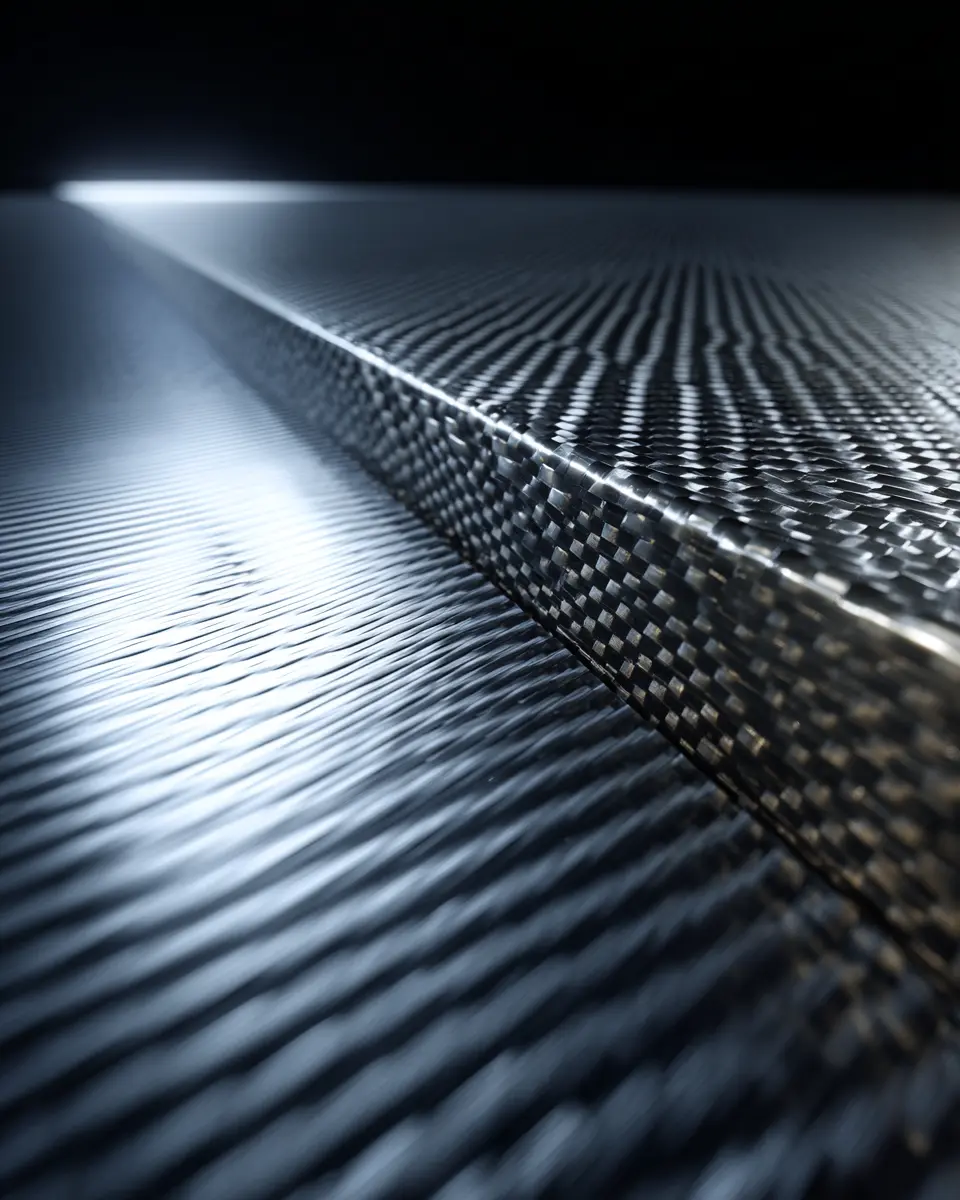
This raises a fundamental question: what if vibration behavior could be adjusted, rather than fixed?
6. From Vibrations to Perception: Feel, Control, and Feedback
Vibrations are not only a physical phenomenon. They are the primary way players perceive and interpret impact.
When the ball meets the racket, the information that reaches the player is not visual or auditory alone. It is largely transmitted through mechanical feedback, in the form of vibrations traveling through the handle into the hand and arm. This feedback allows players to instantly assess the quality of the shot.
A clean, centered hit produces a stable and consistent vibration pattern, which players associate with control and precision. In contrast, off-center impacts or unstable contacts generate more complex signals, often perceived as instability or lack of confidence in the shot.
In padel, this perception becomes even more critical. Because vibrations are less filtered, the player receives a more direct and less mediated signal from the impact. This can enhance feedback clarity, but it also means that unwanted vibration modes are more present and harder to ignore.
Consistency is the key factor. High-level performance is not only about producing good shots, but about producing repeatable sensations. When vibration patterns vary significantly from shot to shot, even if the outcome is similar, the player’s ability to trust their strokes can be affected.
This is where the limitation of fixed systems becomes evident. If the vibration response of the racket is predefined and non-adjustable, the player must adapt to it, rather than shaping it around their own preferences or playing conditions.
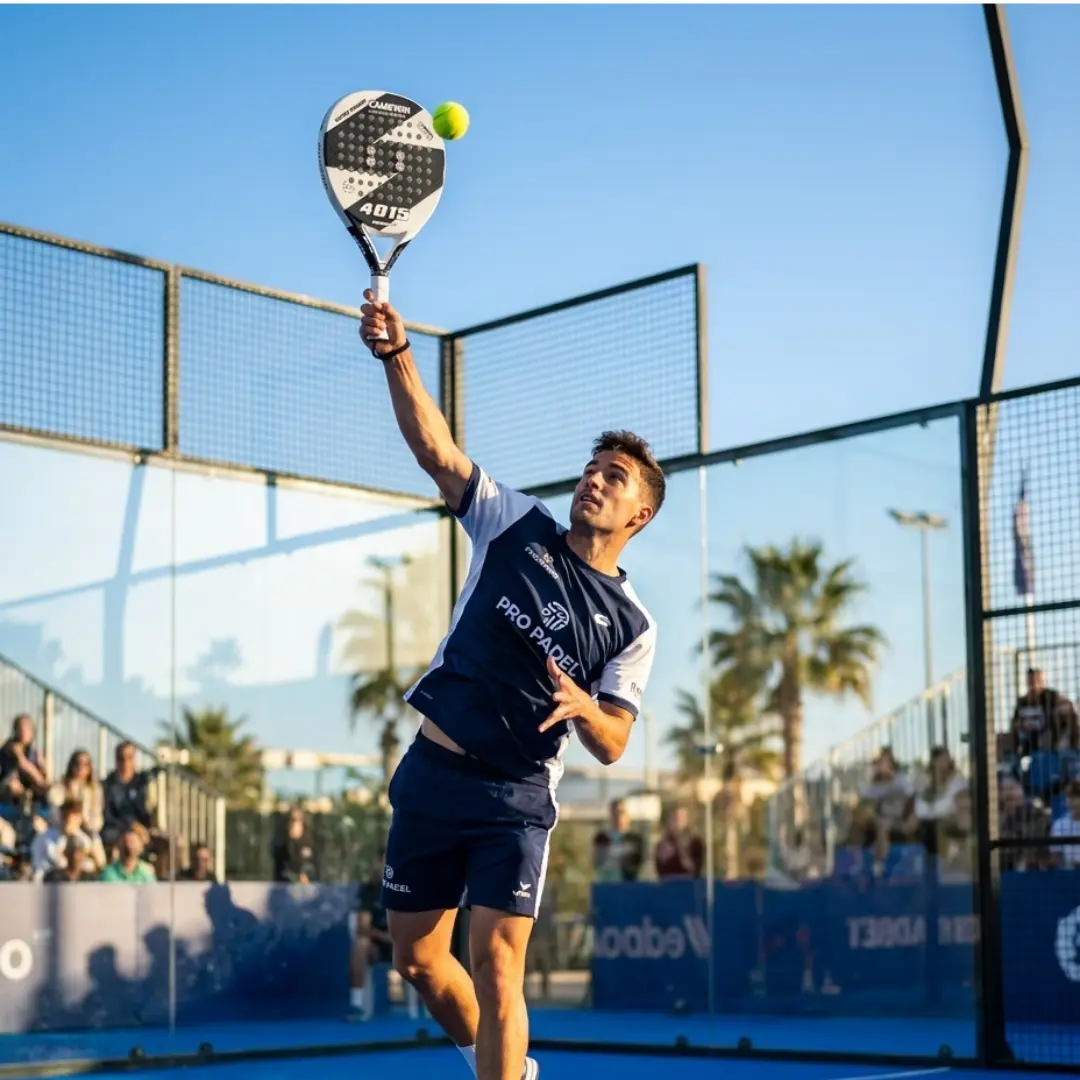
In a sport like padel, where impact conditions change constantly, this lack of adaptability becomes a structural constraint. It limits the possibility to refine feel, adjust control, and respond to different match situations in a precise and intentional way.
7. The Missing Piece: Towards Selective Vibration Control
Up to this point, vibration behavior in padel has been shaped by structure, materials, and playing conditions. What is still largely missing is a way to actively manage how vibrations evolve during play.
Most current solutions are based on material choices or internal constructions. While these can influence vibration response, they remain passive and fixed. They do not distinguish between useful feedback and unwanted vibration modes, and they cannot adapt to different types of impacts.
A different approach is to move from passive damping to active, tunable control.
Instead of embedding all vibration behavior inside the racket, this logic introduces systems that can be added, adjusted, or removed, allowing the player to shape how the racket responds.
This is the approach pioneered by AMbelievable, where vibration control is treated as an engineering problem rather than a material limitation.
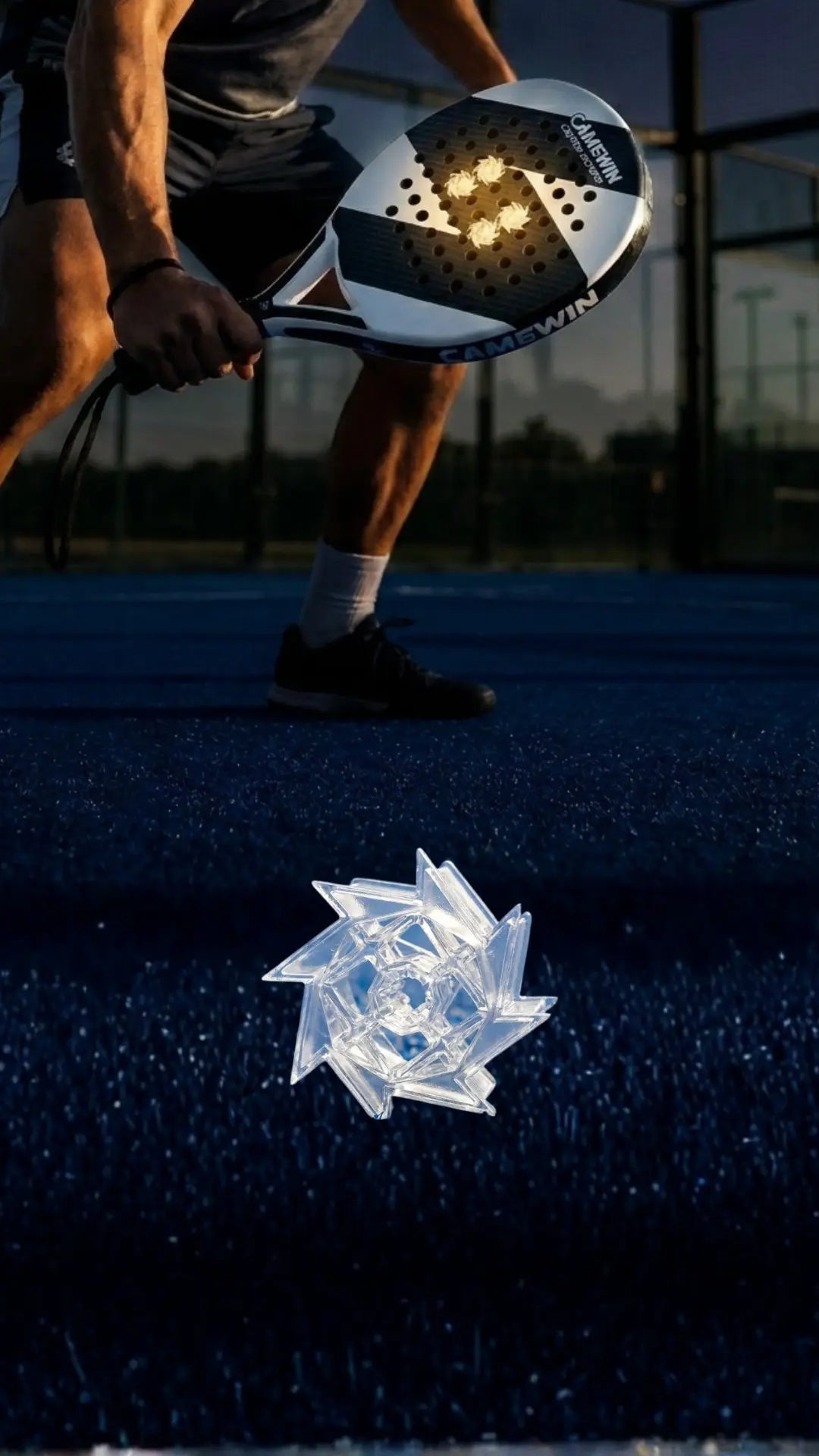
By combining metamaterial-based structures with external, tunable elements, it becomes possible to influence how vibrations propagate, which frequencies are preserved, and which are reduced.
The result is not simply less vibration, but better-managed vibration. Feedback remains clear and informative, while instability and unwanted oscillations are minimized.
This same approach is now ready to be applied to padel, extending the proven advantages of AMbelievable’s patented vibration control technology into a sport with different impact dynamics and structural behavior.
In this context, vibration management is no longer a fixed characteristic of the racket, but a dynamic parameter that the player can control and adapt, depending on how they want to play.
Conclusion
Padel is often described as a simpler or more accessible alternative to tennis, but from a vibration standpoint, it is anything but simple. The absence of a stringbed, the composite structure of the racket, and the nature of the game itself create a system where vibrations are less filtered, more variable, and more dependent on real playing conditions.
From materials such as carbon, fiberglass, and foam cores, to specific situations like off-center hits, defensive shots, or rebounds off the glass, every element contributes to shaping how vibrations are generated and transmitted. What emerges is not a single vibration profile, but a constantly evolving one, influenced by both design and context.
Unlike tennis, where an elastic interface partially manages impact, padel relies heavily on structural behavior. This makes vibration control more closely tied to how the racket is built, and less to adjustable elements. At the same time, it highlights a limitation shared by both sports: most existing solutions do not distinguish between useful feedback and unwanted vibration modes.
Understanding vibrations, therefore, is not just a technical exercise. It is a way to better understand feel, control, and consistency, and ultimately how performance is perceived by the player.
As the sport continues to evolve, so does the need for more advanced approaches.
Not solutions that simply reduce vibrations, but systems capable of managing them selectively, preserving what matters and minimizing what does not.
If you are a tennis player, this approach is already available today, allowing you to experience a new level of control over vibration behavior and on-court feel.
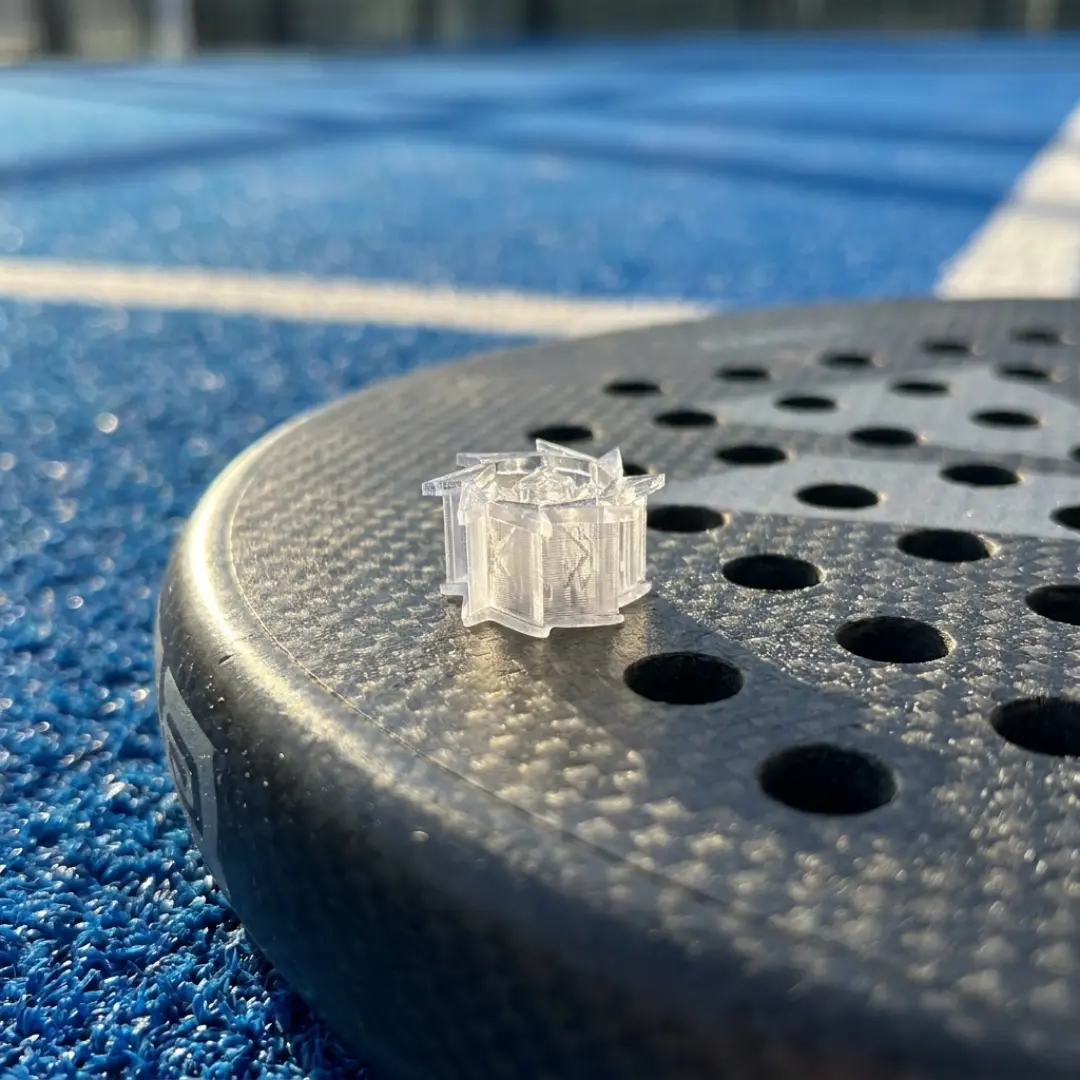
If you are a padel player, the same technology and expertise are about to become available, bringing a new level of precision and personalization into a sport where vibration control has so far remained largely unexplored.
Because in the end, what defines a great shot is not only how the ball travels, but also what the player feels at impact. And for the first time, that feeling is becoming something that can be engineered.