
Every tennis player knows that unmistakable sound, that clean, full “pop” when the ball meets the strings at just the right point. It’s the instant when power, control, and comfort merge in perfect harmony. And yet, what happens between the ball and the strings remains one of the most misunderstood aspects of the game.
In tennis, we often focus on racquet weight, balance, and stiffness, but rarely on the real engine behind every shot: the strings. They store and release energy, shape the ball’s trajectory, and dictate how much feedback or vibration reaches your arm. In short, the strings are the voice of your racquet, translating each subtle movement of your hand into a precise physical response.
This article is a comprehensive, data-driven guide to understanding how tennis strings influence power, control, and feel, and how the right setup can help you bring out your best game. We’ll dive into the science of string tension, the role of gauge and materials, how to recognise when strings are “dead”, and how innovative tennis accessories can preserve and enhance string performance over time.
Whether you’re chasing more spin, greater precision, or simply better comfort, everything starts inside the strings. They are the invisible part of tennis that you don’t see, but you always feel.
1. What Strings Actually Do (and Why They Matter More Than the Frame)
Strings as the Elastic Engine of the Racquet
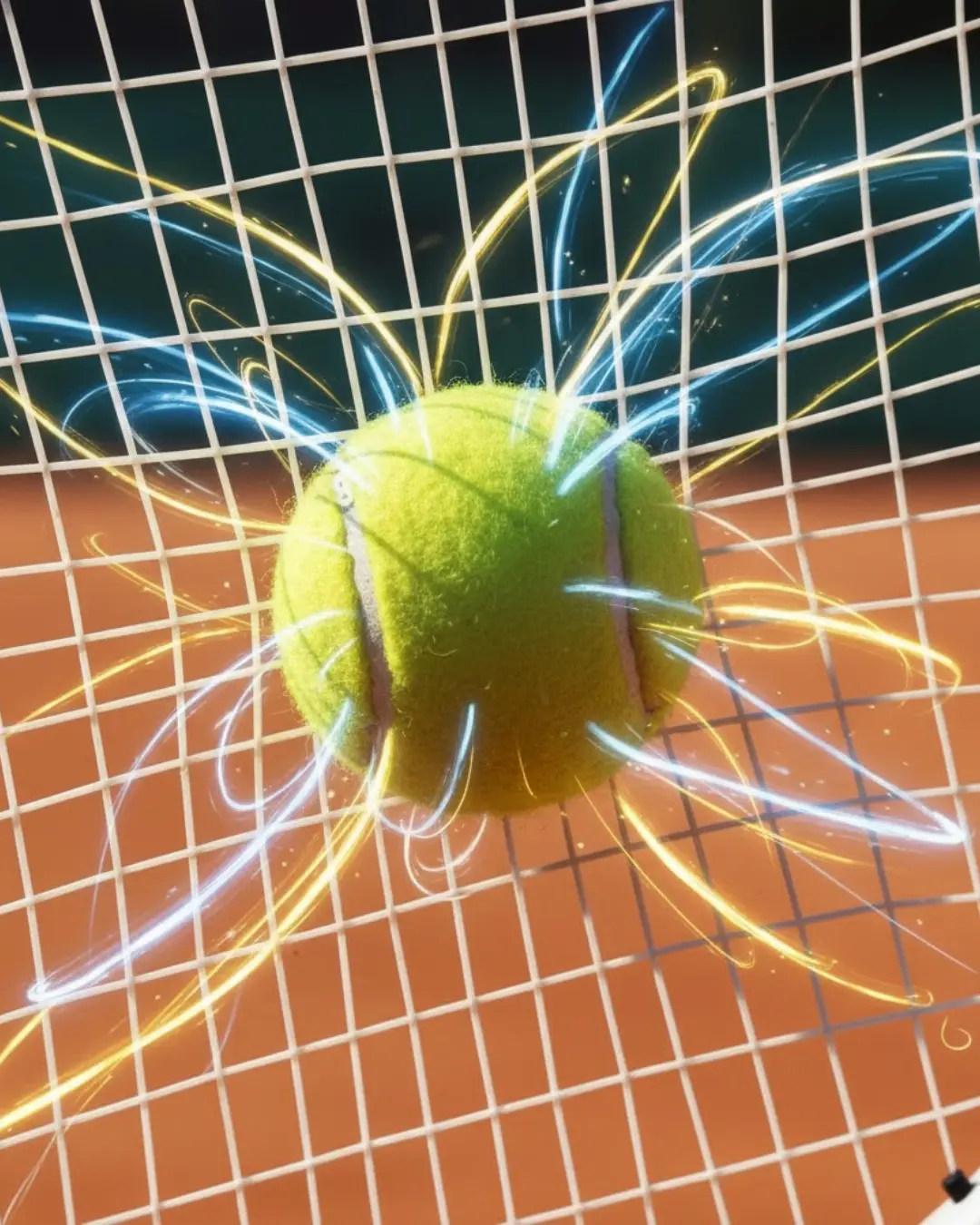
Every tennis shot begins long before impact. When the ball meets the strings, the impact compresses the stringbed, storing elastic energy that is released in a fraction of a second.
That stored energy is what gives the ball its speed, not the frame and not your arm. Studies show that up to 50 percent of a shot’s power comes directly from the strings.
A more elastic stringbed releases energy faster, generating greater racquet power and higher ball speed. Conversely, a tighter or stiffer setup increases string control, but reduces the amount of free power generated on impact.
Strings and Sensory Feedback: The Language of Feel
Your strings also define what you feel. Every vibration that travels from the racquet to your arm tells your brain how clean or off-center the contact was. When strings are too stiff or too old, they lose responsiveness, and the feedback becomes inconsistent or “noisy.”
That is why professional players pay close attention not only to string tension, but also to how “alive” the stringbed feels during play. A racquet that vibrates excessively doesn’t just affect your arm comfort, it also disrupts perception and timing, making consistent play more difficult.
Comfort, Control and Vibration Management
In tennis, comfort is not about softness, it is about stability and energy consistency. A well-balanced string setup that absorbs impact while maintaining tension over time allows you to hit harder and longer with less fatigue.
Using innovative tennis accessories such as AMbelievable™ ones does not reduce performance, it optimizes how energy travels through the frame. By reducing unwanted string vibration and enhancing frame stability, these tools ensure cleaner power transfer and more accurate control over the direction and depth of every shot.
2. The Gauge: Thickness That Changes Everything
What Is the Gauge of a Tennis String
The gauge refers to the thickness of a tennis string, typically ranging between 1.15 mm and 1.40 mm. It may appear to be a small specification, yet it plays a decisive role in how the racquet behaves on impact. String gauge influences elasticity, spin generation, control, durability and comfort, all fundamental parameters that shape your playing style.
A thinner string stretches more, absorbs part of the impact and increases ball dwell time, while a thicker string resists deformation and delivers a firmer, more stable response. Understanding this relationship is crucial to fine-tune the balance between power and control in your string setup.
Thinner or Thicker: Finding the Right Balance
A thin gauge (1.15–1.25 mm) enhances sensitivity and spin potential, as the ball “bites” deeper into the strings, creating more rotation and that lively, effortless power many players describe as “pop.” The downside is reduced string durability and tension retention, especially for players who use heavy spin or high swing speed.
A thick gauge (1.30–1.40 mm) provides superior control and consistency, maintaining tension longer and limiting unpredictable string movement. The feel is firmer and less elastic but more precise, ideal for those who prefer accuracy and directional stability over sheer explosiveness.
Matching Gauge to Your Playing Style
If you have a fast swing and natural racquet speed, a thicker string can help you maintain control and prevent over-hitting. If you rely on touch, acceleration or spin, a thinner gauge rewards you with sharper feedback and better responsiveness. For most intermediate players, the optimal middle ground is around 1.25 mm, offering a balanced mix of comfort, spin and durability.
Keep in mind that string gauge interacts with frame stiffness and string material. On rigid racquets or with polyester strings, the combination can amplify vibration peaks and reduce feel. In these setups, Auxetic Pads or VibraLive can help stabilise the frame and smooth energy transfer, preserving both comfort and accuracy throughout the shot.
3. String Materials: Comfort, Spin and Durability
Polyester Strings: Control and Spin Power
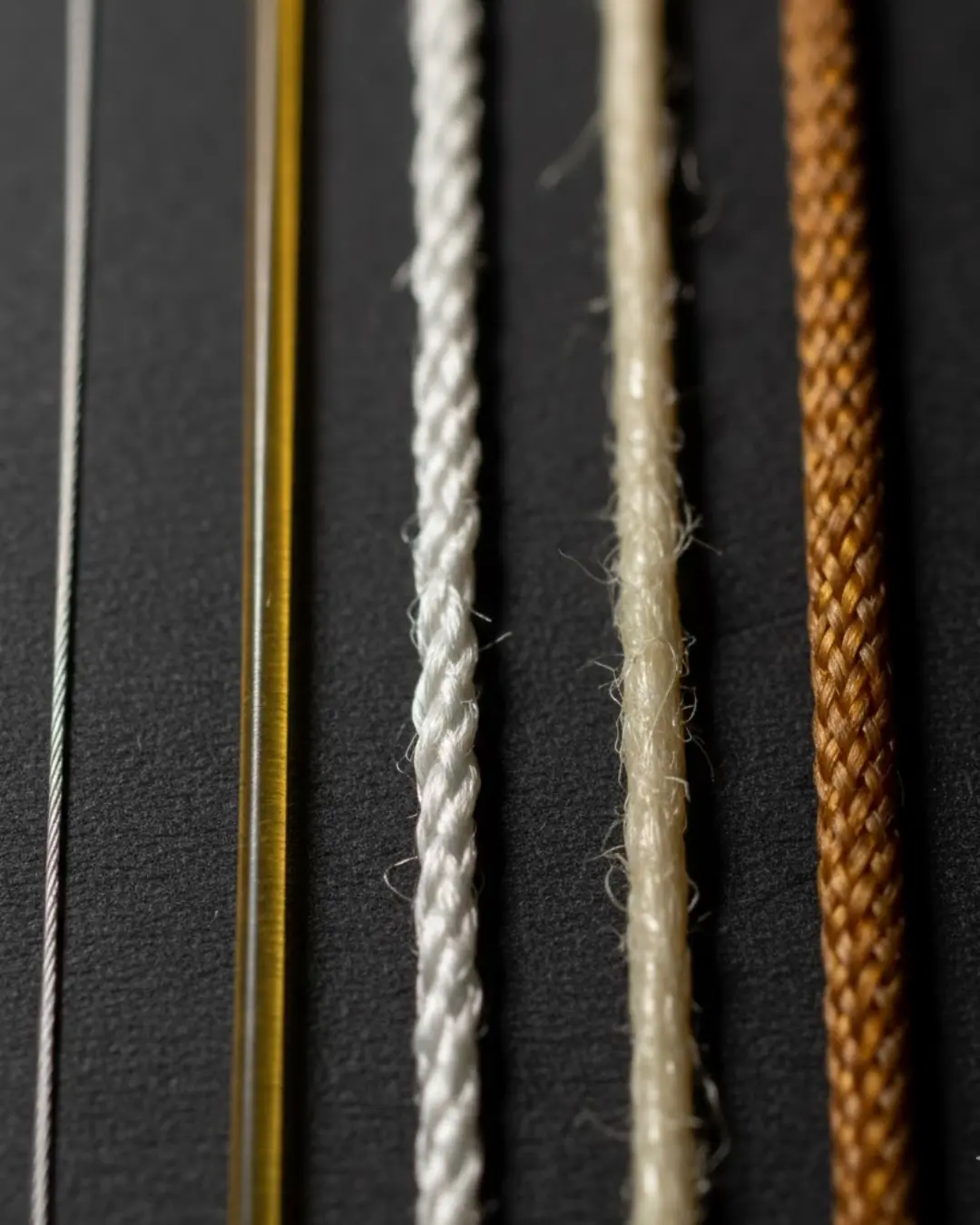
Polyester strings dominate modern tennis because they offer an exceptional combination of control, spin potential and durability. Their rigid molecular structure allows the strings to snap back rapidly after contact, “grabbing” the ball and producing heavy rotation. This mechanical spin effect is why almost every baseline professional relies on polyester monofilaments.
However, stiffness comes at a cost. Polyester can be harsh on the arm, especially when strung too tightly or used for long sessions. After 10–15 hours of play, it tends to lose elasticity and feel “dead,” transmitting more shock and less feedback. To maintain comfort while keeping control, many players lower the tension slightly or pair polyester strings with stabilising accessories that absorb excess vibration and improve energy return.
Multifilament Strings: Comfort and Feel Above All
For players seeking a softer impact and greater sensitivity, multifilament strings remain the ideal choice. They are composed of hundreds of fine nylon fibres bound together, designed to replicate the elasticity and comfort of natural gut while keeping costs and maintenance manageable. Multifilaments offer outstanding energy return, a pleasant sound on impact and superior comfort, which makes them a safe option for players prone to arm fatigue or elbow pain.
Their main limitation is durability. Under heavy topspin or aggressive hitting, they fray and lose tension faster than polyesters. For this reason, many advanced players adopt a hybrid setup, using a durable polyester in the mains for control and a multifilament in the crosses for touch and responsiveness.
Natural Gut and Hybrid Setups: Tradition Meets Technology
The natural gut remains the gold standard for touch, comfort and tension stability. Its organic fibre structure provides unmatched energy efficiency and a uniquely responsive feel, which is why it continues to be used in high-level hybrid configurations.
The main drawbacks are its sensitivity to moisture and its higher price, but when combined with polyester strings, it delivers an exceptional balance of power, control and vibration damping.
Hybrid string setups — mixing one material for the mains and another for the crosses — allow precise customisation of performance.
A gut/polyester hybrid increases control without sacrificing comfort, while a polyester/multifilament combination boosts spin and reduces harshness. These configurations represent the evolution of tennis stringing, blending tradition, innovation and feel in a single setup.
4. String Tension: The Art of Balance Between Power and Control
The Physics Behind String Tension
In tennis, string tension defines how tightly the strings are pulled across the frame, and this single factor can completely redefine your racquet’s character. Lower tension allows the stringbed to deform more, catapulting the ball with greater elasticity and offering extra power and comfort. Higher tension limits deformation, provides a firmer and more predictable response, and delivers greater directional control.
Even a small variation of two kilograms can change ball speed, trajectory, and overall feel. Finding your ideal tension range is personal, and it depends on technique, swing speed, and sensitivity to impact.
Power, Energy Transfer and Elastic Response
True power in tennis depends on how efficiently the strings transfer energy to the ball. When strings deform and snap back in sync with your swing, they create a trampoline effect that sends the ball forward with minimal effort.
A more elastic setup, obtained with a thinner gauge, lower tension, or softer materials, increases rebound energy and maximises ball speed.
If the racquet is not sufficiently stable, part of that energy is lost as vibration, and Auxetic Pads help minimise this loss by turning more swing power into forward momentum while keeping impact comfort high.

Control, Stability and Feedback
Control depends on racquet stability as much as on string tension. A stiffer stringbed or a thicker gauge reduces deformation, creates a linear and predictable response, and lets you swing faster without losing accuracy.
Control also relies on feedback, which is the information you perceive from each shot. When the racquet filters vibrations effectively, feel becomes sharper and timing more precise, and this clarity supports consistency during long rallies.
Customising Your Setup for Power and Control
To balance power and control, start from your natural playing style. Players with explosive and fast swings can increase tension or use thicker strings to gain precision and stability. Players who prefer comfort and depth can choose lower tension or softer string materials to increase elasticity and feel.
A hybrid setup, with polyester mains for control and multifilament crosses for power, is an excellent compromise for many intermediate players. You can also fine-tune your racquet by adjusting weight in specific areas, and Torsion Balancers improve stability on off-centre hits and emphasise the traits you want to enhance, such as power or control, in line with your tension and string type.
Maintaining Tension and Performance Over Time
Even the most balanced setup evolves with use. Strings typically lose between 5% and 10% of their tension in the first hours of play and up to 20% after several sessions, and heat and humidity accelerate this process. When tension drops too much, the ball becomes less predictable and vibrations increase, which affects both comfort and precision.
To maintain consistent performance, restring regularly, avoid extreme temperatures, and use accessories that stabilise the frame. A racquet that holds tension well allows you to trust your swing, and that trust is the foundation of true control.
5. How the Pros Manage Their Strings: Tension, Feel and Sweet Spot
Why String Choice and Tension Matter So Much for Professionals
For professional players, choosing the right string type and tension is as strategic as selecting the racquet itself. It defines how the racquet reacts at every impact, shaping power, control, spin potential, comfort, and even the effective size of the sweet spot.
In technical terms, lower string tension does increase the sweet spot by allowing the strings to flex more on impact. This added elasticity increases dwell time and forgiveness on off-centre hits, making the racquet feel more powerful and comfortable, although slightly less precise. Conversely, higher tension reduces string movement, resulting in a smaller but sharper sweet spot that rewards clean technique and timing.
When players ask “Is 55 lbs tension a lot in tennis?”, the answer depends on context. Around 55 lbs (≈25 kg) is generally considered a medium tension, right in the range where most professionals play. Lower tensions, around 45–50 lbs, favour spin and comfort, while higher ones, 60 lbs or more, maximise control and feedback.
Material also plays a crucial role. Polyester strings offer control and spin potential but are harsher on the arm, while natural gut or hybrid setups provide superior feel and energy return.
For professionals who compete across multiple surfaces and climates, tension and material are adjusted constantly to match court speed, temperature and playing conditions, ensuring consistency from match to match.
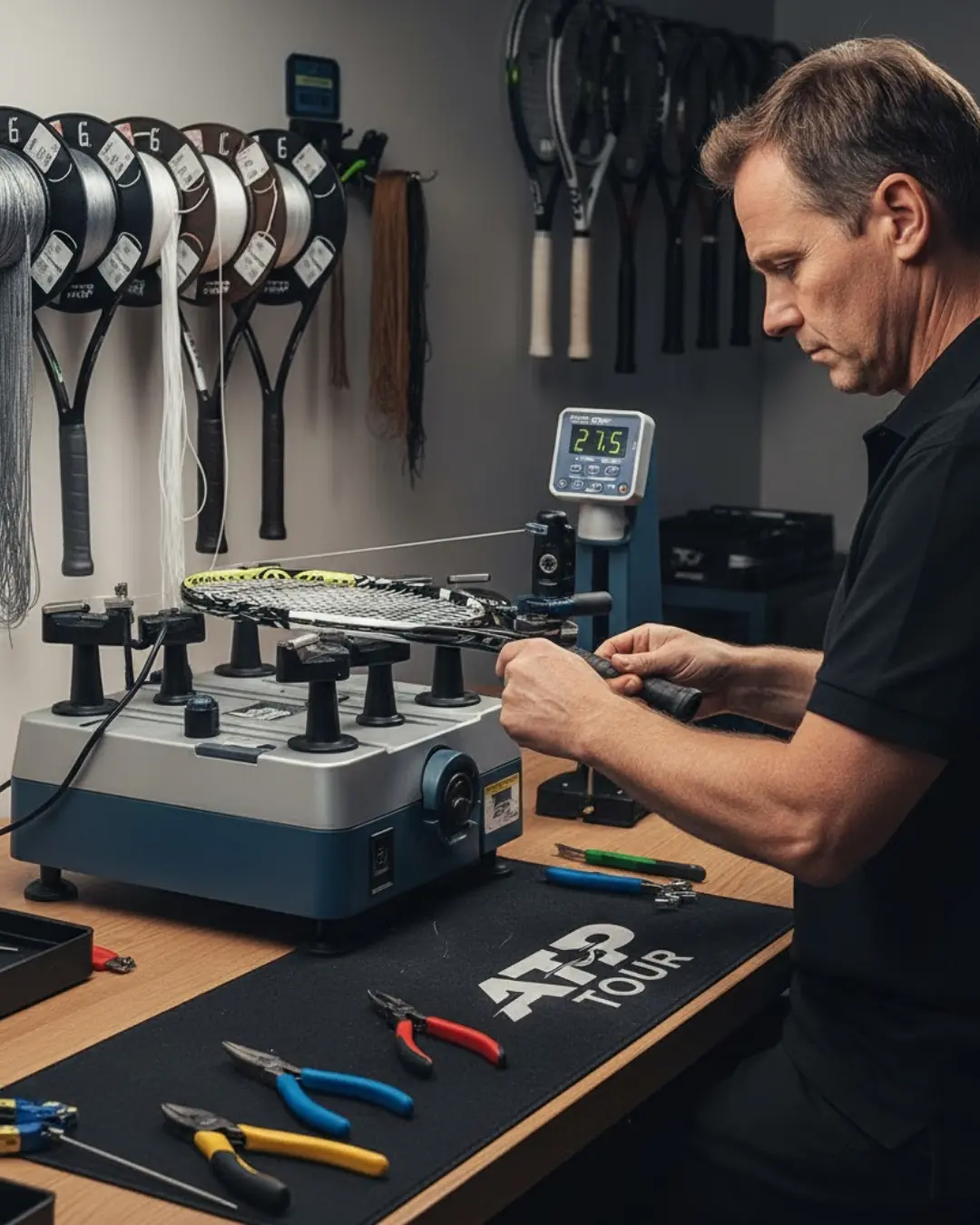
Now, let’s see what ATP and WTA players prefer for their string setup.
ATP Players and Their String Setups
On the men’s tour, most players work within a narrow personal tension range, finely tuned to their swing mechanics. They rarely make drastic changes, preferring stability and feel over experimentation.
| Player | String Type | Approx. Tension | Notes |
| Jannik Sinner | Head Hawk Touch 1.25 | ~27–28 kg (61–62 lbs) | High tension for maximum control and a compact sweet spot |
| Carlos Alcaraz | Babolat RPM Blast | ~24–25 kg (53–55 lbs) | Medium tension for explosive power and spin tolerance |
| Rafael Nadal | RPM Blast 1.35 | ~25 kg (55 lbs) | Balanced setup that combines heavy topspin with precision |
| Novak Djokovic | Hybrid (VS Gut / ALU Power) | ~26.5/25.5 kg (59/56 lbs) | Control-oriented hybrid for a consistent stringbed feel |
| Roger Federer | Hybrid (Natural Gut / ALU Rough) | ~26.5/25 kg (58/55 lbs) | Classic setup optimised for precision and touch |
Across the ATP Tour, the trend shows that players generating heavy spin use lower or mid tensions to enhance ball pocketing and dwell time, while flat hitters or control-based players prefer higher tensions for directional accuracy.
Even a small shift of half a kilogram can change how a player perceives contact, influencing both confidence and shot selection.
WTA Players and Their String Setups
On the women’s circuit, the average tension is slightly lower, reflecting an emphasis on comfort, longer rallies, and efficient energy transfer. The goal is often to keep a large and stable sweet spot while maintaining control on high-speed exchanges.
| Player | String Type | Approx. Tension | Notes |
| Iga Świątek | Tecnifibre Razor Code 1.25 | ~24 kg (52–53 lbs) | Balanced setup for controlled spin and depth |
| Coco Gauff | Luxilon ALU Power | ~24 kg (53 lbs) | Medium tension for power and consistency |
| Elena Rybakina | Yonex PolyTour Fire 1.25 | ~25 kg (55 lbs) | Stable setup for precision and drive through the ball |
| Aryna Sabalenka | Luxilon 4G | ~25–26 kg (55–57 lbs) | Slightly higher tension for control and aggressive play |
| Serena Williams (career average) | Natural Gut | ~30 kg (66 lbs) | High tension for maximum control and compact response |
While the materials differ — from co-polyesters to softer multifilaments — the principle remains the same: each player builds a setup that amplifies their strengths and protects their arm, adjusting tension depending on conditions and schedule. The most consistent players are often those who have refined their string setup over years of data and feedback.
6. Best String Tension and Setup for Each Tennis Surface
Why the Court Surface Changes Everything
Every tennis surface interacts differently with the ball, and the best players in the world know it.
The speed, height and friction of the bounce influence how the racquet should behave, and that means string tension, material and even sweet spot response must adapt too.
Clay, hard courts, grass and indoor surfaces all demand specific combinations of power, spin and control, and even a one-kilogram change in tension can make the difference between hitting the line and missing it wide.

Clay Courts: More Spin and a Bigger Sweet Spot
On clay, where the ball slows down and bounces higher, players tend to lower their string tension slightly (usually by 0.5–1.5 kg). This increases dwell time and enlarges the effective sweet spot, allowing for more pocketing and elasticity.
A looser stringbed helps generate heavier topspin and greater depth with less effort, perfect for long rallies. Polyester or hybrid strings are preferred because they maintain control even under the higher spin load and slower pace typical of clay tennis.
Hard Courts: The Baseline Setup
Hard courts offer a neutral balance between speed and grip, but they are also the most demanding on the body. Most pros keep a medium tension setup to balance control, comfort and durability.
Too tight, and vibrations travel directly to the arm; too loose, and precision suffers. Many players switch to softer co-polyesters or hybrid combinations during hard-court swings to reduce fatigue and maintain a consistent response over time.
Grass Courts: Precision and a Smaller Sweet Spot
Grass is the fastest surface and has the lowest bounce, which shortens contact time between the ball and strings. To maintain directional control, players often raise tension by 1–2 kg and use slightly stiffer strings.
A tighter stringbed limits the trampoline effect, keeping trajectories low and stabilising the racquet face through quick exchanges at the net. The result is a sharper but smaller sweet spot that rewards clean, compact technique.
Indoor Courts: Consistency and Feel
Indoor conditions remove wind and humidity, giving players complete control over their setup. Many pros reduce tension slightly for added feel and power, taking advantage of the stable environment.
Natural gut and hybrid setups perform especially well indoors, maintaining tension consistency and comfort throughout long matches. With predictable bounce and temperature, the sweet spot feels more stable, making the racquet an extension of the player’s hand.
What the Numbers Say
Even though the changes are minimal, pros take them seriously. Nadal, Alcaraz and Świątek usually lower their tension on clay to increase spin and forgiveness, while Federer and Djokovic have historically raised theirs slightly on grass for precision and control.
Small tweaks, often just a kilogram or two, are enough to change how the ball leaves the stringbed and how the sweet spot behaves on different surfaces.
Summary Table: How Surface Influences String Setup
| Surface | Common Adjustment | Goal | Typical String Type |
| Clay | –0.5 to –1.5 kg | More spin, larger sweet spot | Polyester or hybrid |
| Hard | Baseline setup | Balanced control and comfort | Co-poly or hybrid |
| Grass | +1 to +2 kg | Tighter control, lower trajectory | Stiffer monofilament |
| Indoor | –0.5 to –1 kg | More feel and power | Natural gut or hybrid |
7. Common Tennis String Mistakes and How to Avoid Them
Using the Wrong String Tension for Your Game
One of the most common mistakes players make when setting up their tennis strings is choosing the wrong tension for their swing style. When tension is too high, the racquet feels stiff and unforgiving, reducing power and comfort while putting extra strain on the arm. When it is too low, control and precision are lost, and the ball launches unpredictably off the stringbed.
The ideal range depends on the string material and racquet type, but a good rule is to start slightly below the manufacturer’s recommendation and adjust gradually based on feel. Remember that temperature, humidity and altitude can also affect string tension, so what feels ideal indoors might require a few tweaks outdoors.
Ignoring String and Racquet Compatibility
Not all tennis strings and racquets are designed to complement each other. Mounting a stiff polyester on a light, flexible frame can create excessive vibration and shock, while soft multifilaments on a rigid racquet may feel too springy and unstable.
To maintain a consistent balance of power, control and comfort, match the stiffness of the string with the flex of the racquet. Before changing string type, consider the racquet’s flex rating and how often you restring. If you are uncertain, a hybrid string setup is usually the most adaptable and reliable choice.
Playing Too Long with Dead or Worn Strings
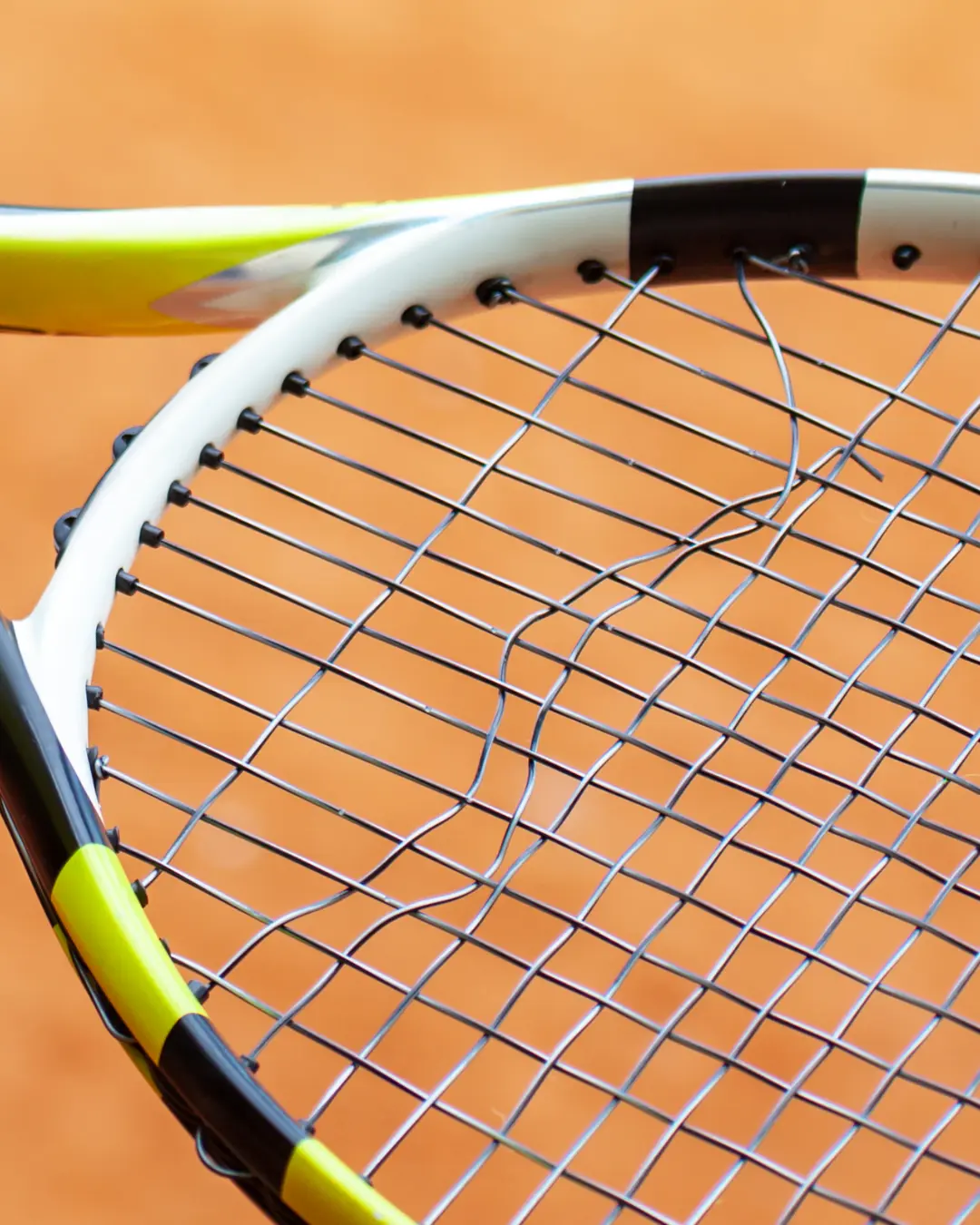
Old or “dead” strings are one of the main hidden causes of poor consistency and arm discomfort. When tension drops significantly, the racquet loses responsiveness, forcing you to swing harder and producing more shock with every shot.
This not only reduces performance but also increases the risk of injuries like tennis elbow. To prevent this, monitor how many hours you play and restring before the strings go completely dead.
Adding Auxetic Pads or vibration dampeners can slightly extend playability and reduce harsh feedback, but they cannot replace the accuracy and energy return of fresh, properly tensioned strings.
Overlooking the Importance of Tennis Accessories
Many players underestimate the impact of tennis accessories such as vibration dampeners or stabilising inserts. These components fine-tune how energy travels through the frame, reduce unwanted vibration and improve overall arm comfort.
On stiff racquets or with polyester strings, Auxetic Pads and Torsion Balancers increase racquet stability, helping create a more controlled and forgiving feel.
The smartest approach is holistic: treat your racquet, strings and accessories as one complete performance system. Each element influences your power, control and comfort, and mastering their interaction is the foundation of a reliable, efficient tennis setup.
8. When to Replace Your Tennis Strings (and How to Know It’s Time)
The Myth of “Only When They Break”
One of the biggest misconceptions in tennis is that strings need replacing only when they break. In reality, most strings lose their elasticity, tension and playability long before snapping, and this slow decline affects your timing, comfort and control.
As tension drops, the stringbed becomes unstable, producing inconsistent bounces and sending more vibration through your arm. The result is a loss of confidence and, in the long term, unnecessary strain on muscles and tendons. Regular restringing is not a luxury, it is an essential part of proper racquet maintenance.
How to Tell If Your Tennis Strings Are “Dead”
You don’t need professional equipment to recognise when your tennis strings are dead. The signs are easy to spot once you know them. If the sound of impact becomes dull or metallic, if the ball flies unpredictably, or if the strings stop snapping back into place, they have lost tension and resilience.
A dead stringbed no longer stores and releases energy efficiently, forcing you to swing harder to achieve the same result. This not only increases fatigue but also raises the risk of arm injuries such as tennis elbow.
As a rule of thumb, polyester strings last about 10–15 hours of play, while multifilament or hybrid setups can stay playable for 20–25 hours. However, the best indicator is consistency: when your shots start to vary for no clear reason, your strings are already past their prime.
How Often Should You Restring a Tennis Racquet?
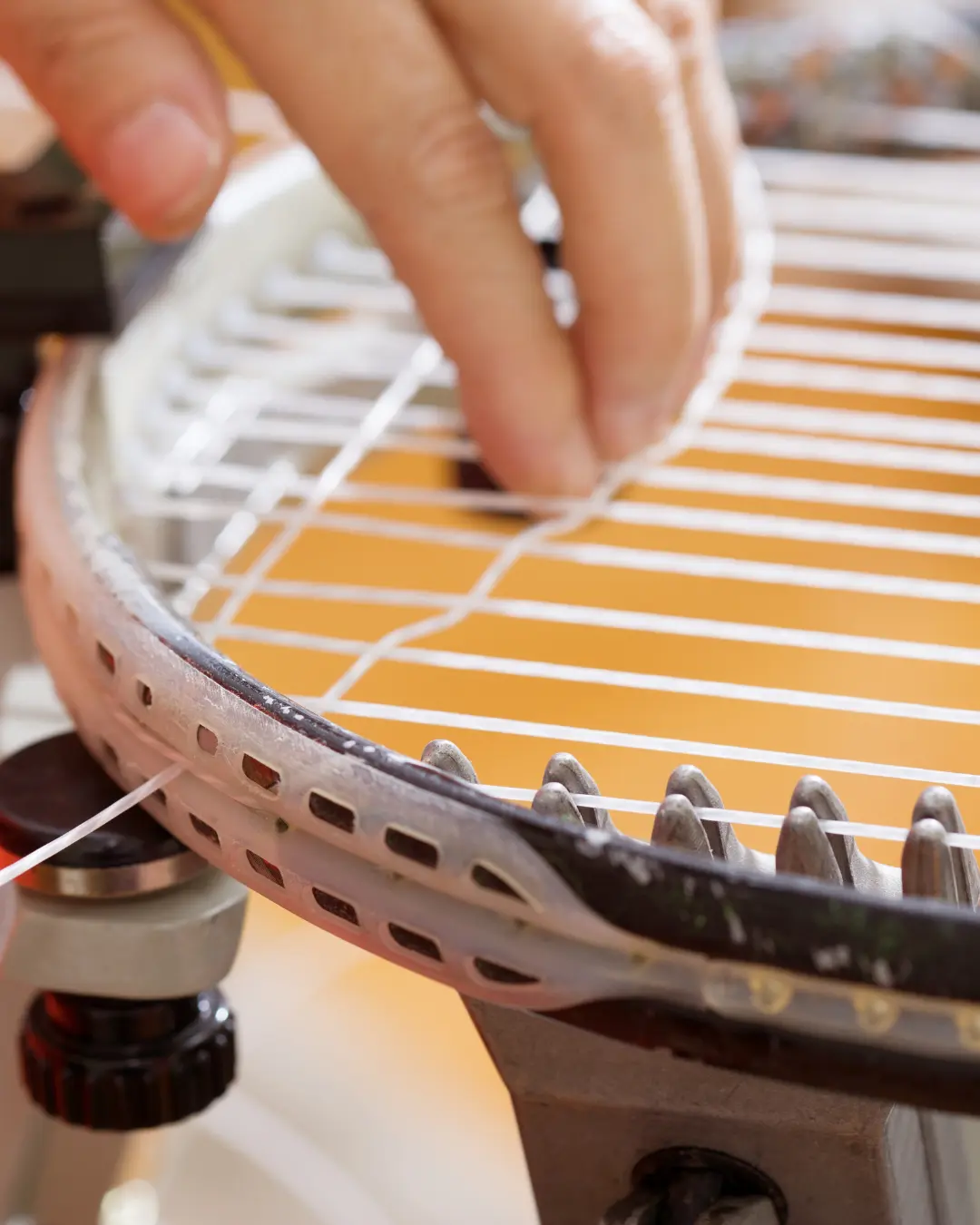
The ideal restringing frequency depends on how often you play, your string type and playing style. A good guideline is to restring as many times per year as you play per week. For example, if you play three times a week, restringing every four months keeps your setup fresh and reliable.
Players who hit hard or use stiff polyester strings should restring more frequently, since these strings lose tension faster. Recreational players using softer multifilaments can extend the interval slightly but should still refresh strings regularly to maintain power, control and comfort.
How to Extend String Life and Maintain Performance
To maximise string performance and durability, avoid exposing your racquet to extreme heat or humidity, which accelerate tension loss. Store it in a thermo-protected tennis bag and check string alignment after each session.
You can also use Tennis Racquet Dampeners or Universal to reduce mechanical stress and keep the stringbed aligned during impact. These accessories do not replace restringing but help reduce premature wear and maintain a consistent feel for longer.
Discover our dampeners!
Ultimately, fresh tennis strings don’t just restore control, they also bring back confidence, consistency and the unmistakable pleasure of a clean, effortless hit.
9. Conclusion. The Science and Sensation of the Perfect Shot
Every player knows that unique instant, the feeling of a ball struck cleanly, leaving the racquet with both power and precision. It is not luck, and it is not only technique; it is the harmony between strings, racquet and body. Understanding how your string setup works, including its tension, gauge and material, means understanding how energy flows through your hands and into the ball.
A well-balanced racquet setup does not just add power or control, it restores clarity and confidence. You begin to notice the subtleties: how a softer impact feels compared to a crisp one, how a drop in tension changes depth and timing, and how vibration reveals what the strings are doing. When these sensations align, your movement becomes fluid and the game feels effortless.

At the same time, the world of tennis strings is evolving rapidly. The next generation of materials focuses on sustainability, adaptive structures and customisation, aiming to reduce the gap between racquet and player. Manufacturers are developing recycled filaments, responsive geometries and smart strings capable of tracking tension and spin in real time. These innovations open a new era where performance and sensitivity coexist.
This same philosophy guides our products. Designed to enhance connection and control, they work alongside your strings to amplify energy return, reduce invisible resistance and make every impact smoother and more efficient. Each accessory is part of a broader vision: a racquet that truly adapts to you.
In the end, the perfect setup is not one-size-fits-all, it is personal. The best way to find it is to experiment, listen and fine-tune until your racquet feels like an extension of your arm. Because the perfect sound, the perfect feel and the perfect shot all begin inside the strings and continue through AMbelievable tennis accessories.